
A small patio doesn’t have to limit your gardening dreams. Whether you’re working with a modest deck, a narrow balcony, or a cramped courtyard, smart patio small garden ideas can turn even the tightest square footage into a thriving green space. The key is layering plants vertically, choosing the right containers, and planning your layout strategically. In 2026, many homeowners are ditching the myth that small patios can’t deliver real impact. With practical solutions and minimal tools, you can create a garden that feels spacious, productive, and genuinely beautiful. This guide walks you through proven strategies that work in real-world constraints, no fairy-tale landscaping required.
Table of Contents
ToggleKey Takeaways
- Small patio garden ideas thrive by growing vertically with wall-mounted planters and trellises, allowing you to hold 20+ plants in the same footprint as traditional ground beds.
- Container gardening success depends on matching pot depth to plant needs (6–8 inches for herbs, 12–15 inches for fruiting plants) and using high-quality, peat-free soil with proper drainage.
- Multi-purpose plants that deliver year-round value—like dwarf fruit trees, ornamental herbs, and evergreen shrubs—ensure every inch of your small patio earns its space.
- Strategic layout with grouped furniture, defined pathways, and sunlight mapping transforms cramped patios into functional, inviting spaces without clutter.
- Starting with one vertical solution or focal-point plant and expanding incrementally makes managing a small patio garden achievable and genuinely rewarding.
Vertical Garden Solutions For Space-Saving Style
When floor space is precious, growing up is your best strategy. Vertical gardens let you maximize plant density without sprawling across your patio or eating into walkways. A well-designed vertical setup can hold 20+ plants in the same footprint where a traditional bed holds four.
Wall-Mounted Planters And Trellises
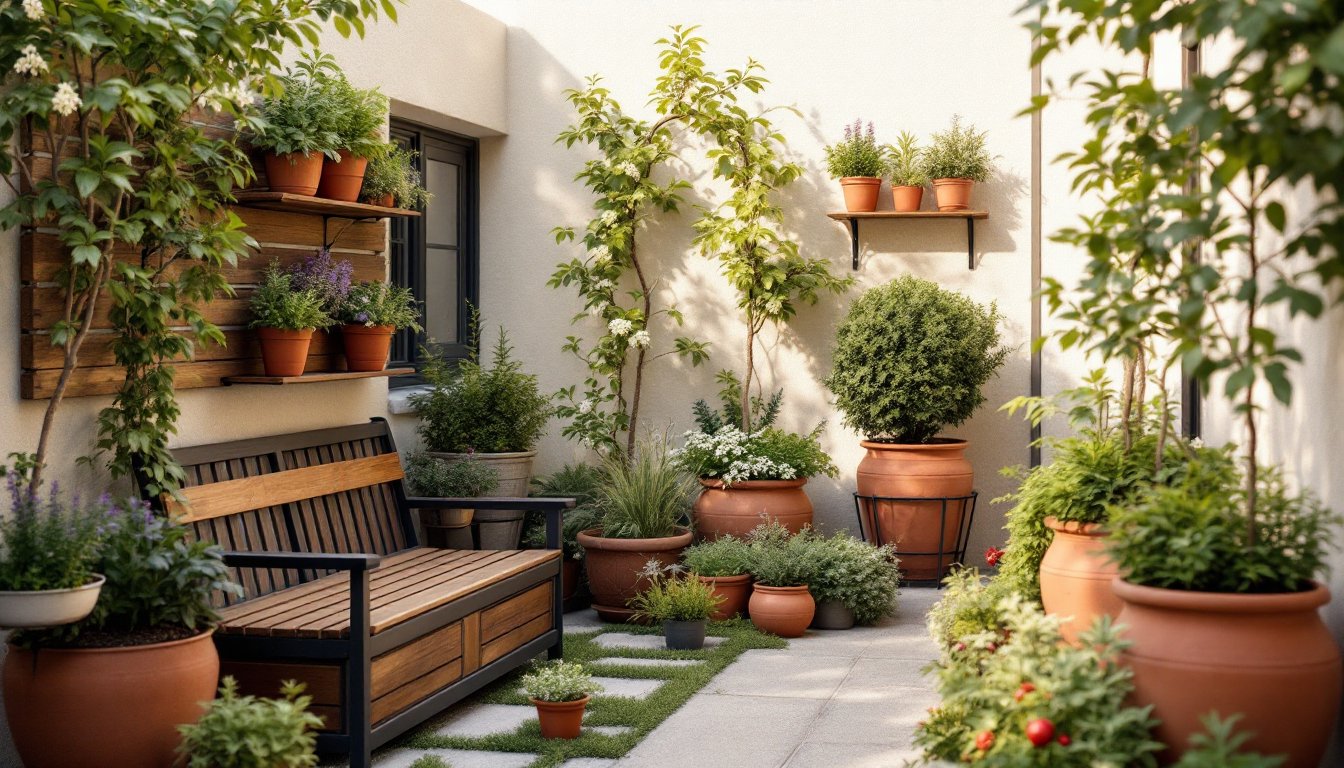
Wall-mounted systems are the workhorses of small patios. These attach directly to your patio wall, fence, or railing, freeing up ground level entirely. Start with a sturdy horizontal aluminum rail or treated wood ledger board anchored to studs or solid masonry, this is non-negotiable for safety and weight distribution. Your mounting surface must handle at least 50 pounds per linear foot once soil and mature plants add moisture.
Popular mounting options include pocket planters (fabric pockets sewn into felt backing, $20–$60 per 3×2-foot panel), tiered metal shelving racks designed for patios, or DIY-friendly wooden pallet planter boxes. Pocket planters work beautifully for trailing herbs and sedums: shelving racks let you display individual pots at varied heights: pallets suit heavier plants like small shrubs or leafy greens.
Trallises pair perfectly with vining plants, clematis, jasmine, or climbing beans transform a bare wall into living texture. Install a pressure-treated 2×2 or metal trellis frame at least 6 inches away from the wall to allow airflow and prevent rot. This gap prevents moisture from pooling behind the frame and damaging siding.
Two solid mounting brackets per 8-foot span, rated for 100+ pounds, keep everything secure. For renters or those avoiding permanent holes, freestanding A-frame trellises ($30–$80) planted with lightweight annuals work nearly as well and move easily when needed.
Container Gardening Basics For Small Spaces
Container gardening is the heartbeat of small patio success. Pots let you control soil, drainage, and placement with surgical precision. The challenge isn’t finding space, it’s choosing the right pot and mix.
Choosing The Right Containers And Soil
Size matters more than most people realize. A plant’s root system dictates container depth: shallow herbs (basil, oregano) thrive in 6–8 inch pots: leafy greens need 8–10 inches: fruiting plants (tomatoes, peppers) demand 12–15 inches minimum. Undersized pots dry out in hours and stunt growth. Oversized pots hold excess moisture and cause root rot, aim for just 2 inches of clearance above the root ball.
Material affects watering frequency and durability. Terracotta looks beautiful but dries fast (ideal in humid climates): glazed ceramic or plastic retain moisture longer (better for hot, dry patios). Fabric grow bags ($5–$15) are excellent for vegetables, they breathe, dry evenly, and collapse for off-season storage. For a cohesive look on a small patio, stick to two materials maximum to avoid visual clutter.
Drainage holes are mandatory. Without them, roots suffocate. If you love a pot without drainage, place a smaller draining pot inside it as a liner and water the inner pot separately.
Soil quality makes or breaks container gardening. Generic “potting soil” lacks structure and compacts over time. Invest in a premium peat-free blend (coconut coir or aged bark base) that includes perlite or vermiculite for aeration and slow-release fertilizer. A 40-liter bag costs $12–$20 and fills roughly eight 8-inch pots. For greedy feeders like tomatoes or roses, add a 1-inch layer of compost at the bottom of each pot before filling. Container soil drains fast and depletes nutrients quickly, so plan on feeding established plants with liquid fertilizer every 2–3 weeks during the growing season. Better Homes & Gardens offers detailed container gardening guidance for seasonal selections and care schedules.
Multi-Purpose Plants That Deliver Year-Round
Small patios can’t afford dead zones or single-season performers. Every plant must earn its space by offering something meaningful, flowers, edible harvests, structure, or winter interest.
Dwarf fruit trees (2–4 feet tall) like columnar apples, dwarf peaches, or espaliered pears produce real fruit in 5-gallon pots and look polished year-round. Place them in full sun (6+ hours daily) and use a tree-support stake for the first two seasons if exposed to wind.
Herbs with visual appeal do double duty: purple basil ($3–$5 seedling) adds color and flavor: variegated mint edges containers with striping: flowering oregano draws pollinators. Herbs tolerate crowding better than most plants and regenerate quickly after harvesting, making them ideal for patio depth and food production.
Evergreen ornamentals anchor year-round structure. Small boxwoods, dwarf hollies, or Japanese maples provide winter silhouette when deciduous plants go bare. A 2-foot maple in a 15-gallon container costs $40–$80 but creates focal-point interest for years. Pair deciduous trees with hellebores or cyclamen (winter bloomers) nearby for seasonal color without replanting.
Self-seeding annuals like alyssum, calendula, or borage reseed in pots and require minimal intervention after establishment, stretching your patio’s visual interest without added planting chores. Better Homes & Gardens and The Spruce offer comprehensive plant recommendations tailored to your climate zone and sunlight conditions. According to Gardenista’s guide to small garden design, layering plants of varying heights creates the illusion of a larger space and maximizes visual impact in tight quarters.
Smart Furniture And Layout Strategies
Layout strategy separates chaotic patios from functional gardens. In small spaces, every piece of furniture and plant placement affects flow and usability. Start by mapping zones: sitting area, dining area (if room allows), and planting zones. Don’t scatter furniture, group it. A single table-and-chair set feels more spacious than scattered pieces because it defines one intentional zone.
Choose furniture that doubles as storage. Wooden benches with under-seat storage ($150–$300) hold pots, soil, and tools while providing seating. Metal plant stands ($30–$100) elevate pots to eye level, creating vertical interest and freeing floor space. For tiny patios, wall-mounted fold-down tables ($80–$200) provide dining or potting surfaces that tuck away completely when not in use.
Color and material cohesion matter enormously. Limiting your palette to two or three colors (say, terracotta, black metal, and green foliage) makes small spaces feel larger and more intentional. Paint your fence or wall a soft neutral if it’s busy or visually loud, this creates a clean backdrop that lets plants shine. Grouping pots by type and staggering heights creates rhythm rather than randomness. Small backyard entertaining ideas show how strategic arrangement transforms narrow spaces into welcoming gathering spots.
Sunlight mapping is essential. Observe your patio at morning, midday, and afternoon. Most vegetables and herbs want 6–8 hours of direct sun, but shade-tolerant plants like ferns, hostas, and hellebores thrive where sun is limited. Position thirsty plants in shadier spots (they dry slower) and sun-lovers in hot corners. This simple strategy reduces watering stress and prevents drought-stressed plants from taking over your care schedule.
Leave pathways. A clear 2-3 foot walkway prevents you from squeezing between pots and damaging plants. In a 10×12-foot patio, define this early and resist the urge to fill every square inch, negative space makes small spaces feel intentional, not cramped.
Conclusion
Small patio gardens succeed through layering, vertical solutions, strategic containers, multi-season plants, and thoughtful layout. You don’t need a sprawling yard to grow food, create privacy, or build a serene retreat. Start with one approach (vertical wall, a few container herbs, or a focal-point plant) and expand incrementally. Most homeowners find their small patio becomes their favorite outdoor space because it’s manageable, personal, and genuinely productive. Your constraints become creative fuel.