
A patio awning is one of the smartest investments you can make for outdoor living. Whether you’re dealing with harsh afternoon sun, unexpected rain, or simply want to extend your entertaining season, the right awning transforms a neglected backyard corner into usable space. The good news? There’s never been more variety in patio awning ideas, from motorized retractable systems to simple DIY fabric setups. We’ll walk you through the main types, help you evaluate what fits your budget and climate, and show you how to choose materials that’ll actually hold up to weather and UV exposure.
Table of Contents
ToggleKey Takeaways
- Patio awning ideas range from motorized retractable systems ($1,500–$4,000+) to budget-friendly DIY options ($400–$800), allowing you to choose based on flexibility needs and budget.
- Retractable awnings offer on-demand sun control and work best for smaller patios, while fixed awnings provide permanent coverage ideal for consistent sun exposure and year-round protection.
- Invest in premium acrylic fabrics like Sunbrella (400+ grams per square meter) and stainless steel hardware to ensure your awning lasts 10+ years without fading or corrosion.
- Pergola-style awnings blend aesthetic appeal with function, costing $1,000–$3,000 for fixed versions and $3,000–$6,000+ for motorized louvered systems that accommodate climbing plants and evolving designs.
- DIY awning builders can save 50–70% by constructing simple fabric-and-frame systems using pressure-treated lumber and outdoor-grade fabric with proper 2–3 inch roof slopes for water runoff.
- Material durability depends on frame choice—pressure-treated lumber requires annual sealing, while aluminum offers low maintenance but lacks warmth; always use stainless steel fasteners in any configuration.
Retractable Awnings for Maximum Flexibility
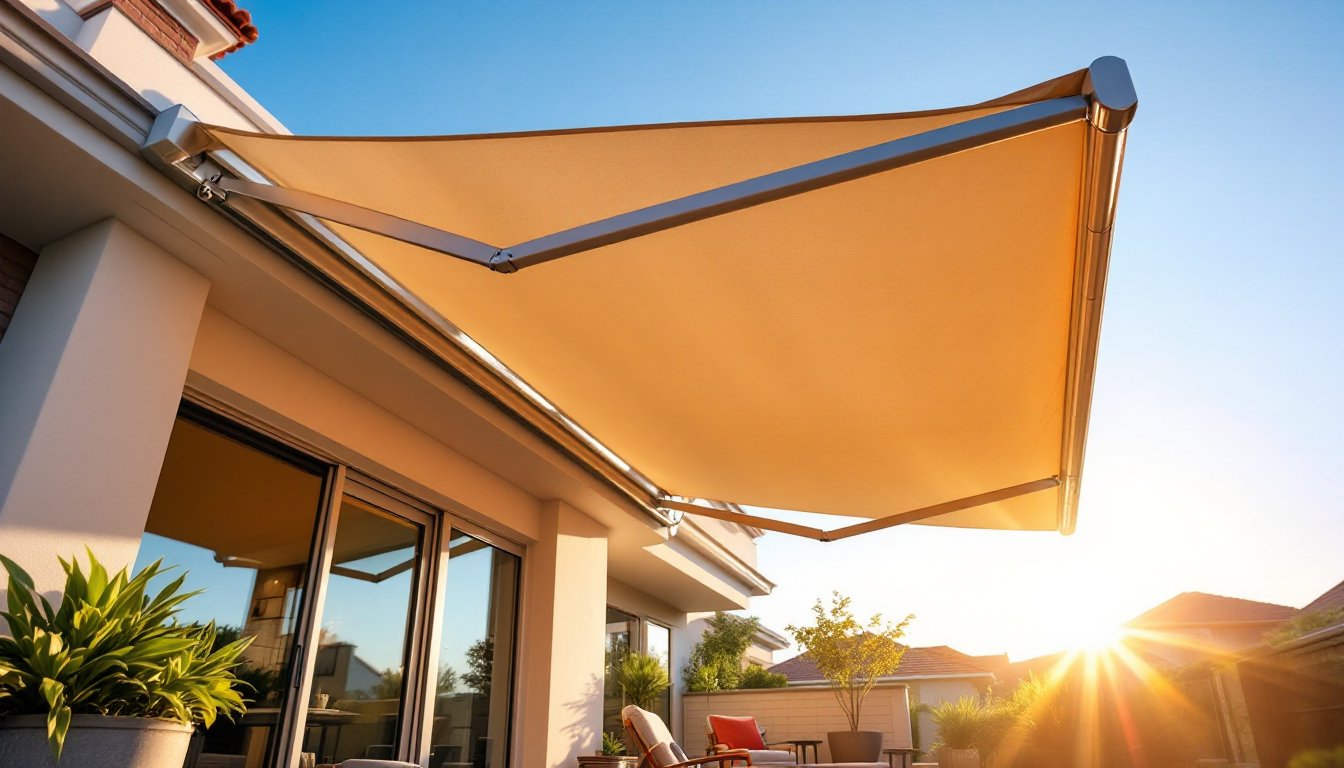
Retractable awnings give you control over sun and shade on demand. You crank them out when the sun peaks, then roll them back when clouds roll in or temperatures drop at night. This flexibility beats permanent solutions if you like keeping your view open or prefer natural light at certain times.
Manual retractable awnings use a hand crank or pulley system, no batteries, no motors, completely reliable. They work well for smaller patios (6–12 feet wide). Motorized versions cost more but offer convenience and often include sensors that automatically retract during wind gusts or rain. Popular motorized awnings range from $1,500 to $4,000+ installed, depending on size and fabric quality.
Key specs to check: Look for a minimum slope of 15 degrees (helps water runoff), reinforced aluminum or steel arms rated for your local wind speeds, and 400+ gram outdoor fabric for UV protection. If your patio gets regular wind over 25 mph, a motorized system with wind sensors is safer, manual systems can be damaged if extended in strong gusts. Installation usually requires bolting to your house fascia or roof, which may need local building approval in some areas. Factor in that annual maintenance (cleaning, occasional lubrication of mechanisms) keeps them operating smoothly for 10+ years.
Fixed Shade Solutions for Year-Round Coverage
If you want set-and-forget shade, fixed awnings deliver permanent coverage without moving parts. They’re bolted to your home or freestanding posts and stay put through seasons. This type works especially well if your patio gets consistent, predictable sun exposure or you’re in a climate where you want protection most of the year.
Fabric and wood combinations are common for fixed awnings, think lightweight canvas or acrylic stretched over a wooden frame. Acrylic fabrics (like Sunbrella) hold color better than basic canvas and resist mildew, making them ideal for humid climates. Wood frames can be left natural, stained, or painted to match your home’s siding. For a polished look that ties into your home’s exterior, stain your frame with outdoor-grade polyurethane.
Aluminium frame options eliminate rotting concerns and weigh less than wood, though they lack the warmth and aesthetic appeal for traditional homes. A solid fixed awning measuring 12 feet wide by 10 feet deep typically costs $800–$2,000 for materials and DIY installation, or $2,500–$4,500 if professionally installed. The outdoor patio awning ideas that work best here involve sizing the awning to cast shade during peak sun hours (usually 10 a.m. to 4 p.m. in most regions) while allowing winter sun penetration when you want natural warmth.
Pergola-Style Awnings for Elegant Aesthetics
Pergola-style awnings blend shade function with visual appeal. They feature an open slatted roof, either fixed or with retractable louvered panels, that creates dappled light while maintaining airflow. This design works beautifully when you want partial shade without the heavy coverage of a solid fabric awning.
Fixed pergolas cost less upfront ($1,000–$3,000 for a 12-by-12-foot structure, materials only) and require no motors or moving parts. They’re perfect for climbing vines, train clematis, climbing hydrangea, or hops across the slats for natural, evolving shade. Retractable louvered pergolas offer adjustability: you can open slats for full sun or close them for complete coverage. These motorized systems run $3,000–$6,000+ but provide maximum flexibility.
Material choices matter here too. Wood frames offer warmth and integrate naturally into residential landscapes. Pressure-treated lumber rated for outdoor use (like treated pine or cedar) lasts 15+ years with annual staining. Aluminum pergolas need less maintenance but can feel industrial unless powder-coated in subtle colors. The appeal of pergola-style awnings lies in their aesthetic versatility, they look at home in traditional gardens or modern minimalist yards. Many homeowners discover that superior garden design ideas incorporate pergolas as both structure and canvas for plantings.
Budget-Friendly DIY Awning Options
If your budget is tight, you can build basic shade structures yourself using standard materials. DIY awnings won’t match the polish of commercial products, but they function well and cost 50–70% less.
Fabric and Frame Combinations
The simplest approach: build a frame from 2×4 pressure-treated lumber and stretch outdoor-grade fabric (canvas, sunbrella-style acrylic, or even shade cloth) across it using stainless steel hardware. Here’s the basic process:
- Build two end frames (tall posts connected by horizontal rafters) using 2×4s, spacing them 8–12 feet apart.
- Run cross-beams between the end frames using 2×4s or 2×6s depending on your fabric weight and desired span.
- Stretch your fabric across the top and secure with stainless steel hooks, screws, and washers, never use regular steel, which rusts.
- Slope the roof 2–3 inches per 10 feet so rainwater runs off rather than pooling.
- Bolt the post bases to concrete footings or attach to your patio with lag bolts rated for shear loads.
For a 12-by-10-foot DIY awning using treated lumber and acrylic fabric, expect to spend $400–$800 in materials. You’ll need a circular saw (or miter saw for cleaner cuts), a drill-driver, and basic hand tools. Two people working a weekend can typically complete assembly and installation.
Another budget option: cable and shade cloth systems. Run stainless steel cables between posts or your house and trees, then clip affordable shade cloth (12–15 dollars per linear foot) to the cables. This approach works great for temporary seasonal setups and costs around $200–$400. Shade cloth typically lasts 3–5 years before UV exposure degrades it, but replacement fabric is inexpensive.
Materials and Durability Considerations
Material choice determines how long your awning lasts and how much maintenance it demands. Understanding the trade-offs helps you avoid costly mistakes.
Fabric quality is paramount. Cheap polyester fabrics fade within 2–3 years and degrade under UV exposure. Premium acrylic fabrics (like Sunbrella or Outdura) cost more upfront ($20–$35 per linear yard) but hold color for 10+ years and resist mildew in humid climates. Solution-dyed acrylics are best, the pigment runs through the fiber, not just the surface, so fading is minimal.
For structural frames, pressure-treated lumber is affordable and rot-resistant but requires annual sealing to maintain integrity. Cedar or redwood are naturally decay-resistant but cost 2–3× more than treated pine. Aluminum frames offer low maintenance and won’t rot, yet they conduct heat and can feel cold to the touch in winter, a minor issue unless you’re in an extreme climate.
Hardware matters too. Use stainless steel bolts, screws, and brackets. Galvanized steel works temporarily but corrodes over time, especially in coastal regions. Stainless steel costs more but lasts the life of your awning without replacement.
Wind resistance depends on both frame strength and fabric weight. Look for frames rated to withstand wind speeds in your area (typically 75–100 mph for most residential zones, but check local building codes). Fabric weight of 400+ grams per square meter indicates durability. Lighter fabrics (200–300 gsm) cost less but flag in wind and wear faster.
Water resistance varies. Some fabrics are treated with water-repellent coatings (waxes or silicones) but aren’t fully waterproof, they resist light rain but will leak during heavy downpours. If you’re counting on your awning for rain protection, choose solution-dyed acrylic with tight weaves rather than porous canvas. Many homeowners find inspiration from home improvement ideas that showcase awning placements and fabric choices suited to different climates.
Conclusion
Selecting the right patio awning boils down to three questions: How much shade do you need? What’s your budget? And how much maintenance are you willing to do? Retractable systems offer flexibility, fixed awnings provide permanent coverage, and pergola styles blend function with design. DIY options let you build practical structures on a shoestring if you’re handy. Whatever you choose, invest in quality fabric and hardware, they’re what’ll keep your awning functional and looking good for a decade. With the outdoor patio awning ideas we’ve covered, you now have a clear path to transforming your backyard into a comfortable, usable outdoor room.