


In today’s fast-paced world, the living room has evolved into a multifunctional space that caters to various needs. Gone are the days when this area served solely as a gathering spot for family and friends. Now, it’s a hub for relaxation, entertainment, and even home offices, reflecting the diverse lifestyles of modern households.
Designing a multifunctional living room requires creativity and strategic planning. By incorporating versatile furniture and smart storage solutions, one can maximize space while maintaining style. This transformation not only enhances functionality but also creates a welcoming environment where comfort and practicality coexist. Whether it’s a cozy nook for reading or an inviting area for movie nights, a well-designed multifunctional living room can adapt to any occasion.
What Is a Multifunctional Living Room?
A multifunctional living room incorporates various elements designed to serve multiple purposes. This versatile space allows for seamless transitions between activities such as entertaining, working, and relaxing. For example, it might feature a sofa that converts into a bed or a coffee table that doubles as a storage unit.
Designers emphasize the importance of layout and furniture choices, ensuring each item contributes to the room’s overall functionality. Modular furniture, like sectional sofas, can be reconfigured depending on the occasion. Additionally, integrating smart technology enhances the living room experience, allowing users to control lighting and entertainment systems with ease.
Storage solutions play a crucial role in maintaining an organized environment. Built-in shelves, concealed cabinets, and under-furniture storage options help minimize clutter while maximizing space utility.
The combination of aesthetic appeal and practicality defines a successful multifunctional living room, creating a welcoming atmosphere tailored to diverse needs.
Benefits of a Multifunctional Living Room
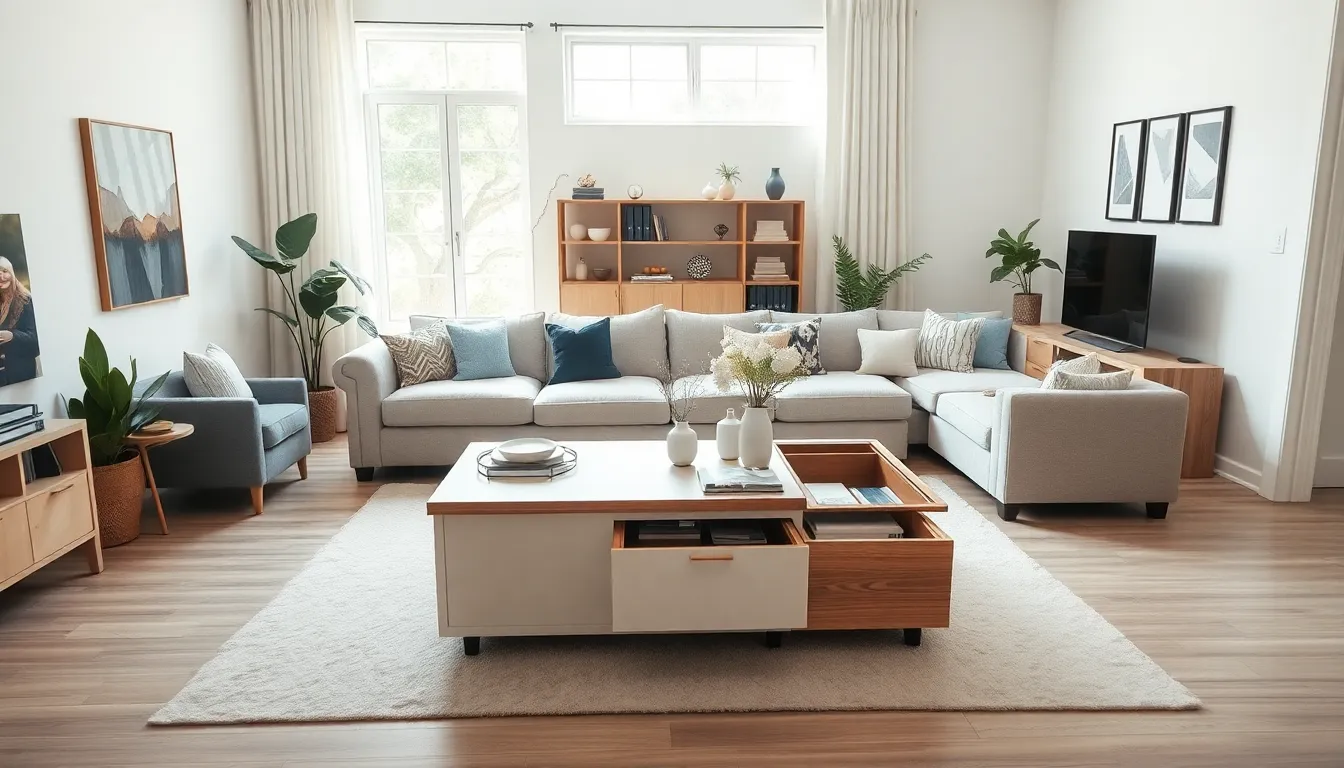
A multifunctional living room offers numerous advantages, making it an essential component of modern home design. From maximizing space to enhancing flexibility, these benefits contribute to a more efficient and enjoyable living environment.
Space Optimization
Space optimization stands as a primary benefit of a multifunctional living room. By incorporating furniture that serves multiple purposes, like a sofa bed or an extendable dining table, homeowners effectively utilize available square footage. For example, a coffee table with built-in storage can hold magazines, remote controls, or other items, minimizing clutter. Modular furniture pieces can adapt to various layouts and activities, allowing for easy reconfiguration of the space according to the specific needs of each gathering or event. This strategic design enables a more organized environment that feels spacious and inviting.
Enhanced Flexibility
Enhanced flexibility presents another significant advantage of a multifunctional living room. The ability to seamlessly transition between activities, such as entertaining guests or creating a workspace, suits modern lifestyle demands. Convertible furniture allows for the quick transformation of the space; for instance, a sectional sofa can accommodate family movie nights and, when rearranged, provide seating for work-related tasks. Smart technology integration furthers this flexibility by enabling efficient control of lighting, sound, and temperature, tailoring the environment to the occasion. Such adaptability ensures the living room remains a vibrant hub that meets diverse needs, offering comfort and functionality.
Key Features to Consider
When designing a multifunctional living room, several key features enhance versatility and comfort. Prioritizing furniture, storage, and design aesthetics maximizes the space’s potential and caters to various activities.
Furniture Selection
Convertible furniture plays a crucial role in multifunctional living rooms. Sofas that convert into beds provide sleeping space for guests, while extendable dining tables accommodate additional visitors. Modular units allow reconfiguration, optimizing space according to needs. Ottomans with hidden storage keep essentials accessible, and accent chairs can serve multiple purposes, enhancing flexibility in seating arrangements.
Storage Solutions
Effective storage solutions are vital for maintaining a clutter-free environment. Built-in shelves offer display options while utilizing vertical space, enhancing organization. Concealed cabinets and multifunctional furniture with integrated storage help keep everyday items out of sight. Wall-mounted organizers and decorative baskets provide easy access to frequently used items, promoting efficiency without sacrificing style.
Design Aesthetics
Design aesthetics significantly influence the feel of a multifunctional living room. A cohesive color palette creates visual harmony, making the space feel larger and more inviting. Textures and patterns add depth, while strategic lighting enhances functionality and mood. Incorporating personal elements, like artwork and plants, personalizes the space, ensuring it reflects individual style while remaining practical for various activities.
Tips for Creating a Multifunctional Living Room
Creating a multifunctional living room involves strategic layout planning and careful selection of colors. These elements enhance the space’s adaptability while maintaining a cohesive and inviting atmosphere.
Layout Ideas
Prioritize a flexible layout that allows easy reconfiguration for various activities.
- Zoning: Divide the space into distinct zones for relaxing, working, and entertaining. Use furniture placement, rugs, or shelving to define each area.
- Modular furniture: Opt for modular sofas and chairs that can be rearranged based on need. This adaptability supports multiple uses.
- Multi-use surfaces: Place coffee tables or side tables close to seating arrangements to facilitate quick transitions from work to leisure.
- Open spaces: Maintain clear pathways and open spaces to enhance flow and accessibility. This layout promotes movement throughout the room.
Color Schemes
Select color schemes that enhance versatility while reflecting personal style.
- Neutral base: Use neutral tones, such as beige or gray, for larger pieces. These colors create a calm foundation that pairs well with various accent colors.
- Accent hues: Incorporate bold colors in accessories, like cushions or artwork. These elements can easily change with trends or seasons, offering a fresh look.
- Layered textures: Mix textures within the color schemes for depth and interest. Use soft fabrics, smooth finishes, and wood to create a welcoming atmosphere.
- Strategic lighting: Implement layered lighting with a combination of ambient, task, and accent lights. This approach highlights colors and enhances the mood for different activities.
Embracing the concept of a multifunctional living room transforms how homeowners interact with their space. By prioritizing versatility through smart design choices and adaptable furniture, it’s possible to create an environment that meets various lifestyle needs. A well-planned living room not only enhances comfort but also encourages creativity and connection among family and friends.
With the right combination of storage solutions and aesthetic elements, this space can evolve seamlessly from a cozy retreat to a vibrant entertainment hub. Ultimately, the goal is to foster an inviting atmosphere that reflects personal style while maximizing functionality. A multifunctional living room truly becomes the heart of the home, accommodating everything from relaxation to productivity.

