
The living room serves as the heart of the home, a space where families gather and memories are made. A well-thought-out layout not only enhances the room’s functionality but also reflects personal style and comfort. Whether it’s cozy movie nights or lively conversations with friends, the arrangement of furniture plays a crucial role in creating an inviting atmosphere.
Designing the perfect living room layout can feel overwhelming, but it doesn’t have to be. With a few key principles in mind, anyone can transform their space into a harmonious blend of aesthetics and practicality. From maximizing space to ensuring optimal flow, understanding the elements of a successful layout can elevate any living room into a welcoming haven.
Importance of Living Room Layout
A well-structured living room layout significantly influences the home’s atmosphere, enhancing both functionality and aesthetic appeal. It serves as a vital area for family gatherings and social interaction.
Enhancing Space Utilization
Effective living room layouts make optimal use of available space. Smart furniture arrangement, like positioning sofas and chairs inward, creates an inviting flow while maximizing usable areas. Multi-functional furniture, such as storage ottomans, frees up floor space and reduces clutter. Strategically placed rugs can define zones, improving spatial organization. Incorporating vertical storage solutions also utilizes walls, leaving more floor space for movement.
Impact on Social Interaction
Layout affects how people engage in the living room. An open layout means easier movement and conversation flow during gatherings. Arranging seating in circles or semi-circles promotes inclusivity and interaction among guests. Ensuring that seating faces one another encourages dialogue, fostering connections. Thoughtful placement of tables allows easy access for refreshments, enhancing the sociability of the space.
Key Elements to Consider
Successful living room layouts rely on several key elements that enhance functionality and comfort. Focus on furniture arrangement and flow to create an inviting space.
Furniture Arrangement
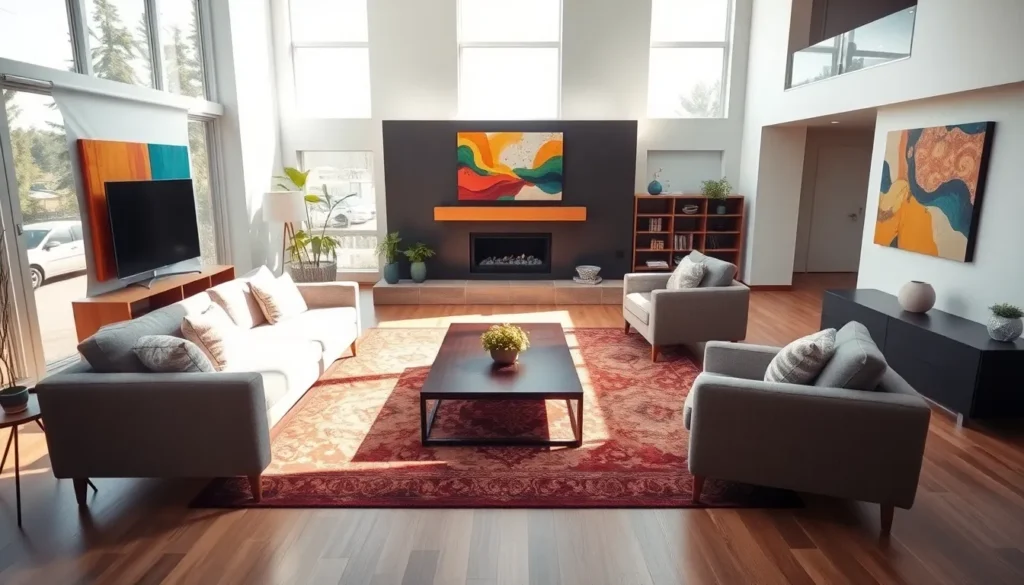
Furniture arrangement directly affects the usability of the living room. Use furniture to define different areas, such as conversation zones or entertainment spaces. Place sofas and chairs facing each other to encourage interaction. Include multi-functional pieces, like ottomans with storage, to maximize space. Avoid blocking pathways and consider the balance between large and small furniture for visual harmony. Maintain a focal point, like a fireplace or artwork, to guide the arrangement, ensuring every piece enhances the overall design.
Flow and Accessibility
Flow and accessibility play crucial roles in a living room’s layout. Ensure adequate space between furnishings for easy movement, ideally allowing at least 18 inches for pathways. Open layouts promote fluidity, making it easier for guests to navigate the area. Use rugs to delineate spaces without restricting movement. Accessibility matters for all users; ensure seating options accommodate diverse needs. Incorporate lighting and ensure that elements like tables and shelves are within arm’s reach, creating a user-friendly environment that invites people to relax and enjoy.
Popular Living Room Layout Styles
Various living room layout styles cater to different preferences and needs. Understanding these styles can help in creating a functional and inviting space.
Open Concept Layout
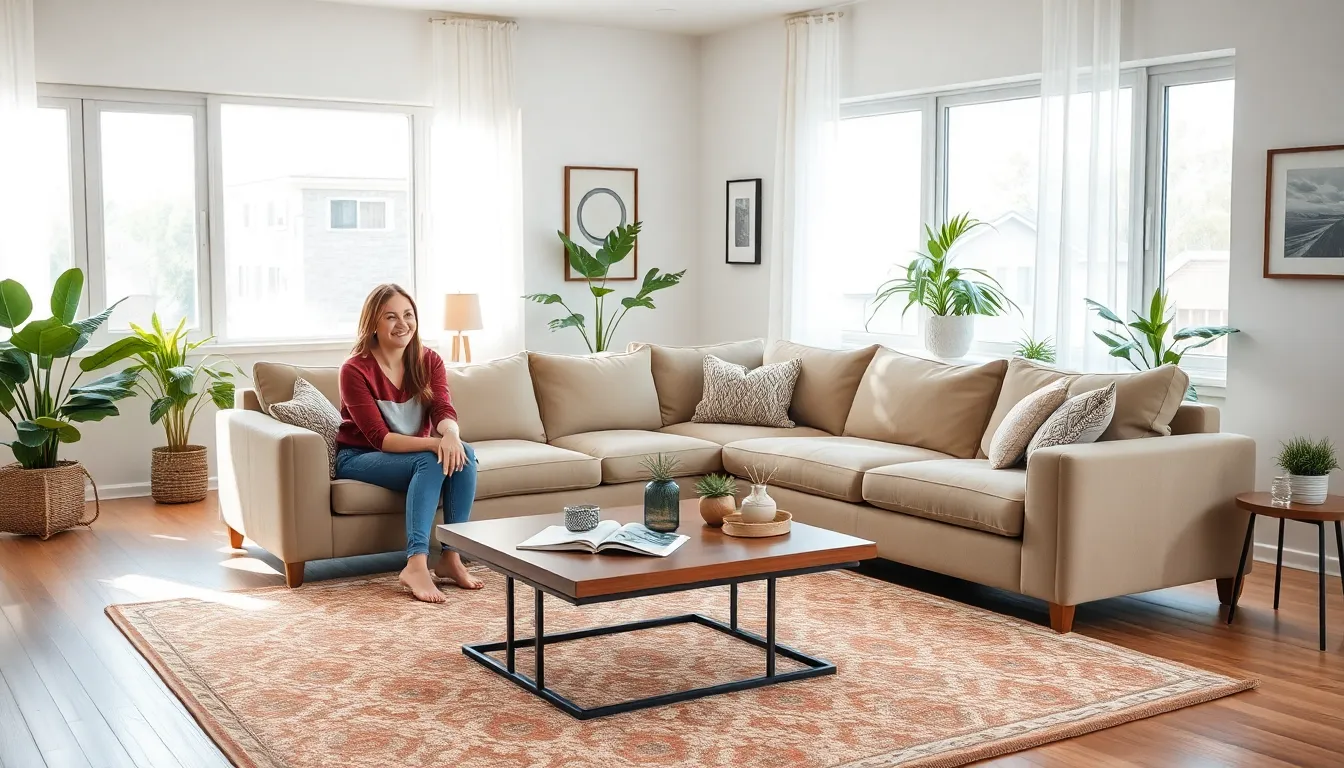
Open concept layouts enhance interaction and connectivity. They typically feature spacious designs where the living room flows seamlessly into adjoining areas, such as the dining room or kitchen. This arrangement promotes socialization, allowing family and guests to engage in conversations across spaces. Furnishings in open layouts often include sectional sofas that define seating areas without obstructing views. Integrating multi-functional furniture, like ottomans and storage coffee tables, optimizes space usage and maintains a clutter-free environment. Selecting light-colored furnishings and accents can also enhance natural light, further emphasizing the openness of the layout.
Traditional Layout
Traditional layouts emphasize symmetry and defined zones within the living room. Furniture arrangements often center around a focal point, such as a fireplace or television, with sofas and chairs positioned to encourage conversation. Elements such as area rugs help define the seating areas and create a cozy atmosphere. In this layout, classic furnishings like armchairs and side tables add charm and anchor the space. Incorporating accent pieces, such as lamps and decorative art, enhances the overall aesthetic while maintaining a cohesive look. This layout style caters to a more formal setting, perfect for gatherings and entertaining guests.
Tips for Optimizing Your Living Room Layout
Optimizing a living room layout involves careful consideration of furniture size and the strategic use of color and texture. These elements significantly enhance both aesthetic appeal and functionality.
Choosing the Right Furniture Size
Choosing the right furniture size creates balance and promotes comfort within the living room.
- Measure the Space: Measure the dimensions of the room before purchasing furniture. This ensures that pieces fit without overwhelming the area.
- Select Proportional Pieces: Choose furniture that is proportional to the space. Oversized sofas can make a small room feel cramped, while tiny furniture may get lost in a larger space.
- Consider Functionality: Opt for furniture that meets specific needs. For instance, a coffee table with storage provides practical solutions while keeping the area tidy.
- Maintain Clear Pathways: Ensure furniture placement allows easy movement. Aim for at least 18 inches between pieces for pathways so that occupants can navigate comfortably.
Incorporating Color and Texture
Incorporating color and texture elevates the living room’s visual interest and ambience.
- Choose a Color Palette: Select a cohesive color scheme that reflects personal style. Neutral tones provide a calming backdrop, while pops of color add vibrancy.
- Mix Textures: Combine various textures, such as soft fabrics, smooth surfaces, and rough materials, to achieve depth. Layering cushions, throws, and area rugs enhances comfort and visual engagement.
- Accentuate Focal Points: Use color and texture to highlight focal points within the room. Artwork, rugs, or accent walls can draw attention and anchor the layout.
- Balance Warm and Cool Tones: Incorporate both warm and cool tones for a harmonious atmosphere. Warm colors create coziness, while cool tones promote relaxation, allowing the space to feel inviting.
A thoughtfully designed living room layout can transform a house into a home. By prioritizing functionality and personal style, individuals can create a space that not only looks inviting but also fosters connection and comfort. Whether opting for an open concept or a more traditional setup, the key lies in understanding how to maximize space and enhance flow.
With the right furniture arrangement and attention to detail, anyone can craft a living room that serves as a welcoming haven for family and friends. Embracing these principles ensures that the living room remains a cherished gathering spot for years to come.