


Junk journaling isn’t just a hobby; it’s a delightful escape into creativity where every page tells a story. For those drowning in a sea of scraps, stickers, and spontaneous doodles, finding fresh inspiration can feel like searching for a needle in a haystack. Fear not, fellow journalers! With a sprinkle of imagination and a dash of whimsy, crafting stunning pages is just around the corner.
Understanding Junk Journals
Junk journals serve as creative outlets for artistic expression and personal storytelling. By incorporating various materials, individuals transform ordinary pages into unique masterpieces.
What Is a Junk Journal?
A junk journal consists of repurposed papers, scraps, and memorabilia assembled into a cohesive format. These journals blend various textures, colors, and styles, fostering an eclectic aesthetic. Artists and enthusiasts often use vintage book covers or neutral binders as bases. Each page becomes a canvas for self-reflection and creativity. Illustrated pages may feature collages, quotes, or handwritten notes. Overall, junk journals empower users to craft tangible narratives from their lives.
Benefits of Keeping a Junk Journal
Keeping a junk journal offers several advantages for creativity and mental health. Improved self-expression happens as individuals document thoughts, experiences, and inspirations. Stress relief occurs when users engage in the meditative process of journaling. Enhanced creativity develops through the mixing of different materials and techniques. Organizing thoughts becomes easier as writers curate their ideas and memories. Additionally, maintaining a junk journal can promote mindfulness, encouraging individuals to focus on the present moment. Each benefit supports overall well-being, making junk journaling a fulfilling activity.
Inspiration Junk Journal Page Ideas
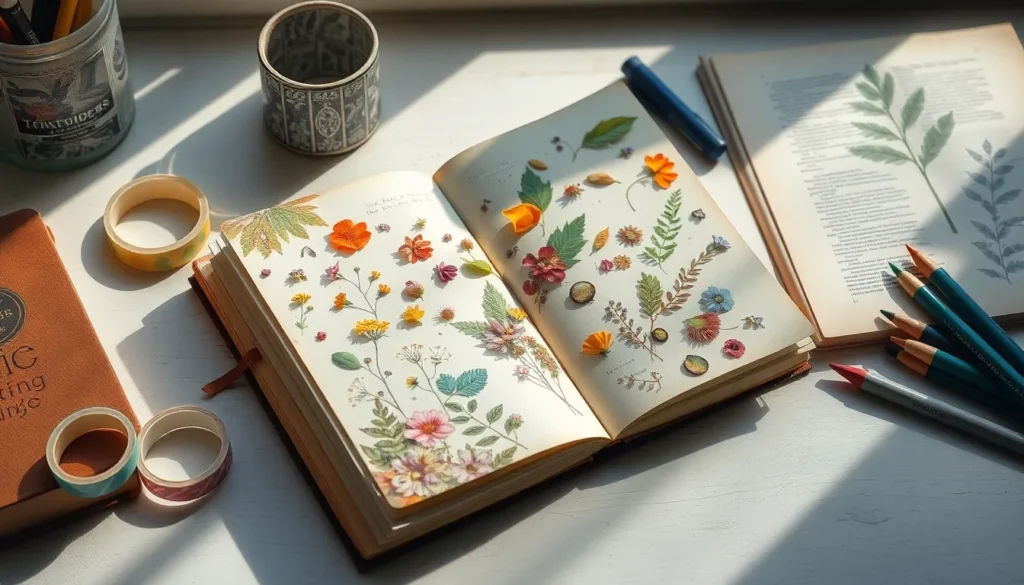
Creating pages in a junk journal can ignite creativity and inspire personal expression. Diverse themes can transform blank spaces into captivating ensembles of art and storytelling.
Nature-Themed Pages
Nature offers a wealth of inspiration for junk journal pages. Incorporate pressed leaves, flowers, or photographs from outdoor adventures. Collage elements like maps or vintage botanical illustrations can enhance the theme. Earthy color palettes with greens and browns evoke calmness and tranquility. Add handwritten observations about nature or snippets of poetry that resonate with the beauty of the outdoors.
Quote and Affirmation Pages
Quotes and affirmations can empower and motivate. Choose favorite quotes that reflect personal beliefs or goals. Employ typography techniques by mixing fonts and styles to create eye-catching layouts. Include decorative elements such as washi tape or doodled borders to amplify the visual appeal. Integrate personal affirmations that encourage positivity, fostering a sense of mindfulness and self-reflection.
Travel and Adventure Pages
Travel pages can encapsulate memories from journeys near and far. Utilize ticket stubs, maps, and postcards from various places to enrich content. Each item can tell its story when placed alongside photographs from those adventures. Document personal experiences or challenges faced during travels to add depth. Use bright colors and cheerful designs to evoke the excitement of exploration.
Art and Doodle Pages
Art and doodle pages invite free expression and experimentation. Fill spaces with sketches, watercolor washes, or mixed media techniques. Use motifs such as mandalas or abstract patterns to engage creatively. Layers of different materials can create interesting textures and depth. Allow spontaneity to guide the process, cultivating an atmosphere of playfulness and fun.
Tips for Creating Inspiring Pages
Inspiration fuels the creativity behind vibrant junk journal pages. Each page can reflect individual styles and preferences.
Choosing the Right Materials
Selecting quality materials enhances the overall look and feel of a junk journal. Recycled papers, old postcards, and colorful magazine clippings create visual interest. It’s crucial to choose items that resonate personally, as each material tells a story. Incorporating textured elements, such as fabric scraps or ribbon, adds depth to the pages. Consider using gel pens for adding details, as they provide vibrant colors that stand out.
Techniques for Layering and Texture
Layering materials cultivates visual intrigue in junk journals. Start by pasting down larger elements before adding smaller ones on top. Experimenting with different adhesives, such as glue sticks or double-sided tape, impacts how layers bond. Consider adding dimension through pop-up elements or 3D embellishments. Texturing with stamps or stencils can also enrich the pages, providing additional design options.
Incorporating Personal Elements
Including personal elements enhances the uniqueness of each journal page. Photographs, handwritten notes, or sketches contribute intimate touches that invite nostalgia. Utilizing meaningful quotes can add depth and context to the designs. Personal memorabilia, such as ticket stubs or event programs, transforms pages into cherished keepsakes. Prioritizing authenticity fosters a genuine connection to the content, making the journaling experience more fulfilling.
Junk journaling is more than just a creative hobby; it’s a pathway to self-discovery and artistic expression. By exploring various themes and techniques, individuals can transform their pages into personalized masterpieces that reflect their unique stories. The process encourages experimentation with materials and styles, allowing for endless possibilities.
Whether it’s through nature-inspired collages or heartfelt affirmations, each page has the potential to inspire and uplift. Embracing this creative outlet not only enhances well-being but also fosters a deeper connection to one’s thoughts and feelings. With a little imagination, anyone can turn their junk journal into a vibrant tapestry of life experiences.