
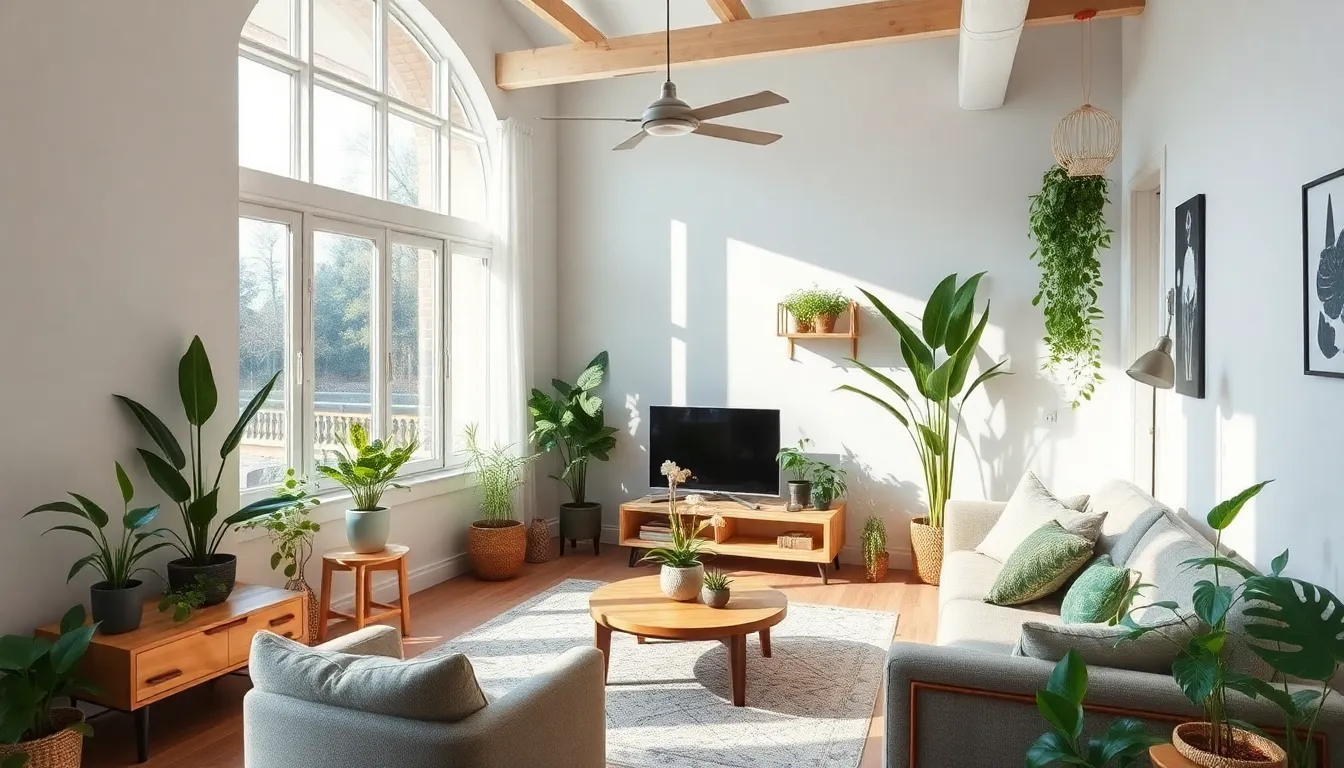

Imagine a living room that not only looks fabulous but also gives Mother Nature a high-five every time you walk in. Green living rooms are all the rage, blending style with sustainability in a way that’ll make your friends green with envy—pun intended. They’re not just a trend; they’re a lifestyle choice that transforms ordinary spaces into eco-friendly havens.
What Are Green Living Rooms?
Green living rooms utilize eco-friendly materials and practices to create stylish, sustainable spaces. Incorporating energy-efficient appliances reduces utility costs and minimizes the ecological footprint. Designers often use natural materials like stone, wood, and bamboo to enhance aesthetics while promoting sustainability.
Indoor plants play a crucial role in green living rooms, improving air quality and adding visual appeal. Selecting non-toxic paints and finishes also contributes to a healthier environment. Many individuals prefer upcycled or vintage furniture, which adds character and prevents waste.
Lighting choices significantly affect energy consumption. Opting for LED fixtures instead of traditional bulbs can lower energy bills and enhance room ambience. Natural light should be maximized through strategically placed mirrors and light-colored curtains.
Utilizing multifunctional furniture helps to reduce clutter and space usage. A sofa bed, for instance, offers seating during the day and converts into a sleeping area at night. Choosing textiles made from organic fibers like cotton and linen aligns with eco-friendly principles while providing comfort.
Design elements such as water-saving fixtures and smart home technologies further promote green living. Investing in smart thermostats and energy monitors encourages efficient energy use. Homeowners often strive to incorporate sustainable practices, making green living rooms a reflection of their values and lifestyle choices.
Benefits of Green Living Rooms
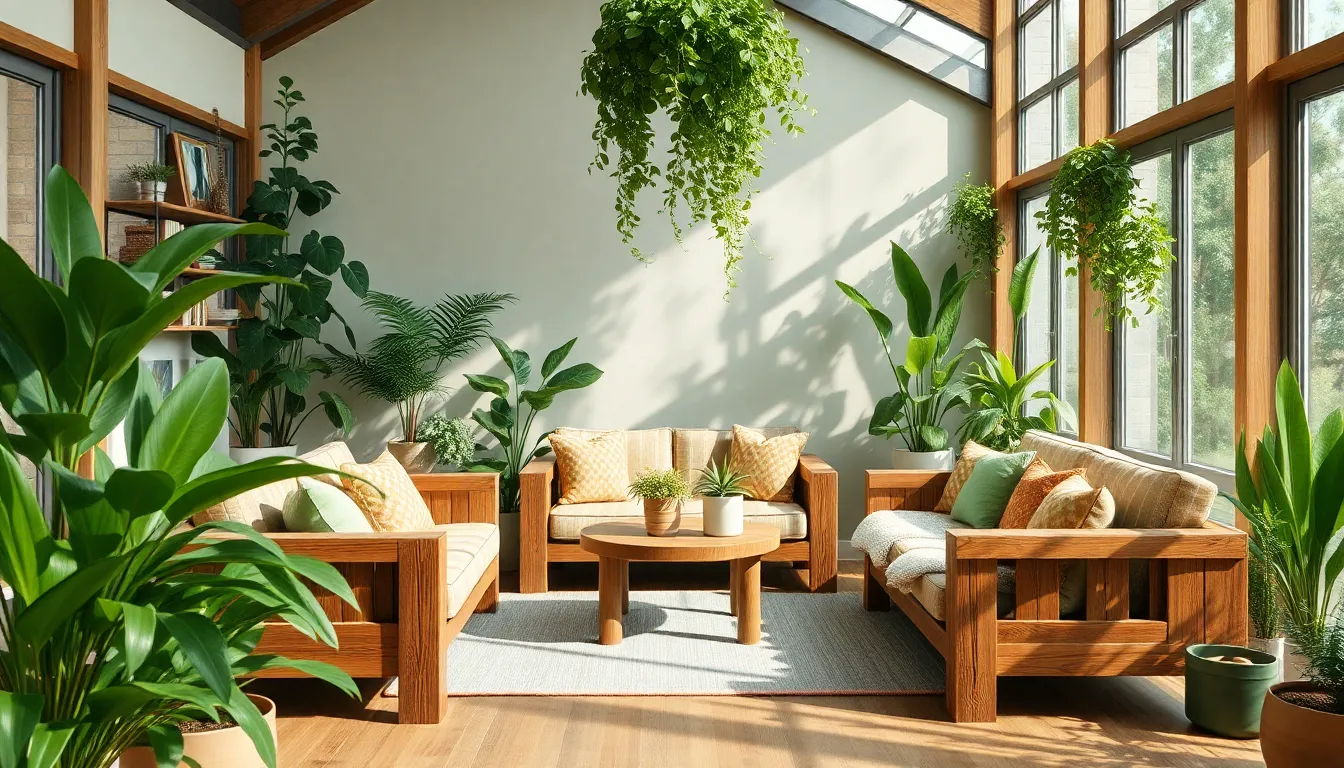
Green living rooms provide numerous advantages. They cater to environmentally conscious homeowners while enhancing comfort and style.
Environmental Impact
Green living rooms significantly reduce ecological footprints. Utilizing sustainable materials minimizes waste and conserves resources. Increased energy efficiency lowers utility costs, promoting financial savings. Incorporating energy-efficient appliances curtails energy consumption, further reducing environmental harm. The use of natural materials, such as bamboo and reclaimed wood, decreases the demand for new resources. Additionally, implementing indoor plants aids in carbon dioxide absorption, improving air quality. Maintaining a green living room aligns well with broader environmental goals, contributing to a healthier planet.
Health Benefits
Health improvements often accompany green living rooms. Natural materials and non-toxic paints minimize exposure to harmful chemicals. Indoor plants purify the air by removing toxins and increasing oxygen levels. This leads to better respiratory health and reduced allergy symptoms. Creating a soothing environment can lower stress levels, promoting overall well-being. Energy-efficient lighting supports eye health and enhances mood by providing adequate illumination. Homeowners experience an elevated sense of comfort and relaxation within these spaces.
Aesthetic Appeal
Aesthetic charm characterizes green living rooms. Natural elements create visually appealing spaces that foster tranquility. Warm wood tones, fresh greenery, and earthy textures deliver a harmonious atmosphere. Sustainable furniture pieces add character and charm, showcasing individuality. Open layouts maximize natural light, making spaces appear larger and more inviting. Thoughtful design choices emphasize both beauty and functionality, appealing to modern sensibilities. A well-designed green living room reflects a commitment to style and sustainability.
Key Elements of Green Living Rooms
Green living rooms incorporate various sustainable elements that enhance both style and environmental responsibility. These elements reflect a homeowner’s commitment to eco-friendly living.
Sustainable Furniture
Sustainable furniture stands out in green living rooms due to its minimal environmental impact. Crafted from reclaimed wood, bamboo, or recycled materials, it prevents waste and reduces deforestation. Choosing upcycled pieces adds character and uniqueness, showcasing creativity while promoting sustainability. Opting for durable items enhances longevity, affecting fewer resources over time. Additionally, manufacturers that prioritize sustainable practices often use non-toxic finishes, ensuring safety for inhabitants. This combination of durability, aesthetics, and eco-consciousness makes sustainable furniture essential in any green living space.
Eco-Friendly Decor
Eco-friendly decor items enhance the aesthetic appeal of green living rooms while aligning with sustainable practices. Selecting organic textiles, such as cotton or linen, contributes to a healthier environment by avoiding harmful chemicals. Using decor made from recycled materials not only minimizes waste but also adds a distinctive charm. Displaying indoor plants improves air quality while providing natural beauty, fostering a calming atmosphere. Incorporating locally sourced art or handcrafted pieces supports artisans and reduces carbon footprints associated with shipping. These decor choices reflect a homeowner’s values, marrying style with sustainability seamlessly.
Energy-Efficient Lighting
Energy-efficient lighting plays a crucial role in creating sustainable living spaces. Employing LED fixtures significantly lowers energy consumption compared to traditional bulbs, resulting in reduced utility costs. Choosing dimmable options allows for customizable ambiance while saving additional energy. Incorporating natural light through larger windows or skylights reduces reliance on artificial lighting during the day. Smart lighting systems contribute to energy management by adjusting automatically according to usage patterns. These strategies not only enhance the functionality of green living rooms but also support broader environmental goals.
Tips for Designing a Green Living Room
Crafting a green living room involves thoughtful choices focused on sustainability and style. Consider these essential elements for a well-designed space.
Using Natural Materials
Natural materials contribute to the eco-friendliness of a living room. Wood, bamboo, and stone offer durability while reducing the carbon footprint. Selecting reclaimed wood furnishings supports sustainability by repurposing existing resources. Many designers favor bamboo due to its rapid renewability and aesthetic appeal. Incorporating natural fibers, like jute or cotton, in rugs and curtains enhances comfort and promotes a breathable environment. Flooring options such as cork and bamboo not only add beauty but also provide insulation and lower environmental impact. Investing in quality pieces made from these materials ensures longevity and reduces waste.
Incorporating Plants
Plants play a crucial role in enhancing indoor air quality while adding beauty. Selecting a mix of indoor plants, such as snake plants and pothos, improves air purification naturally. A variety of greenery contributes to the wellness aspect of a space, promoting relaxation and reducing stress. Positioning large plants in corners can create a focal point and draw attention. Hanging plants or wall-mounted planters further utilize vertical space, making the room feel more vibrant. Regular maintenance fosters a connection to nature, enriching the living experience while supporting sustainable living practices.
Choosing Low-VOC Paints
Low-VOC paints help maintain healthier indoor air quality by minimizing harmful emissions. Selecting paints certified as low in volatile organic compounds offers peace of mind for residents. Many manufacturers provide a range of colors and finishes without compromising on aesthetics. Applying these paints retains the visual appeal of a space while ensuring safety. Opting for natural pigments in paint formulations supports environmentally conscious choices. Additionally, utilizing non-toxic finishes on furniture extends the sustainability aspect of the design. Choosing low-VOC products significantly enhances the overall sense of well-being within a green living room.
Creating a green living room goes beyond aesthetics; it embodies a commitment to sustainability and well-being. By integrating eco-friendly materials and energy-efficient solutions, homeowners can transform their spaces into havens of health and comfort. The thoughtful use of natural elements and non-toxic products not only enhances visual appeal but also contributes to a healthier indoor environment.
As more individuals embrace this lifestyle choice, green living rooms will continue to inspire creativity and innovation in design. Ultimately, these spaces reflect personal values while promoting a more sustainable future for everyone.

