
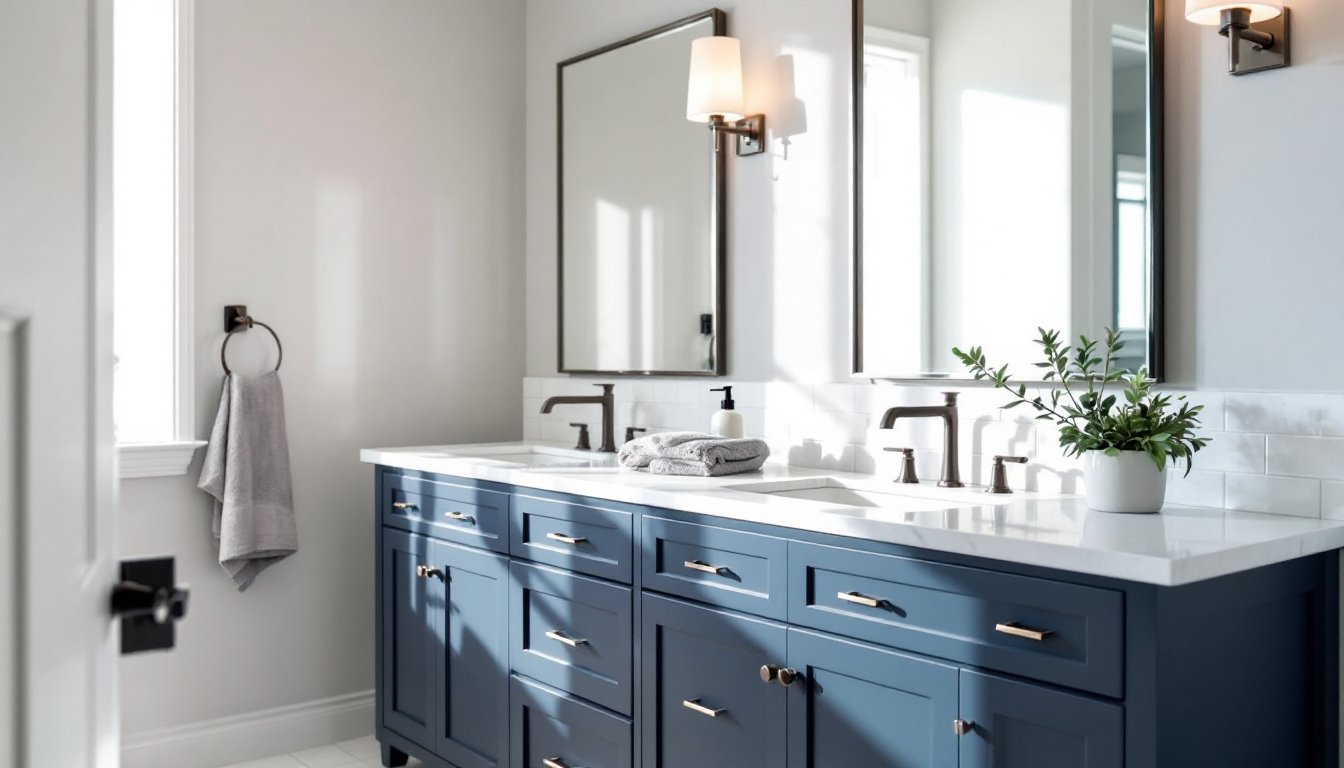

A blue vanity can be the anchor piece that transforms an ordinary bathroom into a space you actually enjoy spending time in. Whether you’re drawn to the timeless elegance of navy or the fresh simplicity of coastal blue, a blue bathroom vanity offers both visual impact and surprising versatility. The key is choosing the right shade and style for your home, one that complements your existing fixtures, mirrors your personal aesthetic, and stands up to daily use. This guide covers everything from selecting the perfect blue tone to pairing it with design styles that amplify its appeal, plus the practical know-how to install and maintain your new vanity. If you’re considering a bathroom refresh, you’ll find that blue vanity bathroom ideas range from subtle and sophisticated to bold and personality-driven, making it easier than ever to find an option that fits your space.
Table of Contents
ToggleKey Takeaways
- Blue vanity bathroom ideas work across multiple design styles—from contemporary and traditional to farmhouse and spa-inspired—making blue an exceptionally versatile choice for any bathroom aesthetic.
- Navy and deep blue vanities project luxury and timelessness while masking water spots better than lighter neutrals, though they require adequate task lighting to avoid feeling heavy in smaller or dimly lit spaces.
- Light and coastal blue options create a fresh, airy feel perfect for smaller bathrooms, while the right shade observed in your actual bathroom lighting (morning, noon, and evening) ensures the color complements your space.
- Pair your blue vanity with warm gold or brass hardware and mirrors for sophistication, or choose chrome and minimalist frames to maintain a modern, cool aesthetic.
- Proper ventilation with an exhaust fan running 20 minutes after showers protects your blue vanity from moisture damage, while regular soft cloth cleaning and annual caulk inspection keep the finish looking fresh for years.
- Accessorize strategically with white or neutral countertops, soft towels, and subtle accent colors to let your blue vanity remain the focal point without overwhelming the bathroom design.
Why Blue Vanities Are a Smart Choice for Modern Bathrooms
Blue has earned its place as one of the most popular vanity colors for good reason. It’s calming without feeling bland, sophisticated without requiring a design degree to pull off, and versatile enough to work in contemporary, transitional, and traditional spaces alike. Unlike trendy colors that can feel dated within a few years, blue, particularly in classic tones, holds up remarkably well over time.
From a practical standpoint, blue vanities also mask water spots and minor stains better than lighter neutrals. Daily moisture and splashing are inevitable in a bathroom, and a deeper blue finish forgives these everyday realities far more gracefully than white or pale gray. The color also pairs seamlessly with standard bathroom fixtures: brushed nickel, chrome, and oil-rubbed bronze all complement blue without competing for attention.
Another advantage? Blue works with almost any secondary color. Warm whites, soft grays, natural wood tones, and even warm accent colors like terracotta or blush can coexist peacefully with a blue vanity. This flexibility makes blue a low-risk choice if you’re planning a gradual bathroom renovation or simply want the freedom to change accessory colors down the road without replacing the vanity.
Choosing the Right Shade of Blue for Your Vanity
Not all blues are created equal, and the shade you choose will dictate the entire mood of your bathroom. The wrong tone can feel cold and institutional: the right one becomes a design statement. Before committing, get sample paint pots or stain samples and observe them in your bathroom’s actual lighting, morning light, noon light, and evening light all render color differently.
Navy and Deep Blue Tones
Navy and deep blue vanities project confidence and luxury. They work especially well in larger bathrooms where they won’t overwhelm the space, and they pair beautifully with white subway tile, marble countertops, or soft gray walls. Navy reads as classic and timeless: it’s bold enough to make a statement without feeling trendy.
One consideration with darker blues: make sure your bathroom has adequate lighting. A navy vanity in a dimly lit space can feel heavy or cave-like. Installing task lighting on either side of the mirror, with a color temperature around 3000K to 4000K, keeps the space feeling open and functional. Deep blues also benefit from lighter accents (white or cream trim, mirrors with reflective frames) to prevent visual heaviness.
Light and Coastal Blue Options
Light and medium blue vanities evoke relaxation and work beautifully in smaller bathrooms or spaces with limited natural light. These softer tones pair naturally with shiplap, white or soft-gray walls, and natural wood shelving. The look feels fresh and accessible, less high-design, more “favorite weekend cottage.”
Coastal blues (think pale blue-green or dusty blue) bridge the gap between pure blue and spa-inspired neutrality. They’re forgiving in various lighting conditions and pair well with both warm and cool accent colors. If you’re aiming for dark blue vanity bathroom ideas that still feel airy, a medium blue with white or cream cabinetry around the sink area creates visual interest while maintaining an open feel.
Design Styles That Pair Well With Blue Vanities
Your vanity’s shade should complement the overall style you’re building. A navy vanity in a minimalist bathroom reads differently than the same navy in a traditional or farmhouse setting.
Modern and Contemporary: Pair a navy or deep teal vanity with clean lines, minimal hardware, and neutral walls. Think flat-panel cabinetry, integrated storage, and perhaps a single-slab marble or engineered quartz countertop. Chrome or brushed nickel fixtures reinforce the contemporary feel. Resources like home decorating and interior design ideas showcase how modern bathrooms leverage color without ornamentation.
Traditional and Transitional: A medium or navy blue vanity works wonderfully in these settings, especially with raised-panel cabinetry, ornate mirrors, and classic brass or bronze hardware. Pair it with subway tile, white trim, and soft gray or warm white walls. This approach feels timeless and sophisticated.
Farmhouse and Cottage: Light or medium blue vanities with a slightly distressed or weathered finish align beautifully with this aesthetic. Add white shiplap, open shelving, vintage-style hardware, and perhaps a vintage mirror frame to complete the look. Natural wood accents (shelves, ladder racks) complement the softness of the blue.
Transitional Spa: A soft blue-green vanity with white accents, natural materials (wood, stone), and warm lighting creates a serene retreat feel. Incorporate plants, natural textures, and soft whites to enhance the spa aesthetic. Design inspiration from interior design trends and room makeovers can help visualize how color and texture work together in sophisticated bathroom settings.
Practical Tips for Installing and Maintaining Blue Bathroom Vanities
If you’re replacing an existing vanity, the install itself is straightforward for a competent DIYer. Turn off the water supply, disconnect the supply lines from the shutoff valves using an adjustable wrench, and unscrew the faucet mounting bolts from beneath the countertop. Unscrew any cabinet mounting bolts from the wall studs. Slide the old vanity out carefully (enlist help if it’s heavy), and check the wall and floor for damage. Fill any holes or uneven spots with spackle and sand smooth before the new vanity goes in.
When installing the new vanity, use shims, thin wooden wedges, to level it perfectly before securing it to the wall studs with appropriate fasteners (usually 2.5-inch cabinet screws). Check level in both directions. Once secured, you’ll reconnect supply lines, mount the faucet, and caulk around the base and countertop.
For maintenance, a blue vanity requires the same care as any bathroom cabinet: regular wiping with a soft, damp cloth, prompt cleanup of spills, and seasonal inspection for water damage around the sink and faucet. If your vanity has a painted or stained finish, avoid harsh abrasive cleaners that can dull the surface. Use bathroom-appropriate wood conditioner or polish annually to keep the finish looking fresh. Check the caulk around the countertop annually: if it’s cracking or peeling, remove it with a utility knife and re-caulk with quality silicone caulk rated for wet areas.
Moisture is the enemy of any wood vanity. Ensure your bathroom has adequate ventilation, an exhaust fan running during showers and for 20 minutes after keeps humidity at bay. If you notice any soft spots, discoloration, or odors, address them immediately, as they signal water damage that requires professional assessment.
Accessorizing Your Blue Vanity for Maximum Impact
The vanity is the stage: accessories are the performance. Smart accessory choices amplify the impact of your blue vanity without overwhelming the space.
Mirror and Frame: A mirror above the vanity commands attention. For a navy or deep blue vanity, consider a mirror with a gold, brass, or substantial wood frame to add warmth and sophistication. For lighter blue vanities, a white, natural wood, or minimalist frame keeps the look fresh and contemporary. A frameless mirror works in modern settings: ornate frames suit traditional spaces. A low-key luxe bathroom with detailed tile and design elements demonstrates how the right mirror complements color and materials beautifully.
Lighting: Sconces flanking the mirror (or a single bar fixture above it) should emit warm white light, around 2700K to 3000K feels inviting and flattering. Position them at eye level when standing, roughly 36 inches apart, to minimize shadows.
Hardware: Cabinet pulls and knobs set the tone. Brass or gold finishes warm a navy vanity: chrome or brushed nickel keeps it cool and modern. Leather or linen pulls add texture and soften the visual weight. Choose hardware that suits your style, mismatched hardware intentionally chosen (one style for drawers, another for cabinet doors) is on-trend in eclectic designs.
Countertop and Backsplash: White, cream, light gray, or marble countertops provide brightness and balance against a blue vanity. A simple white subway tile or marble backsplash is timeless: consider a slightly bolder tile pattern if your design style embraces it. The countertop is a high-touch surface, engineered quartz or honed marble stands up beautifully to daily use and won’t require the maintenance that softer natural stones demand.
Textiles and Accessories: Soft whites, grays, or warm neutrals in towels, bath mats, and shower curtains let the blue vanity remain the focal point. A single accent color (soft gold, blush, or sage) in a small textile or accessory adds personality without clashing.