
Countertops take up real estate in your kitchen and bathroom, and they set the tone for the entire space. But a full replacement with premium materials like quartz or granite can easily run $5,000 to $15,000+. The good news? You don’t need to drain your bank account for countertops that look polished and perform well. Plenty of cheap countertop ideas deliver real style and durability without the price shock. Whether you’re doing a full renovation or just refreshing what’s there, affordable options like laminate, butcher block, concrete, and tile give you genuine choices that work with most budgets and design tastes.
Table of Contents
ToggleKey Takeaways
- Cheap countertop ideas like laminate, butcher block, concrete, and tile offer genuine style and durability at $10–$50 per linear foot, making premium materials like quartz and granite unnecessary for most budgets.
- Laminate countertops remain a wallet-friendly workhorse at $10–$20 per linear foot with versatile finishes mimicking natural stone, though edges can chip and seams may allow water seepage over time.
- Butcher block brings warmth and character to kitchens at $25–$50 per linear foot and is DIY-friendly, but requires annual resealing and proper maintenance to prevent water damage and warping.
- Concrete and tile countertops are ideal for DIYers seeking customization, offering creative freedom with concrete at $15–$40 per linear foot and tile at $2–$8 per square foot, though both require periodic sealing.
- Refinishing existing countertops costs just $3–$10 per linear foot and can transform dated surfaces in a weekend, making it the cheapest path to a refreshed kitchen before considering full replacement.
- Recycled glass and composite materials provide eco-friendly, non-porous alternatives at $20–$40 per linear foot that combine affordability with upscale appearance and sustainability.
Laminate Countertops: Classic, Durable, and Wallet-Friendly
Laminate has been the workhorse of budget kitchens for decades, and honestly, modern laminates look nothing like the dated patterns of the 1990s. High-pressure laminate (HPL) bonds a decorative layer to a plywood or particle board substrate, creating a non-porous, easy-to-clean surface. Pricing runs $10–$20 per linear foot installed, making it one of the cheapest countertop materials on the market.
Where laminate shines is versatility. Manufacturers offer hundreds of finishes mimicking natural stone, wood, and metals. They’re scratch-resistant enough for everyday kitchen use and can handle heat from a pot briefly, though you’ll want trivets for hot cookware. Laminate won’t stain or harbor bacteria, and cleanup is as simple as soap and water.
The trade-off? Edges can chip if bumped hard, and seams (where two sheets meet) aren’t invisible. Water seeping under the edge can swell the substrate over years. Avoid cutting directly on laminate and always use a cutting board. If you need durability in a rental or temporary kitchen, laminate delivers solid performance at a fraction of other costs.
Butcher Block and Wood Countertops: Warmth Without the Price Tag
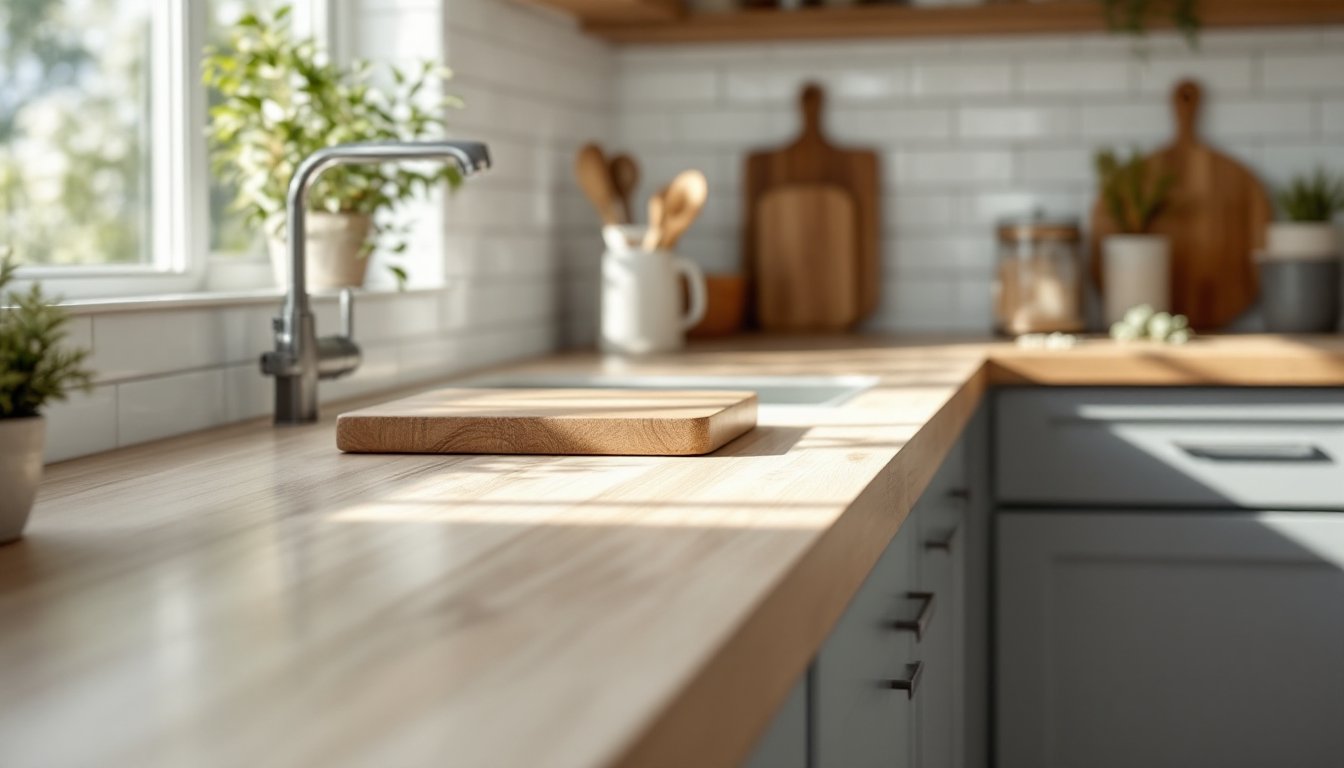
Wood brings unmatched warmth to a kitchen, and butcher block, solid strips of hardwood glued edge-to-edge, is the affordable wood option. Prices range from $25–$50 per linear foot, depending on wood species. Walnut and cherry cost more: birch and maple are friendlier to budgets.
Butcher block is DIY-friendly if you’re handy. Many suppliers sell it pre-finished or unfinished. If unfinished, you’ll sand and apply food-safe mineral oil or polyurethane (which offers more protection than oil). The real work is finishing, plan 2–3 coats with sanding between coats, but it’s doable over a weekend with basic tools.
Keep expectations realistic: wood is porous and needs maintenance. It’ll show water marks and can warp if moisture sits on it. That said, wood develops character over time, minor dents and stains become part of its charm. Avoid placing the sink directly on wood countertops: consider placing one area in stainless steel or another water-resistant material. Reseal annually with food-safe oil. If you love the idea of warm, organic countertops and don’t mind a bit of upkeep, butcher block is genuinely affordable and rewarding.
Concrete Countertops: DIY-Friendly and Customizable
Concrete is the choice for DIYers who want something bespoke without hiring a fabricator. Custom poured-in-place or precast concrete runs $15–$40 per linear foot and can be tailored with color, texture, and embedded objects (stones, glass, seashells). It’s also surprisingly forgiving to install yourself.
For a DIY pour, you’ll build a form (essentially a box) fitted over your existing cabinets, mix concrete, pour it, finish the surface, and seal it. The learning curve is real, expect some trial on your first attempt, but it’s absolutely achievable over 2–3 weekends. Concrete Academy and YouTube channels dedicated to polishing and sealing concrete offer step-by-step guidance.
The catch: concrete is porous and requires sealing every 1–2 years to resist stains and water. Acidic foods (lemon, vinegar) can etch the surface unless sealed well. Heat resistance is good, concrete doesn’t mind a hot pot, but standing water will damage it. You’ll also notice hairline cracks over time: they’re cosmetic and normal unless something structural shifted. If you’re willing to embrace a material that patinas and improves with age, concrete offers creativity and affordability.
Tile Countertops: Endless Style Options on a Budget
Tile is the most forgiving budget countertop for DIYers and offers almost infinite design freedom. Ceramic and porcelain tiles cost $2–$8 per square foot (plus grout and installation), and you can mix colors, sizes, and finishes for a completely custom look. Unlike factory countertops, you design the pattern as you lay it.
The process: remove old countertops, install cement board (a waterproof substrate), set tiles in thin-set mortar using a notched trowel, grout the joints, and seal grout. If you’ve ever tiled a shower, countertops use the same technique. Grout lines do collect crumbs and need occasional sealing, but they’re part of the aesthetic. Stick with closed-joint spacing (wider grout lines) rather than trying to achieve seamless gaps, it’s easier and more forgiving.
Pick porcelain over ceramic if possible: it’s denser and less prone to chipping at edges. Avoid glossy finishes that show fingerprints and water spots: matte or textured tiles hide imperfections. The main drawback is maintenance: grout can stain, and the slight unevenness of hand-laid tile (compared to a flat surface) can make some cutting boards wobble. If you’re comfortable with a little character and want affordable design flexibility, tile is unbeatable.
Recycled Glass and Composite Materials: Eco-Friendly Savings
Recycled glass and composite countertops blend affordability with sustainability. Recycled glass composite, crushed glass suspended in resin or concrete, costs $20–$40 per linear foot and adds visual interest with sparkle and color. Recycled plastic composites are similar in price and offer durability with an eco-conscious story.
These materials are non-porous, stain-resistant, and handle heat reasonably well. They look custom and upscale while remaining budget-friendly. Installation is similar to laminate or tile, depending on the product. Many are available as prefabricated slabs, so you don’t need to pour or finish anything yourself, just drop them in.
The downsides are limited: resin-based composites can yellow slightly over decades under direct sunlight, and some brands feel less substantial than stone. That said, if you want something durable, unique, and gentler on your wallet and the planet, recycled glass or composite materials deliver on all fronts. Check product reviews and warranties before committing, as quality varies widely between manufacturers.
Refinishing Existing Countertops: Transform What You Have
Before you rip out counters, consider refinishing them. If your existing countertops are structurally sound but dated or damaged, refinishing costs $3–$10 per linear foot and transforms them in a weekend.
Laminate renewal: Sand with 150-grit paper, apply laminate repair filler to any chips, sand smooth, then apply two coats of polycrylic or laminate paint. The finish won’t be as durable as factory laminate, but it looks fresh and buys you years before replacement.
Concrete sealing and staining: If you have bare or worn concrete, grinding and sealing it like a showroom floor takes a weekend and costs minimal materials. Concrete stain (which penetrates the surface rather than sitting on top like paint) creates rich color without peeling.
Tile reglazing: Worn tile can be reglazed by professionals or even with DIY kits. It’s faster and cheaper than removal and installation.
Resources like The Kitchn and Remodelista showcase before-and-after transformations that prove refinishing delivers surprising results. If your countertops are solid but tired, refinishing is the cheapest path to a refreshed kitchen. Many homeowners find the result so satisfying they skip full replacement altogether.
Conclusion
Affordable countertops don’t mean settling for less. Laminate, wood, concrete, tile, and composite materials each offer genuine style and performance when matched to your lifestyle. The key is choosing a material that fits your budget, your willingness to maintain it, and your design vision. Start by assessing your daily use: do you need stain resistance, heat tolerance, or easy cleanup? Then pick the option that delivers. Whether you’re going the DIY route or having professionals install, cheap countertop ideas prove you can upgrade your kitchen without spending like a contractor.