
Your staircase doesn’t have to be a blank canvas. The wall running alongside, or behind, those steps is prime real estate for personality, color, and design. Whether you’re working with a cramped hallway staircase or an open, dramatic flight, stair wall decor ideas can turn an overlooked transition zone into a focal point. Modern stair wall decor spans gallery walls and wallpaper treatments to floating shelves and ambient lighting. The best approaches balance aesthetics with practicality, accounting for foot traffic, shadows, and the unique angles that stairs create. This guide covers 12 solid, actionable ways to refresh your stairway wall decor, from budget-friendly paint tricks to statement-making installations that don’t require a contractor’s license.
Table of Contents
ToggleKey Takeaways
- Stair wall decor ideas transform overlooked stairwell spaces into focal points by combining gallery walls, paint, shelving, and ambient lighting tailored to your home’s layout.
- A well-planned gallery wall requires pre-layout on kraft paper, proper anchoring to studs, and consistent frame finishes with 2–3 inches of spacing for visual breathing room.
- Paint is the fastest stair wall decor upgrade; choose an accent color like navy, sage, or terracotta and prime all repairs before applying two coats of quality interior paint.
- Floating shelves mounted on studs (12–18 inches apart) create functional display zones when filled with a mix of items using the ‘rule of three’ for visual balance.
- Layered lighting solutions—overhead task lights, mid-height sconces, and warm white LEDs (2700K)—both illuminate the staircase and highlight your decor while meeting building code safety requirements.
- Budget-friendly updates like peel-and-stick wallpaper, DIY framed artwork, plants on shelves, and chalkboard paint deliver high-impact personality changes for under $100 without contractor involvement.
Gallery Wall Layouts For Visual Impact
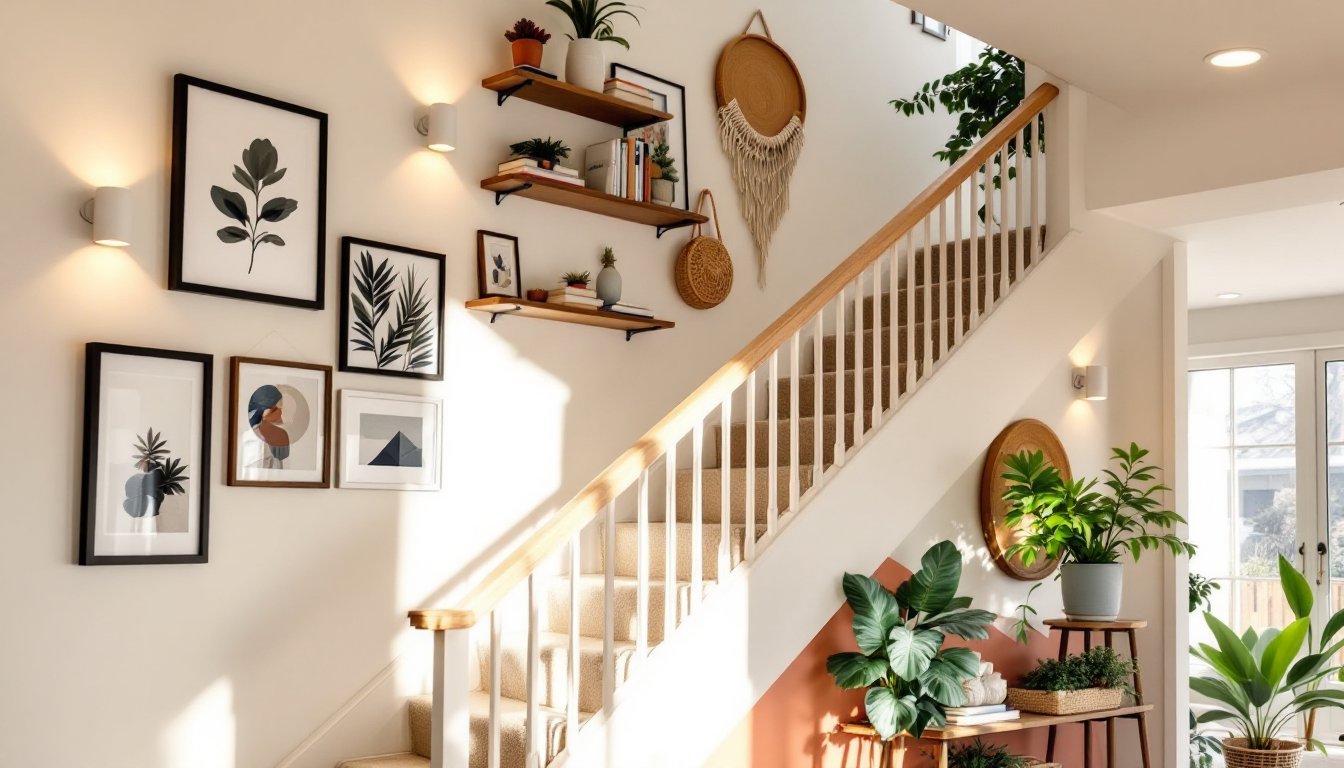
A gallery wall transforms a long, monotonous stairwell into an evolving visual story. The key is planning the layout before you hammer a single nail. Start by laying out frames and artwork on the floor, or sketch the arrangement at full scale on kraft paper taped to the wall. Include a mix of frame sizes and finishes (white, black, natural wood, metal) to avoid a too-matchy look. Aim for 2–3 inches of space between frames for breathing room, though symmetrical grids work if you prefer order.
Use a level and a tape measure to mark stud locations. Most stairs have about 16 inches on-center wall studs, which is handy for anchoring heavier pieces. For drywall-only sections, toggle bolts or heavy-duty picture hangers rated for your frame weight are essential. Start with the center frame and work outward, double-checking alignment as you go. Artwork options run the gamut: family photos, prints from retailers like The Spruce, abstract art, or even pressed botanicals. Keep the gallery cohesive by sticking to a color palette (blacks and whites, muted pastels, or earth tones) and limiting yourself to 2–3 frame styles.
One pro tip: hang frames slightly above eye level as you ascend the stairs, since sight lines shift as you move up the flight. This creates a natural, comfortable viewing experience rather than a disjointed one.
Wallpaper And Paint Techniques
Paint is the fastest stair wall decor upgrade, and wallpaper adds depth and texture where plain drywall falls flat. For paint, accent colors work best, think a rich navy, soft sage, or warm terracotta running up one wall while the rest of the house stays neutral. This draws the eye upward and makes the staircase feel intentional, not accidental.
Prep is non-negotiable here. Fill nail holes and dings with spackle, sand smooth once dry, and wipe the wall with a tack cloth to remove dust. Prime any repairs or dark existing colors before applying finish paint: two coats of quality interior paint ensure even coverage. Plan on about 350–400 square feet per gallon for standard drywall, though angles and texture may affect this.
Wallpaper adds luxury with minimal effort once you get it up. Peel-and-stick options from budget retailers work for test runs, though traditional wallpaper (applied with adhesive paste) lasts longer and handles stairs’ bumps and creases better. Measure the wall height and width, add 4 inches for trimming, and buy one extra roll to account for pattern matching. Installation on stairs can be tricky, corners and angled sections require patience and a smoothing tool. If you’re new to wallpaper, resources from Addicted 2 Decorating walk through hanging techniques step by step. Consider matte or velvet finishes for a sophisticated feel: glossy finishes can feel dated on stair walls.
Floating Shelves And Functional Displays
Floating shelves turn stairway walls into curated display zones without the visual weight of a full bookcase. They’re also forgiving, a few objects artfully arranged often beats an empty wall. Install shelves on studs whenever possible: use lag bolts or heavy-duty floating shelf brackets rated for at least 25 pounds per shelf (the actual weight of shelf plus contents will be lower, but overspec is safer).
Measure twice before drilling. Shelves should be 12–18 inches apart vertically for comfortable viewing and comfortable clearance if someone reaches for an object. Stagger shelves on opposite walls to create rhythm and avoid a boxy appearance. Keep the staircase functional, don’t crowd shelves so much that they obstruct sightlines or create dust-collection zones.
Fill shelves with a mix of personal items: framed photos, small plants (real or high-quality faux), decorative boxes, and a few books. Lean some items, stack others, and leave breathing room. The “rule of three” (grouping objects in threes) creates visual balance. Consider installing shelves at varying heights along the ascent, almost like a timeline or progression. If your stairwell has corners or alcoves, those are goldmines for shallow shelving that adds dimension without eating floor space.
Lighting Solutions That Elevate Your Stairs
Lighting is underrated in stairwell design. A well-placed sconce or strip light not only illuminates the path but creates ambiance and highlights whatever stair wall decor you’ve installed. Recessed lights or small LED puck lights in the ceiling cast downward glow: picture lights above artwork draw attention to gallery walls: and wall-mounted sconces at mid-height create a hotel-like polish.
If your home doesn’t have dedicated stairwell wiring, battery-operated LED puck lights or adhesive strips are a rental-friendly starting point. For permanent installations, run NM (Romex) cable between studs from an accessible junction box, or hire a licensed electrician if you’re not comfortable working with 120V circuits. Most building codes require at least one light source for interior stairs: check your local IRC (International Residential Code) to confirm.
Warm white LEDs (2700K color temperature) feel inviting: cool white (4000K+) suits modern, minimalist decor. Dimmers add flexibility, bright light for safety, dim light for evening ambiance. Position lights to avoid harsh shadows on artwork or to highlight texture in wallpaper or painted finishes. The goal is layered lighting: overhead for task, sconces for accent, and perhaps a hidden LED strip along a shelf edge for subtle drama.
Nature-Inspired Decor And Plants
Staircases can feel sterile or industrial, but plants and natural materials warm them up. Real plants thrive on stairwells with indirect, filtered light, pothos, philodendron, and snake plants tolerate shade and dry indoor air. Place smaller pots on floating shelves, or hang trailing varieties in macramé or simple ceramic holders from eye bolts screwed into studs. Water infrequently (these plants prefer drying out between waterings) and wipe leaves quarterly to dust.
If natural light is dim, high-quality faux plants from retailers like Young House Love have gotten convincing. Cluster them in groups of three or five, mixing textures and pot colors, rather than scattering singles. Wooden frames, woven baskets, and stone accents echo nature without clutter. A simple canvas print of a forest, mountain, or botanical illustration fits seamlessly into stairway wall decor ideas. Color-wise, greens, warm neutrals, and soft blues complement most interiors.
One caution: stairwells can swing in temperature and humidity if exterior walls are involved. Check that plant placement doesn’t interfere with traffic or create a hazard, falling pots are a liability. Anchor heavy planters to shelves with museum wax or by securing them in bases that won’t tip.
Budget-Friendly Updates And DIY Projects
You don’t need a five-figure renovation to refresh stair wall decor. A fresh coat of paint costs under $100 and is the most bang-for-buck upgrade. Pick a color from a paint sampler chip, grab a quart to test on a 2×3 foot section, and live with it for a few days before committing. Mistakes are forgiving if you’re painting over existing color.
DIY artwork is another no-cost option. Print photos on cardstock, mount them in budget frames, and arrange as a gallery. Or sketch your own abstract designs, frame them in mismatched wooden frames from thrift stores, and layer with string art or handwritten quotes. String lights, cheap, cheerful, and rental-friendly, drape around artwork or along shelves. Fabric scraps stapled to stretcher bars create instant “art” in whatever color scheme you’re targeting.
Another hack: paint a stairway wall with chalkboard or whiteboard paint (available at hardware stores for $20–$30 per quart). Families love rotating quotes, art, or seasonal messages. Or use removable wallpaper samples as temporary decor: peel them off when you want to change the look. The key is starting small and building, a painted accent wall, then one floating shelf, then artwork. This approach spreads cost and lets you refine your style without overcommitting. Transform Your Space: Creative hallway inspiration for more ideas on adjacent spaces.
Conclusion
Stair wall decor isn’t an afterthought, it’s an opportunity to inject personality into a high-traffic zone. Start with one or two ideas from this list: a bold paint color, a small gallery wall, or ambient lighting. Plan your layout, prep your surfaces, and measure twice before cutting or hanging. Most projects are approachable for a handy homeowner: complex electrical work or structural concerns warrant a pro. Over time, layer in additional decor until your staircase becomes a genuine design feature you’re proud to show off.