
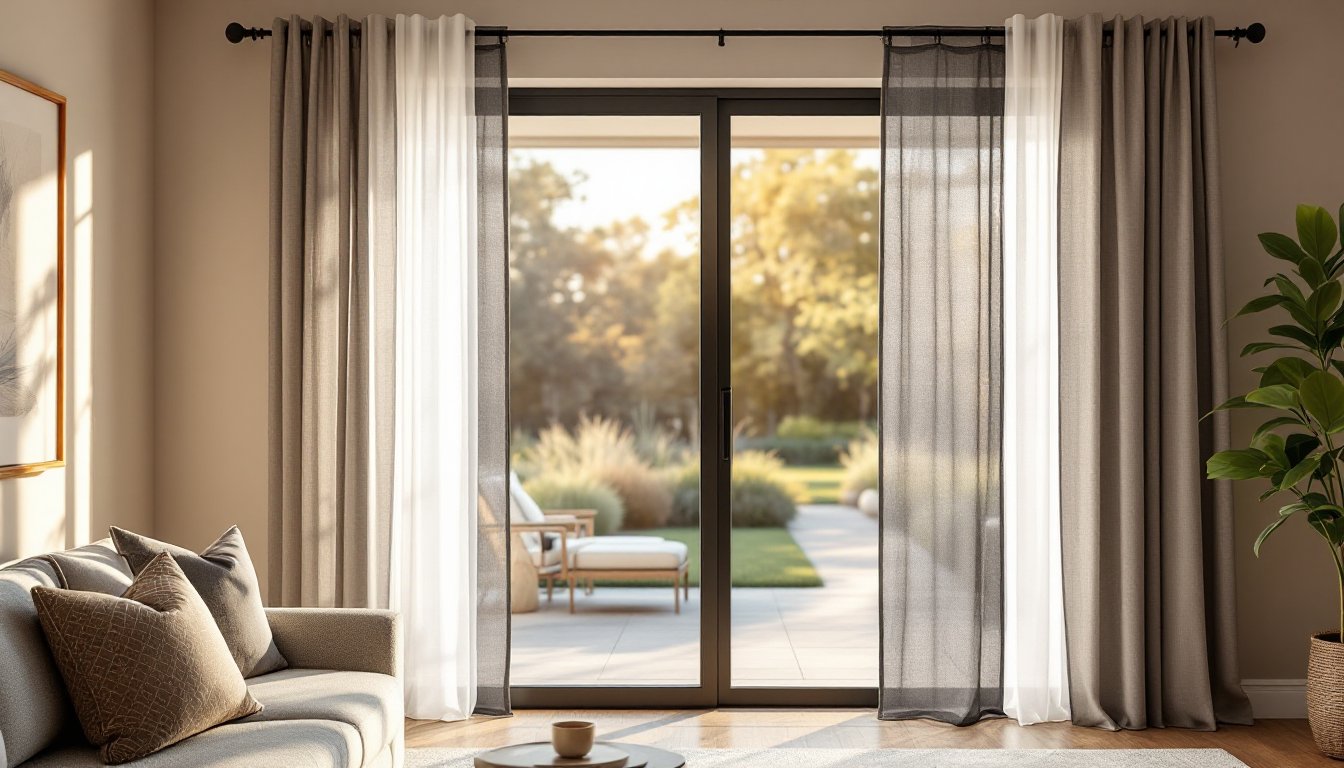

Sliding glass patio doors flood a room with natural light and create that seamless connection to the outdoors, but they’re also a blank canvas that most homeowners leave unfinished. The right curtains on your patio door can tie together your entire living space, control glare and heat gain, and give you privacy without blocking the view. Whether you’re after elegant sheer panels or weatherproof outdoor fabrics, sliding patio door curtain ideas run the gamut from simple to sophisticated. This guide walks you through seven proven approaches to outfit your sliding glass patio doors with style and function, helping you pick the setup that fits your home’s needs and your design vision.
Table of Contents
ToggleKey Takeaways
- Sliding glass patio door curtain ideas range from elegant sheer panels for light filtering to blackout curtains for privacy and thermal control, with outdoor fabrics offering durability for exposed porches.
- Sheer curtains in neutral tones let diffused light through while preserving your view, and installing rods 6 to 12 inches beyond the door frame ensures panels clear the glass when fully drawn.
- Layered curtain setups with a sheer underneath and heavier privacy drape on top provide maximum flexibility and designer-quality aesthetics while improving temperature control.
- Outdoor-rated fabrics like solution-dyed acrylic resist fading and mildew better than standard indoor curtains and should be paired with rust-resistant stainless steel or powder-coated hardware.
- Motorized smart curtain systems offer convenient automation and light scheduling but are optional for most DIYers; manual rod systems with lightweight panels deliver solid value without electronics to maintain.
- Neutral color palettes and subtle patterns coordinate with most interiors, while bold geometric prints suit modern spaces—always test fabric samples near your door under different lighting before purchasing.
Sheer Curtains for Elegant Light Filtering
Sheer curtains are the go-to choice when you want to soften natural light without killing the view. Unlike blackout panels, sheers let diffused sunlight pour through while taking the edge off direct rays that can fade furniture and create hot spots on your floor.
For sliding patio doors, lightweight linen or voile sheers work best because they hang cleanly and don’t add bulk to the track mechanism. Opt for panels in neutral tones, white, cream, or soft gray, so they complement any décor. If you’re worried about nighttime visibility, stack two panels on each side of the door so they can slide to the center when you want full coverage.
One practical tip: make sure your sheers reach the floor without bunching. Measure from the top of your sliding door frame to the floor, then add 2 to 4 inches for a graceful pooled or kissing hem effect. Install your rod slightly wider than the door frame (usually 6 to 12 inches beyond each side) so panels clear the glass when fully drawn.
Sheer sliding patio door curtains are especially smart in kitchens and dining areas where you want ambient light during the day but modest privacy at night. They’re also budget-friendly and require minimal hardware, a simple tension rod or standard drapery rod rated for the fabric weight will do the job.
Blackout Curtains for Privacy and Temperature Control
Blackout curtains are engineered with a dense, light-blocking weave (often with a foam or acrylic backing) that cuts glare, blocks most outside light, and seriously improves thermal performance. They’re essential if your bedroom door opens to a busy street, a neighbor’s property, or if you’re battling afternoon sun blaze in a west-facing room.
When picking blackout panels for a sliding patio door, look for options labeled “100% blackout” or “room-darkening.” Thermal-backed varieties offer better insulation: they can reduce heat loss by 25% or more in winter and keep summer heat out when properly installed. Blackout fabrics come in various styles, modern solids, subtle textures, and even patterned designs that don’t scream “darkroom.”
Installation is straightforward: hang a blackout rod just like you would a sheer, but use a heavier-duty bracket rated for the extra weight. A standard 1-inch diameter rod works fine for most residential doors. Make sure brackets are secured to wall studs or use heavy-duty anchors if mounting between studs. Blackout panels tend to be heavier than sheers, so overhanging the door frame by 8 to 10 inches on each side helps block light leaks around the edges.
These curtains are especially valuable in bedrooms or home theaters where you control the ambiance and need reliable privacy. They’re also a smart retrofit in older sliding doors with poor sealing, as they add an extra insulation barrier.
Outdoor Fabrics That Weather the Elements
If your patio doors open directly onto a covered or semi-exposed porch, standard indoor curtains will mildew, fade, and degrade quickly. Outdoor-rated fabrics like solution-dyed acrylic, polyester blends, and marine-grade materials are engineered to withstand moisture, UV exposure, and temperature swings without rotting or losing color.
Solution-dyed acrylic is the workhorse of outdoor curtain fabric. Color is locked into the fiber during manufacturing, so it resists fading far better than screen-printed designs. Sunbrella and similar premium brands offer 10-year fade warranties. These fabrics are water-resistant (though not waterproof), breathe well enough to prevent mildew, and are easy to clean, a garden hose rinse or mild soap and water usually does the trick.
When installing outdoor fabrics on a sliding patio door, use rust-resistant hardware: stainless steel or powder-coated aluminum rods and brackets. Standard steel will corrode quickly in humid or coastal climates. Check the fabric’s weight rating: outdoor-grade panels typically weigh 10 to 16 ounces per linear yard, so you’ll need brackets rated for heavier loads than indoor sheers.
Hang outdoor curtains about 1 to 2 inches away from the door frame to allow air circulation around the panel, which helps prevent moisture buildup and mildew. If the porch isn’t fully covered, consider panels with grommets or rustproof D-rings so water doesn’t pool in hem pockets. Outdoor fabrics cost 30% to 50% more than indoor options, but the durability payoff is worth it if your doors face weather.
Layered Curtains for Versatile Design
Layering two different panels, typically a sheer underneath and a heavier drape on top, gives you maximum flexibility. During the day, draw the sheer to soften light while keeping the view open. At night or when you need privacy, close the heavier panel. This combo works especially well on sliding patio door curtain ideas because you get aesthetic appeal plus functional control.
For layering, install two rods on the same mounting surface: the inner rod holds the sheer, and the outer (wider) rod holds the privacy curtain. Space them 6 to 8 inches apart to prevent binding. Use a 1-inch inner rod and a 1.25 or 1.5-inch outer rod so the heavier panel doesn’t sag into the sheer when drawn.
Color and texture play a big role in layered design. Pair a neutral sheer with a bold, patterned drape in jewel tones, warm neutrals, or even a subtle geometric print. Many homeowners pair crisp white sheers with soft linen or cotton blends in tan, charcoal, or sage. The combination feels intentional and designer-quality without requiring professional installation.
Layered setups also help with temperature control. Closed sheers alone provide modest thermal benefit, but add a blackout or thermal drape on top and you’re looking at significant insulation gains. This approach is ideal for living rooms and master bedrooms where you want the flexibility to adjust light and privacy throughout the day without constantly opening and closing a single panel.
Motorized and Smart Curtain Solutions
Smart motorized curtains are no longer just luxury fixtures, they’re increasingly affordable and practical for busy homeowners who want to automate light control, set schedules, and reduce glare with a phone tap or voice command. Motorized tracks fit most standard sliding patio door openings and can handle moderate to heavy fabrics.
These systems typically include a motor-driven rod, wall-mounted remote, and optional app or voice-assistant integration (compatible with Alexa, Google Home). Installation requires a 110V outlet nearby (or battery-backup options for wireless units), so you may need an electrician to run power to your patio door wall, a job that shouldn’t require a permit in most jurisdictions unless you’re rewiring a circuit.
Motorized curtains shine when you’re managing multiple doors or want passive shading that responds to time of day. Set them to close automatically at sunset for privacy, or schedule morning opens to wake you with light. Some advanced systems include light sensors that adjust panel position based on outdoor brightness, which is handy for protecting furniture from fading or reducing air-conditioning load on hot days.
Cost ranges widely: basic motorized systems start around $300 to $500 for a single door setup (hardware only: fabric is extra), while premium smart-home-integrated solutions run $800 to $1,500+. Installation is straightforward if power is already nearby: otherwise, budget for an electrician. While motorized curtains add convenience, they’re optional unless you have mobility issues or control multiple doors simultaneously. For most DIYers, manual rod systems paired with lightweight panels offer good value and zero electronics to maintain.
Color and Pattern Ideas That Match Your Décor
The color and pattern you choose sets the tone for your entire room. Sliding patio door curtains are a large visual element, so they should coordinate with your wall color, furniture, and trim, not fight against them.
Neutral palettes (white, cream, taupe, gray, charcoal) are timeless and let your view shine. They pair well with nearly any interior style and won’t feel dated in five years. If you want subtlety, choose a tone slightly lighter or darker than your walls to create gentle definition without drama.
For pattern, consider scale and intensity. Large geometric prints work in modern or eclectic spaces and make a confident statement. Smaller, subtle patterns (tone-on-tone stripes, small florals, abstract textures) blend into traditional or transitional rooms and feel sophisticated. Solid linen-look fabrics with natural weave texture add dimension without bold pattern, a safe middle ground.
Regional influences matter too. According to Southern Living, soft whites, creams, and botanical-inspired patterns suit traditional Southern homes. Modern décor often leans toward solid dark grays or charcoals paired with sleek hardware, while farmhouse styles embrace cream or natural linen with simple rod-pocket or tab-top headers.
Before buying, grab fabric samples and hang them on or near your door for a few days. See how they look in morning light, afternoon glare, and evening ambient lighting. Order swatches from multiple manufacturers to compare quality, weight, and color consistency under different conditions. Resources like The Spruce and Decoist offer endless color combination galleries if you’re stuck deciding which shades complement your space best.
Conclusion
The right curtains on your sliding patio doors improve comfort, protect your furnishings, and tie your indoor and outdoor living areas together visually. Whether you choose elegant sheers, practical blackouts, durable outdoor fabrics, layered designs, smart automation, or colors that match your décor, start by measuring your door frame accurately and choosing hardware rated for your fabric weight. Install brackets into wall studs or use heavy-duty anchors, and don’t skip the small details, proper spacing from the wall, floor-length panels, and rust-resistant hardware all add up to a professional-looking install that lasts. Pick the approach that fits your lifestyle and budget, and you’ll enjoy your patio doors with confidence and style.