
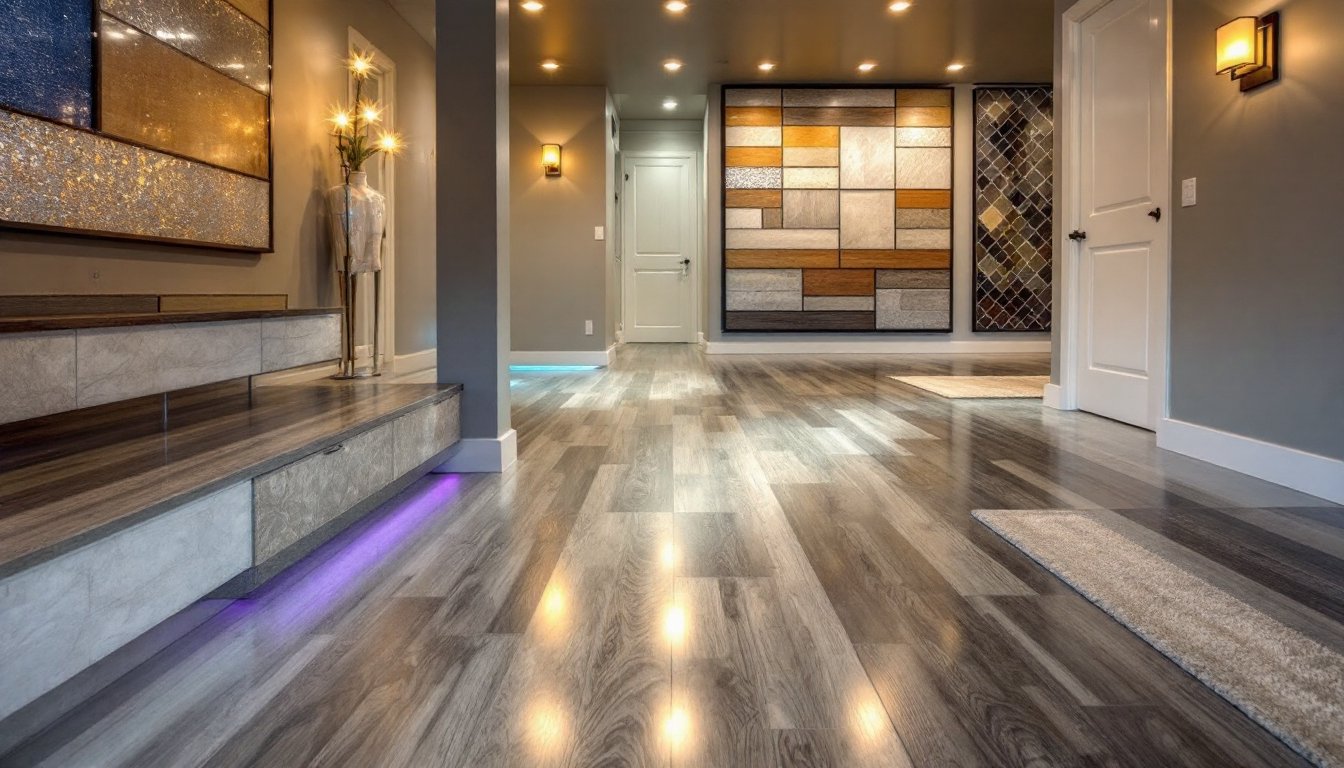

A basement sits below grade, making it one of the toughest spaces in a home to get right with flooring. Moisture, temperature swings, and limited natural light all demand smarter material choices than upstairs rooms. But here’s the good news: basement flooring ideas have evolved far beyond gray concrete slabs. Whether you’re finishing a rough space or refreshing an existing basement, today’s options blend durability, style, and moisture resistance in ways that work for real budgets and real homes. This guide walks through the best basement flooring solutions, helping you pick the right material for your specific needs.
Table of Contents
ToggleKey Takeaways
- Basement flooring ideas must prioritize moisture resistance and durability due to below-grade conditions including humidity, temperature changes, and potential water exposure.
- Concrete epoxy provides a cost-effective, durable finish ($3–8 per square foot) that lasts 10–15 years, but requires proper surface prep and ventilation during application.
- Luxury vinyl plank is genuinely waterproof, comfortable underfoot, and easier to install than tile or polished concrete, making it ideal for basements with moisture concerns ($2–5 per square foot).
- Porcelain tile offers 25+ year lifespan and superior moisture resistance, especially when paired with epoxy or polymer-modified grout instead of standard cement.
- Assess your basement’s moisture history, intended use, and budget before selecting flooring, as material choice affects prep work, timeline, and long-term maintenance requirements.
Concrete Epoxy: Durable and Stylish
Epoxy coatings transform bare concrete into a hard, seamless floor that resists stains, moisture, and heavy foot traffic. The coating bonds chemically to the concrete substrate, creating a surface far tougher than paint alone.
Application requires proper surface prep, your concrete must be clean, dry, and slightly etched so the epoxy grips. This means acid-washing or diamond-grinding to open the pores. Skip this step and the coating will peel within months.
Epoxy comes in solid colors, metallic finishes, and flake systems (small decorative chips suspended in clear resin on top of a base color). The flake look hides dust and dirt between cleanings, making it popular for garages and workshops. Solid epoxy looks sleeker and more finished.
Application is a two-person job: one mixes and pours while the other spreads and levels. Most products cure in 24–72 hours, and you’ll want good ventilation because the fumes are potent, wear a respirator mask rated for organic vapors. The cost runs $3–8 per square foot installed, making it budget-friendly compared to tile or luxury vinyl, and it’ll last 10–15 years with proper maintenance and the occasional recoat.
Luxury Vinyl Plank: Comfort Meets Practicality
Luxury vinyl plank (LVP) mimics wood grain or stone at a fraction of the cost, and it’s genuinely waterproof, a game-changer for below-grade spaces. Unlike laminate, which swells if water pools, LVP shrugs off spills and humidity.
Thick, rigid-core LVP (sometimes called SPC for stone-polymer composite or WPC for wood-polymer composite) resists denting better than standard vinyl and installs faster because planks lock together without adhesive. A 5 mm thick board over underlayment feels warmer underfoot than concrete and dampens sound.
Installation is straightforward: acclimate the material to the space for 48 hours, lay a moisture barrier (critical in basements), and click the planks together. You’ll need a jigsaw, miter saw, and tapping block, but no glue or nails. Seams stay tight because the mechanical lock is stronger than most adhesive bonds.
Why Vinyl Works in Wet Environments
Vinyl’s core is polyurethane, polypropylene, or limestone, none of which absorb water. The top wear layer is a photo-printed veneer under a urethane seal, protecting against scratches and UV fading. In a finished basement with occasional moisture spikes, LVP holds up better than wood, laminate, or standard vinyl sheet.
Cost runs $2–5 per square foot installed, and lifespan is 10–20 years depending on foot traffic and maintenance. Scrub occasionally with a damp mop (not a wet one) and avoid standing water.
Tile Flooring: Timeless and Moisture-Resistant
Ceramic and porcelain tile are the gold standard for moisture resistance. Porcelain is denser and less porous than ceramic, making it the smarter choice for a basement where humidity fluctuates or minor flooding might occur.
Tile itself doesn’t rot, but grout, the mortar between tiles, is porous and can absorb water. Use epoxy grout or polymer-modified grout instead of standard cement grout: it resists moisture and staining far better. Sealing grout lines with a penetrating sealer once the grout cures adds another layer of protection.
Layout planning matters: larger tiles (12×24 or 24×24 inches) mean fewer grout lines and a cleaner, more spacious look. Smaller tiles (6×6 or 8×8) allow more creative patterns but require more grout, which is more work and more potential moisture paths.
Setting tile requires a notched trowel to apply thinset mortar evenly, a level to keep tiles flush, and spacers to maintain consistent grout joints. It’s doable for a DIYer tackling a smaller area, but larger installations benefit from a professional’s speed and experience. Cost ranges $5–15 per square foot depending on tile grade and labor. Lifespan is 25+ years with minimal maintenance, just sweep and mop.
Carpet and Area Rugs: Adding Warmth and Coziness
Carpet is the enemy of basements. Standard carpet absorbs moisture like a sponge, and once damp, it becomes a breeding ground for mold and mildew. If a basement floods, even partially, standard carpet is essentially disposable.
But, a finished basement with excellent moisture control and proper drainage can support moisture-resistant area rugs over another flooring base. Don’t wall-to-wall carpet the floor: instead, lay vinyl plank or sealed concrete, then add a moisture-rated area rug for comfort and style. This lets you replace just the rug if water does seep in, rather than tearing out the entire floor.
Moisture-resistant rugs use synthetic fibers like polypropylene and are typically low-pile. They’re easier to clean and dry faster than wool. Cost is $2–6 per square foot for quality rugs, and replacing one is far cheaper than replacing waterlogged carpet and the subfloor beneath it.
Polished Concrete: Industrial Appeal with Modern Finishes
Polishing transforms raw concrete into a glossy, finished surface without the topcoat feel of epoxy. A contractor uses progressively finer diamond grinding pads, starting at 100-grit and stepping up to 1500-grit or higher, to expose aggregate (small stones) in the concrete and create a shine.
The result looks sophisticated and feels modern. Polished concrete is harder and less slippery than epoxy, and it doesn’t require the same strict ventilation during application. It does, but, need a sealer to resist moisture and staining, most professionals apply a penetrating silicate or polyurethane sealer.
This is a professional-grade process: DIYers shouldn’t rent a grinder and attempt it without experience. The risk of uneven polishing and over-grinding is high, and the machine is heavy and difficult to control. Polishing typically runs $3–12 per square foot depending on aggregate exposure level and sealer choice. Lifespan is 15+ years, and maintenance is minimal, regular sweeping and occasional sealing.
Choosing the Right Flooring for Your Basement
Start by assessing your basement’s moisture situation. Has water ever pooled in a corner during heavy rain? Are the walls damp after humid spells? Is the floor already sealed or painted? These clues tell you how aggressive your moisture barrier needs to be.
Next, think about use. A recreation room or kids’ playroom needs comfort underfoot and durability against spills and traffic. A workshop or storage area can handle bare concrete or epoxy. A media room or bedroom should feel finished and warm. Your budget, timeline, and willingness to do the work yourself also shape the choice. Basement flooring ideas range from a weekend epoxy pour to a multi-week tile installation. Homeowners exploring options may find DIY-friendly vinyl plank or area rugs over sealed concrete suit their timeline, while others prefer hiring professionals for tile or polished concrete.
Also consider the entire picture: subflooring, moisture barriers, and underlayment. Many flooring products require a vapor barrier (usually 6-mil polyethylene sheeting) between the concrete and the floor covering. Some, like rigid-core vinyl, include this in the installation process. Others, like tile, require you to apply it beforehand. Projects like basement flooring installation show how material choice affects prep work and timeline.
Building codes vary by location, so check with your local building department if you’re finishing a basement for living space (as opposed to just storage). Some jurisdictions require radon testing before finishing a basement, and egress windows or second exits may be mandated. Professional resources like ImproveNet can help you plan budgets and connect with local contractors if the project grows beyond DIY scope. When in doubt, a consultation with a contractor familiar with your local codes is worth the cost of a phone call.