
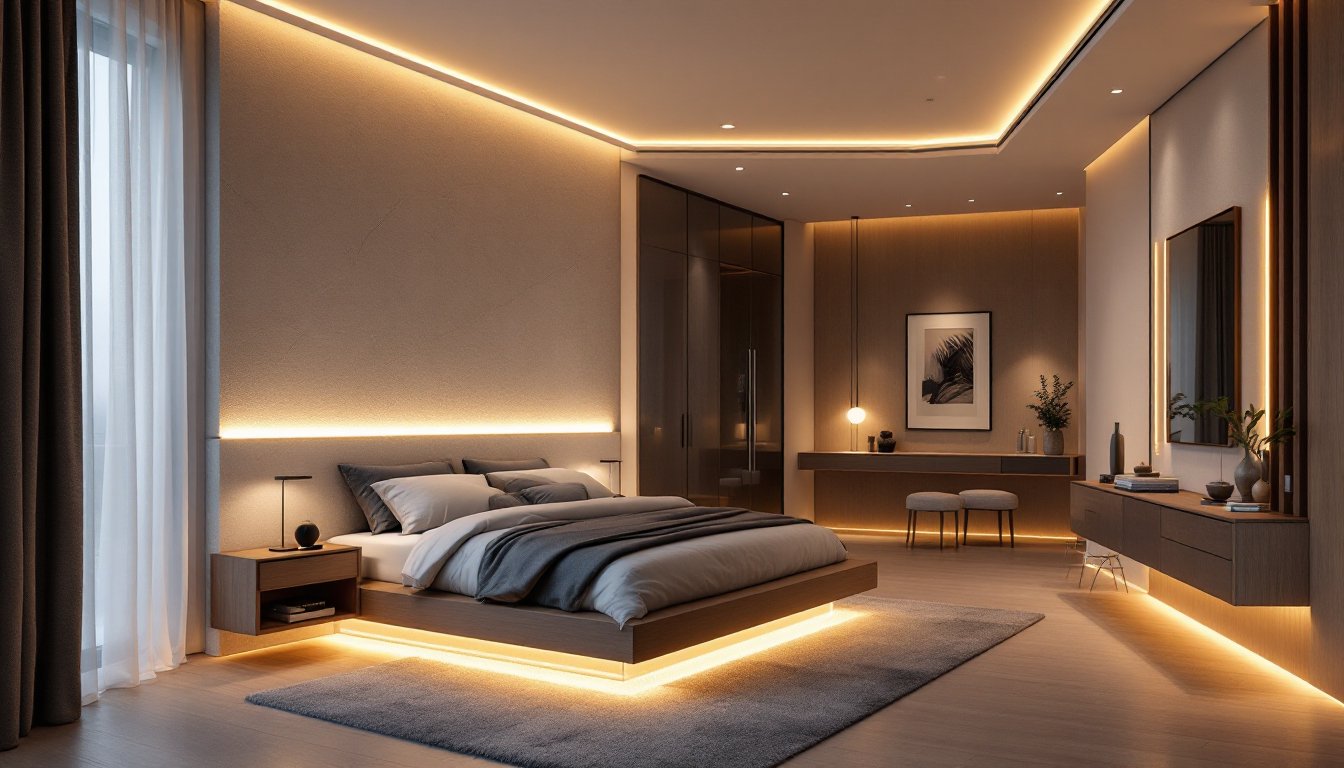

LED lights have become the go-to choice for bedroom design in 2026, and for good reason, they’re energy-efficient, long-lasting, and incredibly versatile. Whether you’re looking to create a cozy retreat or add functional task lighting, LED bedroom ideas offer flexibility that traditional incandescent bulbs simply can’t match. The beauty of LED lighting lies in its ability to layer different types of light (ambient, accent, and task) to set the exact mood you want. This guide walks you through practical LED light ideas for bedroom spaces, from installation tips to color temperature choices, so you can transform your room without guesswork or wasted money.
Table of Contents
ToggleKey Takeaways
- LED light ideas for bedroom spaces offer superior energy efficiency, lasting 25,000 to 50,000 hours while using 75% less electricity than traditional incandescent bulbs.
- Layer three types of lighting—ambient, accent, and task—to create a functional and relaxing bedroom atmosphere with precise mood control.
- Warm white LEDs at 2700K color temperature promote better sleep by signaling your body to produce melatonin, making them ideal for evening relaxation.
- LED strip lights are versatile, low-voltage, and require minimal installation expertise, making them perfect for accenting headboards, baseboards, and shelves.
- Dimmer switches are essential for LED bedroom lighting, allowing you to adjust brightness throughout the day and support your natural circadian rhythm.
- Start with non-invasive upgrades like dimmable LED bulbs and strip lights before committing to permanent fixtures like recessed ceiling lights or hardwired track systems.
Why LED Lights Are Perfect for Bedroom Design
LED lights outperform older lighting technologies in nearly every way that matters for a bedroom. They produce minimal heat, which keeps your sleeping space comfortable and reduces cooling costs during warmer months. Unlike incandescent bulbs that burn out after 1,000 hours, quality LEDs last 25,000 to 50,000 hours, that’s roughly 10 years of typical use. Energy consumption is another standout feature: LEDs use about 75% less electricity than traditional bulbs, which translates to real savings on your monthly utility bills.
Beyond the numbers, LEDs give you design control that transforms your bedroom possibilities. You can choose from virtually any color temperature (warm white, cool white, daylight), and many LED options are dimmable, allowing you to adjust brightness to match your mood and activities. RGB color-changing LEDs add another layer, letting you shift your bedroom atmosphere depending on the time of day or your needs. This level of customization makes it easy to create a space that feels both relaxing and functional.
Ambient Lighting for Relaxation and Sleep
Ambient lighting is the backbone of bedroom comfort, it’s the general, overall light that fills the space. For a bedroom, you want soft, diffused light that doesn’t create harsh shadows or strain your eyes. Recessed ceiling lights with dimmable LED bulbs (typically 9–15 watts) work well here, as do flush-mount or semi-flush ceiling fixtures. Position fixtures roughly 4–6 feet apart and avoid placing them directly above your bed where they’ll create glare.
Warm white LEDs in the 2700K color temperature range are ideal for evenings and wind-down time. This warm tone signals your body to produce melatonin, promoting better sleep quality. If you want a more contemporary look, LED panel lights (flat, low-profile fixtures) mounted on the ceiling create even illumination without visible hot spots. Dimmer switches are essential, install a standard LED-compatible dimmer (not all dimmers work with every LED, so check the packaging) to gradually lower brightness as you approach bedtime. This supports your natural circadian rhythm and helps establish a consistent sleep schedule. Avoid placing ambient lights where they shine directly into your eyes while lying in bed.
Accent Lighting to Highlight Bedroom Features
Accent lighting adds visual interest and highlights architectural or decorative features, a textured wall, artwork, floating shelves, or an accent headboard. The rule is simple: accent lights should be about three times brighter than ambient lighting to draw attention without overwhelming the space. LED strip lights and directional track lights are the most practical choices here.
LED strip lights come in adhesive-backed rolls and install easily along baseboards, behind headboards, or above crown molding. They’re available in warm white, cool white, or RGB color-changing options. For a sophisticated setup, warm white strips at 3000K create a welcoming glow, while RGB strips let you experiment with subtle color shifts. Track lights with adjustable LED heads (typically 5–10 watts per bulb) mount on a single rail and angle to highlight specific areas. They work especially well to spotlight artwork or accent walls. Modern LED options include 20 bedroom lighting ideas from House Beautiful that showcase both traditional and contemporary accent approaches. Install accent fixtures at a slight angle (not straight-on) to reduce glare and create depth.
Task Lighting for Practical Bedroom Activities
Task lighting serves a specific function, reading, getting dressed, applying makeup, or working at a desk. It should be bright enough to prevent eye strain but not so intense that it washes out the rest of your room. Bedside task lights typically range from 400–800 lumens, while desk or vanity lights may reach 1,000+ lumens depending on the task.
LED bedside table lamps with dimmable bulbs (typically 8–12 watts equivalent to 60–100W incandescent) offer adjustable brightness for reading or winding down. Position the light to the side of your reading area to minimize glare on your book or device. For a bedroom vanity or makeup area, install a dimmable LED strip or panel light above or around the mirror, vertical mounting on both sides of the mirror prevents shadows on your face. Under-bed LED strip lights serve double duty: they provide low-level nighttime navigation and add a subtle, modern touch. Many dimmable LED desk lamps now include USB charging ports, which is convenient for keeping your phone charged without an extra outlet.
Creative LED Strip Installation Ideas
LED strip lights are one of the most versatile and user-friendly ways to carry out led bedroom ideas. They’re flexible, low-voltage (typically 12V DC), and require no wiring expertise. Here’s how to install them properly:
Surface Preparation: Before applying adhesive strips, clean the surface thoroughly with rubbing alcohol or a degreaser. Let it dry completely, about 2 minutes. This ensures the adhesive makes solid contact and the strips stay put long-term. If your wall or surface is textured, you may need to use mounting brackets with clips instead of adhesive alone.
Installation Steps:
- Measure twice and mark placement with a pencil
- Cut the LED strip at designated cut points only (marked with scissors on the backing)
- Peel the adhesive backing and firmly press the strip into place, working from one end to the other
- Connect the power supply and test before finalizing positioning
- If using a remote control or app-based dimming, mount the receiver in a convenient, inconspicuous location
Creative Placements: Behind the headboard creates a warm glow: along the baseboard provides nighttime navigation: above floating shelves highlights stored items: framing a doorway adds architectural definition. RGB strips behind or under a bed frame create a modern, spa-like ambiance. For added durability, LED lighting ideas for your bedroom offer examples of professional installations that blend strips seamlessly with decor.
Color Temperature and Brightness Considerations
Color temperature, measured in Kelvin (K), dramatically affects how your bedroom feels. 2700K warm white mimics incandescent light and is best for relaxation and sleep promotion. 3000K warm white sits slightly cooler and works well for ambient lighting without sacrificing coziness. 4000K neutral white is increasingly popular in modern designs: it’s bright enough for reading or getting ready without feeling clinical. 5000K+ daylight white should generally be avoided in bedrooms at night, it suppresses melatonin and can disrupt sleep cycles, though some people use it during morning routines to boost alertness.
Brightness is measured in lumens. For ambient bedroom lighting, aim for 1–2 lumens per square foot, a 200-square-foot bedroom typically needs 200–400 lumens total from all ambient fixtures combined. Task lighting at a bedside table should reach 400–800 lumens for comfortable reading. Dimmer switches are non-negotiable because they let you adapt brightness to the activity and time of day. When selecting LED bulbs, check the packaging for both Kelvin rating and lumen output, don’t rely on wattage alone, since LEDs are far more efficient than older technology. Interior design resources like MyDomaine often feature discussions on layering lighting to achieve balanced, visually appealing bedroom designs. For a layered approach, use warm ambient light, add task lighting where needed, and accent a key feature, this combination gives you maximum control over your bedroom atmosphere.
Getting Started With Your LED Bedroom Project
Start by assessing your current lighting and identifying gaps. Walk through your bedroom at different times, morning, evening, and night, and note where you need more light or prefer less. Then sketch a simple floor plan and mark where you’ll place ambient, task, and accent fixtures. This prevents the common mistake of installing fixtures only to realize they create glare or miss key areas.
Essential Materials: Dimmable LED bulbs (verify compatibility with your existing fixtures), a compatible dimmer switch (check specs, not all dimmers work with all LED types), LED strip lights with adhesive backing or mounting clips, power supplies if using low-voltage strips, and a voltage tester if you’re installing new switches or fixtures.
Tools You’ll Need: Tape measure, pencil, screwdriver (Phillips and flathead), wire stripper if running new electrical circuits, and safety glasses. If you’re adding recessed lights or running new wiring, you may need a stud finder and possibly a professional electrician, local electrical codes vary, and any work involving your home’s main electrical panel should go to a licensed pro.
Quick Wins: Start with non-invasive upgrades like LED strip lights, swappable dimmable bulbs, and bedside task lamps. These give you immediate results without renovation. Once you’re comfortable with the effect, consider adding recessed ambient lights or hardwired track fixtures. For bedroom inspiration and design guidance, explore how other homeowners have layered their lighting for maximum impact. Take your time planning, good lighting design transforms a bedroom from functional to genuinely restful.