
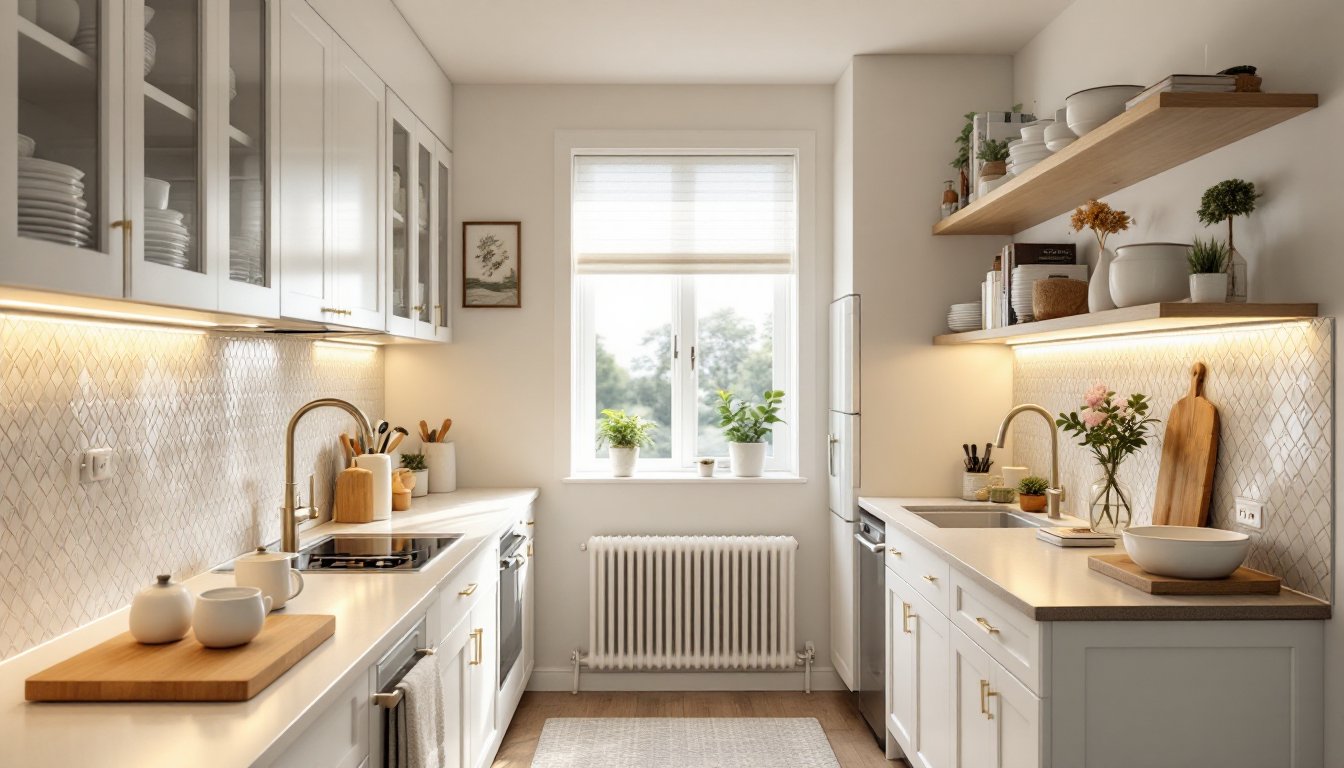

A small galley kitchen doesn’t have to feel cramped or dated. Whether you’re working with a narrow galley kitchen in a cottage, an apartment, or a renovated historic home, smart design choices can turn tight quarters into a hardworking, pleasant space. Galley kitchens, those linear layouts with appliances and counters running along two opposite walls, were built for efficiency, and they’re experiencing a resurgence with modern DIYers who appreciate their functionality. The key is understanding how to maximize every inch without sacrificing style or workflow. In this guide, we’ll walk through seven practical ideas that will help you redesign your small galley kitchen into a space you’ll actually want to spend time in, whether you’re meal prepping or hosting a small gathering.
Table of Contents
ToggleKey Takeaways
- Maximize vertical storage with open shelving, wall-mounted cabinets, and floating shelves to make small galley kitchen spaces feel larger while keeping frequently used items accessible.
- Arrange your kitchen workflow in a triangle between sink, stove, and refrigerator to minimize unnecessary steps and improve efficiency in tight layouts.
- Layer your lighting with overhead, task, and ambient LED strips to brighten the space, then choose light-colored countertops, backsplash tiles, and white cabinetry that reflect light and expand the visual area.
- Invest in compact, multi-functional appliances like slim refrigerators (30–32 inches), 24-inch cooktops, and slimline dishwashers to save crucial counter and hallway space without sacrificing capability.
- Add personality through intentional design choices—a statement backsplash, grouped color-coordinated open shelves, and one focal point—that make your small galley kitchen feel designed and curated rather than cramped.
Maximize Vertical Storage for Hidden Functionality
Open Shelving and Wall-Mounted Cabinets
In a small galley kitchen, wall space is your greatest asset. Rather than cramming everything into base cabinets, think vertical. Open shelving above counters creates the illusion of more space while keeping frequently used items within arm’s reach. Install floating shelves or wall-mounted cabinets at least 18 inches above the counter, this gives you room to work while keeping shelves visible and organized.
Wall-mounted cabinets with glass doors serve double duty: they provide closed storage (hiding clutter) while maintaining visual openness. A stainless steel or ceramic backsplash installed above shelves adds a professional touch and is easy to wipe down. When mounting shelves, locate studs in the wall using a stud finder, and use lag bolts or appropriate anchors rated for your shelf weight. A typical floating shelf rated for 50 pounds per shelf works well for dishes and glasses but needs heavier-duty brackets if you’re storing cookbooks or small appliances.
Don’t overlook the space above cabinet trim. A slim shelf running along the perimeter near the ceiling holds decorative baskets, vintage dishware, or small cookbooks without eating into active counter space. Keep items on open shelves intentional, a cluttered galley kitchen feels worse than a cramped one. Stick to everyday items and decor you genuinely use or display.
Streamline Your Layout With Smart Workflow Design
The classic galley layout already forces efficiency, but you can tweak it further. Arrange your workflow in a simple triangle: sink, stove, and refrigerator should be positioned to minimize unnecessary steps. In a standard small narrow galley kitchen, you’re already working with this constraint, the goal is to eliminate anything that breaks the flow.
Consider a rolling kitchen cart or butcher block on casters. This movable worksurface gives you extra prep area when needed and tucks away into a corner or against the wall when empty. Another smart move is repositioning cabinet and drawer contents by function. Store pots and pans near the stove, bowls and plates near the dishwasher, and knives and prep tools near the sink. This isn’t just tidy, it cuts prep time in half.
If you’re open to minor structural changes, consider removing a lower cabinet door to create an open knee space under the sink or counter. This visual break can make the galley feel less boxed-in. Just ensure water lines and electrical outlets won’t be affected. Projects involving plumbing relocation typically require a permit, so check with your local building department first. Keep counters as clear as possible: every appliance that lives on the counter (toaster, coffee maker, blender) should earn its real estate by being used regularly.
Brighten the Space With Light-Reflective Materials
Lighting transforms a small galley kitchen from dungeon-like to airy. Layer your lighting: overhead (recessed or a slim track light), task lighting above the counter, and ambient lighting from open shelves or under-cabinet strips. LED under-cabinet lights are affordable, easy to install with self-adhesive strips, and generate minimal heat, crucial in a compact space.
For countertops, light colors reflect light and expand the visual space. Quartz, light granite, or butcher block finishes work well: avoid dark slabs that absorb light and make the galley feel narrower. Light-colored backsplash tiles, subway tile, small mosaics, or even peel-and-stick alternatives, bounce light around and create visual interest. White or cream cabinetry combined with bright grout also opens up the space.
Windows or glass panes in upper cabinet doors amplify natural daylight. If you have a window in the galley, keep it clear of obstructions and consider a sheer shade rather than heavy curtains. Paint walls a soft white or warm neutral, not because “small spaces need white,” but because it genuinely reflects more light. If you want color, add it through removable elements: a painted backsplash using peel-and-stick tiles, colorful canisters on open shelves, or a narrow rug. These changes cost little and let you experiment without commitment.
Choose Compact, Multi-Functional Appliances and Fixtures
Standard full-size appliances don’t fit every small galley kitchen, and they don’t need to. Slim refrigerators (30 to 32 inches wide versus the typical 36) save crucial inches. Look for a model with good freezer capacity if you’re one person or a couple: you won’t notice the loss of width, but you’ll gain hallway space.
For cooking, a 24-inch range or cooktop is standard in compact kitchens. Gas cooktops offer precision and heat control: smooth-top electric cooktops are easier to clean. A slimline dishwasher (18 inches) replaces a full-size model and still holds a day’s worth of dishes for two people. Combi-oven or multi-cooker appliances (Instant Pot style) handle braising, steaming, and pressure cooking in a footprint smaller than a toaster.
Faucet choice matters more than you’d think. A pull-down or pull-out faucet with a spray function gives you more reach and flexibility in a small sink without taking up counter space. A single-bowl sink is often smarter than a double in a galley because it provides more continuous work surface. Measure your cabinet opening and sink cutout before ordering: countertop space is too precious to waste on an awkward layout. Before purchasing any appliance, research its depth, many slim units have shallow counters behind them, eating into your prep area.
Add Visual Interest Without Clutter
A functional galley kitchen doesn’t have to be boring. The trick is being intentional about what you display and where.
Consider a statement backsplash in a soft mosaic, geometric pattern, or Moroccan tile. A temporary peel-and-stick option (such as those from brands like NextWall or Chasing Paper) lets you test a design without permanent commitment. This adds personality and makes the galley feel designed, not just crammed.
On open shelves, group items by color or material. Stack white bowls together, line up matching glasses, and tuck cookbooks upright on a small shelf. This looks intentional and costs nothing. A narrow galley kitchen benefits from this “curated” feel because it keeps visual clutter at bay while showing off items you love.
Add one focal point, a piece of artwork, a vintage mirror above a shelf, or a framed collection of kitchen prints. In a small space, too many focal points compete: one well-placed piece draws the eye and distracts from the kitchen’s tight footprint. Mirrors are particularly effective because they reflect light and create an illusion of depth.
If you want decor advice tailored to small spaces, resources like Apartment Therapy offer budget-friendly and practical approaches. Similarly, The Kitchn frequently features small-kitchen renovations with before-and-after comparisons and reader solutions. Looking at how designers handle small narrow galley kitchen ideas can spark your own approach. Avoid trendy kitchen gadgets that clutter counters: stick with tools you actually reach for daily.
Conclusion
A small galley kitchen is an asset, not a limitation. By focusing on vertical storage, smart layouts, reflective materials, and compact appliances, you can create a kitchen that works as hard as you do. These changes range from paint and shelving (weekend projects) to appliance swaps or minor layout tweaks (multi-day efforts). Prioritize what frustrates you most, if you’re always reaching over someone to get to the fridge, address workflow first. If darkness makes the space feel cramped, invest in lighting. Your galley kitchen can be beautiful, efficient, and genuinely enjoyable to use.