
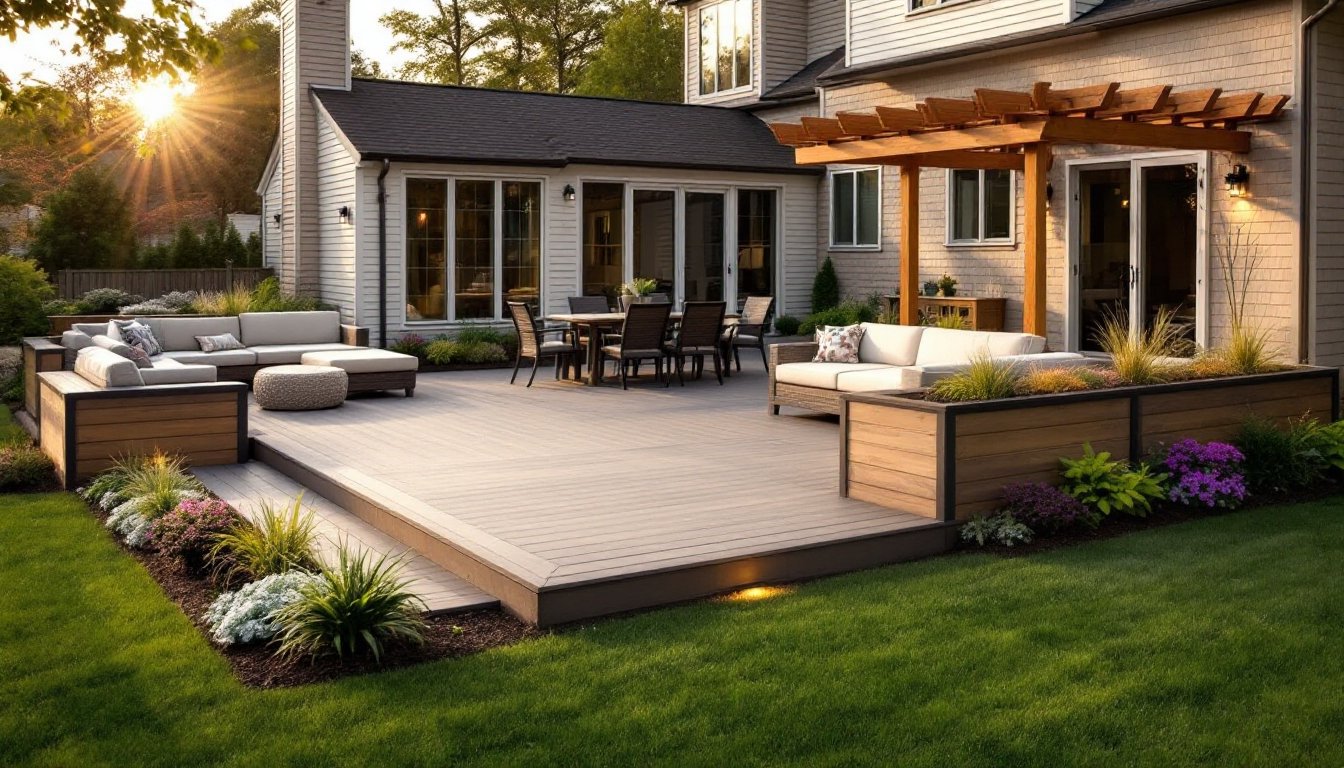

A ground level deck sits close to or flush with your yard, skipping the railings and elevation of traditional raised decks. For many homeowners, this approach is the missing piece in their backyard entertaining strategy. Ground level decks are affordable to build, easier to access, and create seamless transitions from indoors to outdoors. Whether you’re working with a small urban lot or a sprawling suburban yard, ground deck ideas offer flexibility that traditional elevated structures simply can’t match. This guide walks you through material selections, layout strategies, and finishing touches to build a deck that fits your budget and lifestyle.
Table of Contents
ToggleKey Takeaways
- Ground level deck ideas eliminate costly support posts and stairs while providing affordable, accessible outdoor living spaces that blend seamlessly with your landscape.
- Composite decking requires minimal maintenance and won’t rot or splinter, making it worth the higher upfront cost over a 10–15 year lifespan.
- Installing a moisture barrier underneath prevents 90% of ground-level rot issues and ensures your deck foundation stays dry and durable.
- Built-in seating, storage, and integrated planters maximize space and define the deck without requiring railings if local codes permit.
- Low-voltage LED lighting and adjacent plantings extend usability and create smooth transitions between your deck and surrounding yard.
- Verify local building codes and prioritize site preparation with proper drainage before construction to avoid costly repairs later.
Why Ground Level Decks Are Perfect For Modern Backyards
Ground level decks eliminate the expense and complexity of support posts, stairs, and railings. They sit directly on a prepared grade or on shallow footings (often just 6-8 inches below grade in frost-prone regions), making them significantly cheaper to build than a 2-foot-high platform deck. Labor is simpler too, no need to frame elaborate understructure or worry about height compliance with most local codes.
Another key advantage: they blend seamlessly with landscaping. A ground level deck naturally transitions into garden beds, hardscaping, or lawn without the visual separation a raised deck creates. Homeowners find they actually use these spaces more because access is immediate and barrier-free. Kids, pets, and guests move freely between the deck and yard without navigating stairs. For aging in place or accessibility needs, ground level design is often the smart choice.
Simple Material Choices For Ground Level Decks
Composite Decking For Low-Maintenance Living
Composite decking (a blend of wood fibers and plastic) has matured significantly. Mid-range products like Trex, TimberTech, or Azek cost $2–$4 per linear foot and require almost zero maintenance. They won’t rot, splinter, or need staining. The downside: they’re more expensive upfront, they can feel plastic-like underfoot, and dark colors absorb heat in summer sun.
For ground level decks, composite works well if your budget allows. You’ll save on maintenance labor over 10–15 years, and the aesthetic has improved enough that most homeowners can’t tell the difference from across the yard. Whatever material you choose, always install over a moisture barrier (landscape fabric or rubber underlayment) to keep water from pooling underneath. This single step prevents 90% of ground-level rot issues.
Creative Layout Designs To Maximize Your Space
Adding Built-In Seating And Storage
Budget-conscious ground level decks often skip railings entirely (check local codes, many don’t require them for decks under 30 inches high). This opens up clever built-in designs.
Perimeter benches frame the deck edge and double as seating and safety barriers. Build them 14-18 inches high and 16-18 inches deep using 2×12 boards supported by joist extensions. Sand and seal the same as deck boards, no need for cushions, though they’re nice.
Under-deck storage works if your deck sits 12+ inches above grade. A weatherproof plywood box fitted with hinges stores firewood, pool toys, or garden tools while remaining invisible. Access it from below or from the deck surface via a hinged trapdoor.
Integrated planters are simpler and visually distinct. Anchor 2×8 boards along the perimeter, fill with soil, and plant low-maintenance shrubs or perennials. This adds texture, defines the deck footprint, and breaks up the flat expanse, all for under $100 in materials. Resources like Ana White’s free playhouse deck plans show how skilled builders combine decking with built-in elements without overcomplicating the frame.
Landscaping Integration And Finishing Touches
A ground level deck isn’t finished until it flows visually and functionally into the surrounding yard.
Edging defines boundaries. Pressure-treated 2×4 or 2×6 boards set edge-on around the deck perimeter keep mulch and soil from creeping onto the surface. Alternatively, metal or composite edging (L-shaped extrusion) looks cleaner and lasts longer.
Mulch or gravel underneath the deck suppresses weeds and improves drainage. Lay landscape fabric first, then add 2-3 inches of cedar mulch, rubber mulch, or pea gravel. Avoid keeping soil flush against the underside, moisture trapped there accelerates rot.
Adjacent plantings matter more than you’d think. Hostas, creeping phlox, or ornamental grasses planted at the deck edge create transitions. If you’re building over an existing lawn or garden, remove sod and roots first: they trap moisture and cause problems later.
Lighting extends usability into evening. Low-voltage LED path lights ($10–$20 each) tucked beneath built-in benches or along the deck perimeter are simple to install and require no electrician. Solar options are cheaper and need no wiring, just sunlight during the day.
Pergolas or shade structures are optional but transform how the deck feels. A simple 8-by-8-foot pergola over the dining area filters harsh afternoon sun without blocking evening light. Lean-to designs attach directly to house siding and cost $500–$1,500 in materials for the average homeowner.
Conclusion
Ground level decks offer homeowners a practical, affordable entry point into outdoor living. By choosing durable materials, planning smart layouts, and integrating thoughtful finishing touches, you’ll create a space that genuinely gets used. Start with accurate measurements, verify local building codes (even ground level decks may need permits in your jurisdiction), and don’t skip site prep, a solid, well-drained foundation prevents years of headaches. Your backyard transformation is closer than you think.