
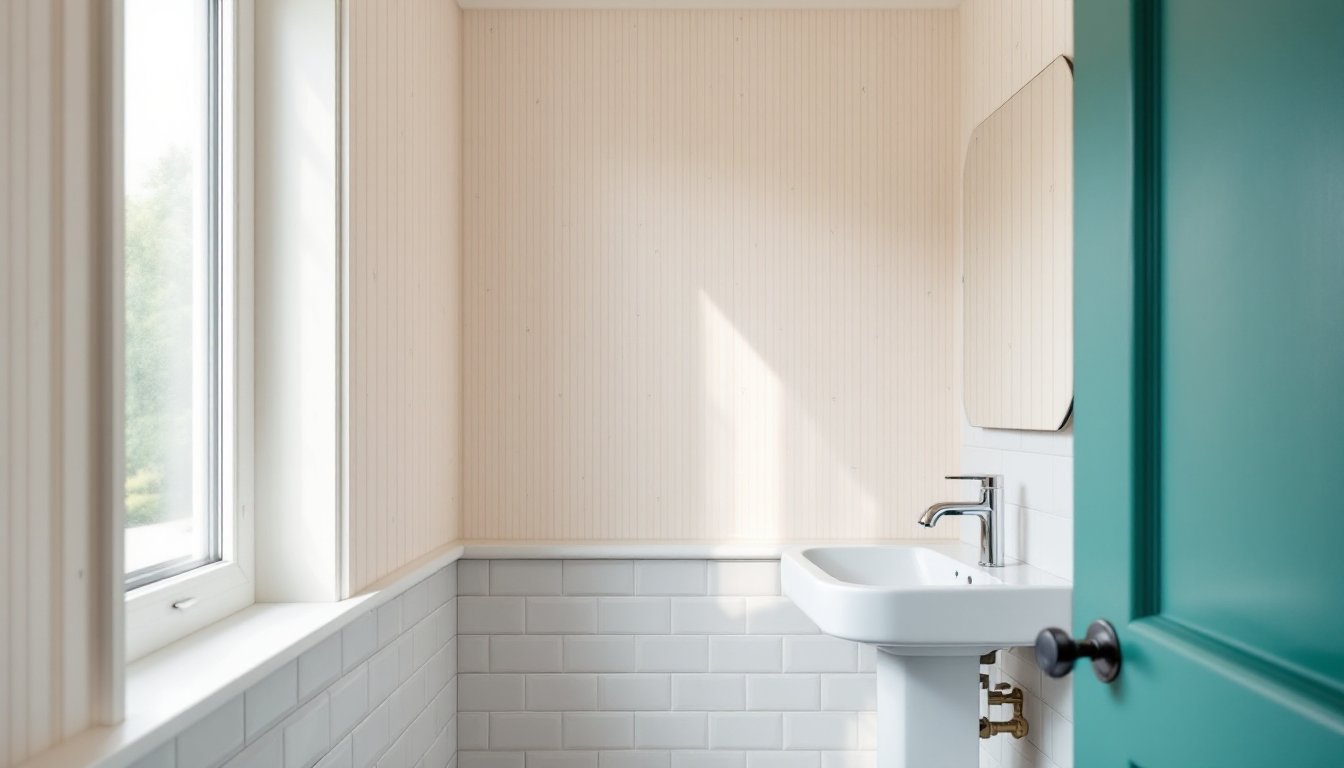

Small bathrooms don’t have to feel cramped or uninspired. With the right wallpaper choice, even a modest powder room or guest bath can become a stylish retreat that feels intentionally designed rather than like an afterthought. Wallpaper is one of the fastest ways to add personality, depth, and visual interest without requiring structural changes or major renovations. Whether you’re working with a 4-by-6-foot half bath or a slightly larger ensuite, selecting the proper pattern, color, and material can dramatically shift how the space feels and functions. This guide walks through practical small bathroom wallpaper ideas that work with tight footprints, moisture conditions, and real budgets.
Table of Contents
ToggleKey Takeaways
- Light colors and minimalist patterns are essential for small bathroom wallpaper ideas, as they reflect light and prevent the space from feeling cramped or overwhelming.
- Vertical stripes visually elongate walls and make ceilings appear higher, making them an ideal choice for bathrooms with limited square footage.
- Always choose moisture-resistant wallpaper materials like vinyl or bathroom-grade options instead of standard paper to prevent mold, warping, and peeling within a year.
- Small-scale geometric and botanical prints work better than large-scale designs in tight bathrooms, creating intentional style without visual clutter.
- Proper wall preparation, acclimation, moisture-resistant adhesive, and ventilation are critical to ensure small bathroom wallpaper installations last 5–7 years rather than failing within months.
Light Colors And Minimalist Patterns For Maximum Space
The most reliable trick for making a small bathroom feel larger is choosing wallpaper in light, neutral tones. Whites, soft grays, pale blues, and warm creams reflect available light and don’t visually close in the walls. Pair these base colors with minimalist patterns, think delicate geometrics, subtle textures, or fine lines rather than large motifs that eat visual real estate.
Minimalist patterns work because they add visual interest without overwhelming the eye. A bathroom measuring 5-by-8 feet benefits from restraint: too much pattern noise makes the space feel busier and smaller. Look for small-scale repeating designs, fine pinstripes, or tone-on-tone patterns where the pattern is only slightly darker or lighter than the base color.
Vertical Stripes To Elongate Walls
Vertical stripes are a classic choice for small bathrooms because they draw the eye upward, making ceilings feel higher. Use narrow stripes (half-inch to one-inch widths) rather than bold wide stripes, which can feel heavy in tight quarters. Pair white or pale gray vertical stripes with a warm white base, or choose cool-toned stripes on a soft blue background. Stripes work especially well in bathrooms where the ceiling height is average or below (8 feet or less). The visual lift is real enough to notice without looking cartoonish or theme-park-like.
When selecting striped wallpaper, consider the finish. Matte finishes feel more sophisticated and hide water spots better than glossy ones, which is practical in moisture-prone spaces.
Bold Accent Walls As A Design Statement
If subtle patterns feel boring, a bold accent wall can introduce personality without making the entire bathroom feel claustrophobic. Pick one wall, often the wall behind the sink or toilet, and commit to a rich color or striking pattern. The remaining three walls stay light and simple, which grounds the space visually and keeps it from feeling overwhelming.
Dark jewel tones work beautifully: deep emerald, navy, or charcoal. Rich colors absorb light rather than reflect it, which paradoxically makes a small space feel cozier and more intentional rather than cramped. Geometric patterns, botanical prints, or even small-scale damask designs work well for accent walls in bathrooms. Homeowners often pair a bold accent wall with simple fixtures and minimal decor to prevent visual chaos.
Before committing, order a sample roll and install a 3-by-3-foot section on your chosen wall. Look at it in morning light, afternoon light, and with the bathroom lights on. Colors shift dramatically depending on lighting conditions. Many design mistakes happen because homeowners chose wallpaper under store lighting rather than in their actual space.
Moisture-Resistant Wallpaper Options For Wet Environments
Bathrooms are wet environments. Standard paper wallpaper absorbs moisture, warps, peels, and creates mold problems, usually within a year. For bathroom use, choose moisture-resistant materials from the start.
Vinyl wallpaper is the workhorse option. It’s plastic-coated, wipes clean with a damp cloth, and resists mold and mildew. Vinyl wallpaper costs slightly more than standard paper (typically $15–$35 per roll vs. $10–$20 for paper), but it lasts 5–7 years in bathrooms versus 1–2 years for untreated paper. Vinyl comes in numerous finishes: smooth, textured, embossed, and faux grasscloth. Quality matters, cheaper vinyl can feel plastic-y and look dated quickly.
Peel-and-stick wallpaper offers easier installation and removal without adhesive. It’s popular in rental bathrooms because it doesn’t damage walls when removed. Choose peel-and-stick options labeled “moisture-resistant” or “vinyl-based.” Cheaper cloth-backed versions absorb moisture and fail faster. Price ranges $2–$10 per roll, making it budget-friendly, but durability is shorter (2–4 years).
Textured wallcovering (grasscloth, burlap, or linen-look finishes) can work in bathrooms if properly sealed with a polyurethane topcoat. Seal these materials after installation to lock out moisture. Standard grasscloth wallpaper is not bathroom-safe: you need bathroom-grade versions specifically treated for moisture.
The rule: avoid standard paper wallpaper entirely in bathrooms. Check the product label for “bathroom,” “kitchen,” “moisture-resistant,” or “vinyl” designations. Untreated paper will fail, creating mold and waste.
Small-Scale Prints And Geometric Designs
Large-scale prints (florals, paisleys, or bold graphics) overwhelm small bathrooms visually. The pattern should feel like a design choice, not a pattern that ate the room. Homeowners working with tight spaces should stick to small-scale repeating prints where the motif repeats every 4–6 inches rather than every 12–18 inches.
Geometric designs, subtle hexagons, tiny diamonds, crosshatch patterns, or dot-and-line combinations, feel modern and work well in minimalist bathrooms. Geometric wallpaper is also forgiving during installation because slight pattern misalignment is less noticeable than with large-scale florals or photographic prints.
Wallpaper featuring nature-inspired patterns also works if the scale is small. Think tiny botanical sprigs, delicate leaf outlines, or scattered seeds rather than oversized blooms or branches. These bring organic interest without visual clutter. Projects highlighted on design-focused platforms show that small geometric or botanical prints paired with white subway tile and minimal fixtures create cohesive, sophisticated small bathrooms. The formula: restrained color palette + small-scale pattern + clean fixtures = intentional design.
Textured Wallpaper For Added Depth And Interest
Textured wallpaper adds dimension to flat small-bathroom walls without introducing pattern. Embossed designs, faux wood finishes, faux brick, or three-dimensional textures create visual interest while remaining subtle. Textured wallpaper can feel more sophisticated and less “decorated” than patterned options, especially in contemporary or minimalist bathrooms.
Common textured options include embossed vinyl (raised patterns that cast shadows under bathroom lighting), faux shiplap or beadboard finishes (popular in cottage or farmhouse aesthetics), and linen or grasscloth textures (expensive but visually rich). The downside: textured wallpaper traps dust and is harder to clean than smooth vinyl. In bathrooms prone to steam and moisture, textures can also be trickier to seal properly.
If choosing textured wallpaper, opt for vinyl embossed designs over natural fibers. Vinyl textures are easier to wipe clean and more moisture-resistant. Pair textured wallpaper with simple solid-colored paint on the ceiling and minimal wall decor so texture becomes the visual anchor rather than one element in a busy scheme. Resources like Homify showcase bathroom projects where subtle textured wallpaper paired with minimal fixtures creates surprisingly luxurious small bathrooms without pattern fatigue.
Practical Installation Tips For Bathroom Wallpaper
Installing wallpaper in a bathroom requires attention to moisture control and surface prep. Skipping prep is the #1 reason wallpaper fails in bathrooms.
Prep the walls. Remove old wallpaper or paint with a scraper and sanding block. Fill holes, cracks, and seams with spackling compound: sand smooth. Wipe walls with a damp cloth to remove dust. Uneven, dirty, or damaged walls cause wallpaper to bubble, peel, or wrinkle. In bathrooms with high moisture, consider applying a moisture barrier primer before hanging wallpaper. This seals the drywall and prevents moisture from backing up behind the wallpaper, which causes mold.
Acclimate the wallpaper. Unroll wallpaper 24 hours before installation. Temperature and humidity changes cause the material to expand or contract: installing too-cold or too-wet material results in seams that don’t match or bubbles as material adjusts to room conditions.
Use the right adhesive. Bathroom wallpaper requires adhesive formulated for moisture-prone environments. Standard wheat paste fails in bathrooms. Use a vinyl-to-vinyl adhesive or pre-pasted moisture-resistant adhesive rated for kitchens and bathrooms. Read the product label, it should specify bathroom use.
Ventilation is critical. Run the bathroom exhaust fan during and for 24 hours after installation. Poor ventilation traps moisture behind the wallpaper, causing mold and peeling. If your bathroom lacks an exhaust fan, installation of a fan-and-damper assembly is worth the cost before wallpapering.
Seal seams in moisture-prone areas. Where wallpaper wraps around the tub or shower, seal seams and edges with waterproof caulk or a waterproofing gel designed for wallpaper. This prevents water from seeping behind the wallpaper during showers.
Many small-bathroom wallpaper projects succeed or fail based on moisture management, not pattern choice. Moisture-resistant material + proper surface prep + good ventilation = wallpaper that lasts. Bathroom inspiration resources highlight the importance of combining smart material choices with installation fundamentals.