
A brick fireplace anchors a room like nothing else, it’s functional, timeless, and a natural focal point that draws people in. Whether your fireplace is original to the house or you’re planning a new build, the good news is that brick is remarkably flexible. You don’t need to live with dated orange-red masonry or assume an old fireplace is stuck looking the same way forever. From fresh paint and modern styling to dramatic accent wall treatments and rustic farmhouse touches, brick fireplace ideas range from quick weekend projects to more involved renovations. The best part? Many of these updates won’t expensive or require a contractor. Let’s walk through some practical, achievable ways to refresh your brick fireplace and make it feel like a major design upgrade.
Table of Contents
ToggleKey Takeaways
- Brick fireplace ideas range from affordable weekend projects like painting to more involved renovations, with many updates achievable without hiring a contractor.
- Painting brick requires thorough surface preparation, masonry-specific primer, and quality exterior paint in 2 coats—this is the most cost-effective fireplace transformation at $100–$200 in materials.
- Modern minimalist, rustic farmhouse, and bold accent wall approaches all transform brick fireplaces; choose the style that matches your home’s aesthetic and your design vision.
- White, warm cream, greige, and light gray are the most popular paint colors for brick fireplaces because they brighten spaces, hide soot, and work across multiple design styles.
- Pair fireplace updates with thoughtful styling—whether asymmetrical farmhouse mantel arrangements or gallery-style modern accessories—to ensure the final result feels intentional rather than forced.
Modern Minimalist Brick Fireplace Designs
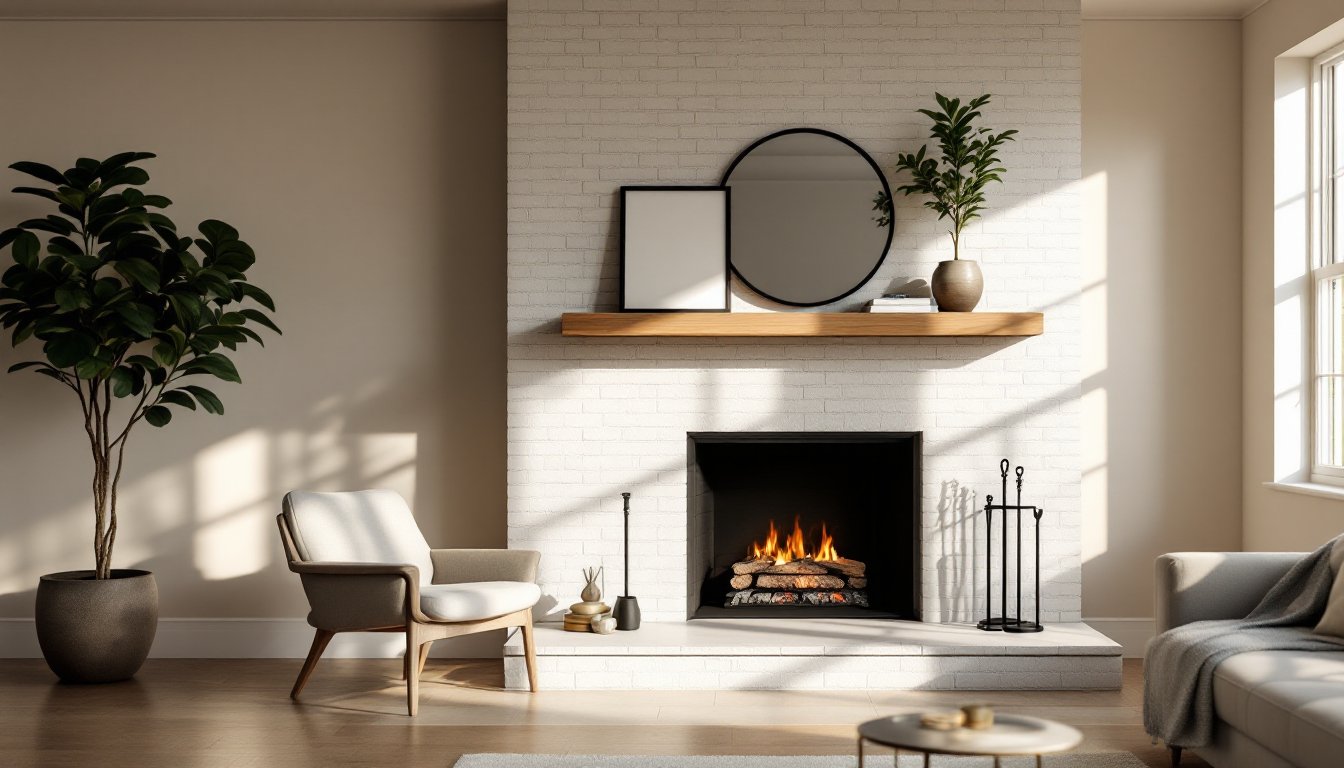
Modern minimalist styling strips away ornate mantels and heavy wood trim, letting clean lines and the brick itself take center stage. The goal is to make the fireplace feel intentional and restrained, not like a period piece.
Start with neutral grout and brick color. If your existing brick is too warm or too dark, a light gray or warm white paint creates a crisp, contemporary look. Keep the mantel simple, a thin floating shelf or no mantel at all works well here. Avoid chunky frames or brass accents: instead, hang a slim mirror or a single piece of modern art above the fireplace, centered or slightly offset.
For the hearth, a sleek concrete pad, polished concrete, or oversized tiles feel more modern than traditional brick. If you’re keeping the brick hearth, make sure it’s clean and sealed so it looks intentional, not just neglected.
Minimalist doesn’t mean cold. A few carefully chosen accessories, a stack of books, a potted plant, or decorative fire tools, can warm up the space. The trick is restraint: think “gallery” rather than “collector’s shelf.” Modern fireplaces also benefit from keeping the wall around it fairly open: avoid wallpaper or busy patterns that compete for attention.
One practical note: if you’re updating the surround, make sure any new materials (paint, tile, grout) are rated for heat. Manufacturer specs matter here, and some paints will off-gas or discolor near high heat sources.
Painted Brick Fireplace Updates
Painting brick is one of the quickest ways to transform a fireplace. It’s also one of the most reversible decisions you can make, strip it off later if you change your mind. But take the prep seriously: most DIY paint failures come from skipping surface cleaning and proper primer.
What you’ll need:
- Wire brush or power washer
- TSP (trisodium phosphate) cleaner or heavy-duty degreaser
- Masonry primer (not regular drywall primer)
- Quality exterior or masonry paint
- Rollers and brushes rated for textured surfaces
- Drop cloths, goggles, and gloves
Step-by-step:
-
Clean the brick thoroughly. Use a wire brush to remove loose mortar, dust, and buildup. If there’s soot, mold, or greasy residue, wash with TSP solution and a stiff brush, then let dry completely (at least 24 hours). This step is critical, paint won’t adhere well to a dirty, greasy surface.
-
Caulk gaps if needed. Large cracks or gaps in mortar should be sealed with paintable caulk rated for masonry. This prevents paint from running into voids and gives you a cleaner finish.
-
Prime with masonry primer. Use a masonry-specific primer, not standard drywall primer. Masonry is porous and breathes: regular primer won’t bond properly. Expect to use 1–2 coats depending on the brick’s color and porosity.
-
Paint with quality masonry paint. Two coats are standard. Textured surfaces like brick require a good roller: a 3/8-inch to 1/2-inch nap works best. Don’t skimp here, cheap paint chalks and fades fast on masonry.
-
Let cure fully. Most masonry paints need 7–14 days before you expose the fireplace to heat. Check your product specs.
White And Light Neutral Paint Options
White and light neutrals are the most popular choices for painted brick fireplaces, and for good reason. They feel fresh, make a room brighter, and hide dust and soot better than you’d expect.
Bright white works best in homes with lots of natural light and a modern aesthetic. It can feel harsh in dimly lit rooms or farmhouse-style homes.
Warm whites and creams (with subtle beige or yellow undertones) feel friendlier and work in traditional or transitional spaces. They’re more forgiving if your lighting is softer.
Greige (gray-beige) is a current favorite because it bridges the gap between cool and warm, working in almost any design style. It also shows less dirt than pure white while staying very neutral.
Light gray brings a slightly more contemporary edge while still feeling soft. Pair it with darker wood or black accessories for contrast.
Tip: Always get a quart sample and paint a test section on the actual fireplace. Paint color shifts dramatically depending on your room’s lighting, adjacent wall colors, and the texture of the brick itself. What looks great on a paint chip can surprise you on a real wall.
Accent Wall And Feature Fireplace Ideas
Making the fireplace the dramatic focal point of a room, rather than just a secondary feature, requires strategic use of color and texture. An accent wall is one proven way to do this.
Option 1: Paint the fireplace wall a bold or saturated color while keeping the rest of the room neutral. Deep charcoal, navy, forest green, or even terracotta can look stunning. The fireplace itself becomes the anchor for the whole room’s mood. This works especially well if the fireplace is on an otherwise blank wall.
Option 2: Use shiplap or board-and-batten around the fireplace. This is a structural update, you’re not painting brick, you’re covering it with 1×6 or 1×8 boards (shiplap) or narrower battens. It’s a more involved project that may require permits depending on the extent of work, but it completely transforms the look. Finish with paint or leave natural wood. This approach brings in visual texture and works beautifully in farmhouse or cottage-style homes.
Option 3: Embrace the brick as the accent. If your brick is a beautiful red or warm cream color, leave it unpainted and make it shine. Clean it thoroughly, seal it with a clear matte or satin sealer to deepen the color slightly, and keep the walls around it neutral. This strategy highlights the brick itself as the feature rather than working against it.
Whatever route you choose, balance is key. A bold fireplace wall works best when the rest of the room stays fairly restrained. Too much competing color or pattern will feel chaotic. HGTV showcases hundreds of fireplace transformations, scroll through them to see how professionals handle color pairing and scale.
Rustic And Farmhouse Brick Fireplace Styling
Rustic and farmhouse styles lean into the fireplace’s age and character rather than fighting against it. If your brick is older or has an uneven color, consider that a feature, not a flaw.
Materials and finishes:
- Leave brick mostly natural or paint it a warm cream or off-white that complements the existing mortar color.
- Use reclaimed or distressed wood for the mantel, old barn wood, weathered beams, or antique flooring boards all work well.
- Add a simple wooden surround or frame using rough-hewn boards. This doesn’t cover the brick but draws attention to it.
- Iron accents (fire tools, mantel brackets, hooks) feel authentic to the style.
- Stone or slate around the hearth adds weight and character.
Styling the mantel:
Rustic mantels are more forgiving than modern ones. Asymmetry is fine. Layer pieces of different heights: a tall candlestick on one end, a small stack of books or a ceramic jug, a framed photo or two. Branches, vintage signs, or antique mirrors all fit the aesthetic. The idea is that items have been collected over time, not arranged by an interior designer.
Surroundings:
Pair the fireplace with wood beams (real or faux), reclaimed shiplap, or plaster walls. Southern Living’s design approach often features fireplaces as the heart of the home, check out their regional takes on farmhouse styling for inspiration on balancing rustic elements with comfort.
Note: If you’re adding actual wood beams or substantial woodwork, be aware of clearance requirements. Building codes require wood to maintain safe distances (typically 12+ inches, depending on the jurisdiction) from active heat sources. Don’t install decorative beams so close to the firebox that they’re a fire hazard.
Budget-Friendly Brick Fireplace Makeovers
You don’t need thousands of dollars to make a fireplace look intentional and updated. Here are the most cost-effective moves:
Paint the brick. This is the biggest bang-for-buck option. A gallon of quality masonry paint costs $30–$50, primer is similar, and brushes and rollers are cheap. Labor is just your time. For a typical fireplace surround, expect 1–2 gallons total. Cost: $100–$200 in materials.
Replace the mantel only. If the existing mantel is dated, a new floating shelf (or a simple wood beam-style mantel) can completely change the vibe. A 48-inch floating shelf in wood or metal runs $80–$200 installed. DIY installation is straightforward with a level, a stud finder, and some basic mounting hardware.
Update hardware and accessories. New fire tools, a modern grate, or brass or black iron accessories are visible but relatively cheap. Swap these out and the fireplace immediately feels more intentional.
DIY a simple tile surround or hearth. Large-format tiles or slate are affordable compared to custom stonework. If your current hearth is damaged or stained, replacing it with oversized tiles (24×24 inches or larger) gives a modern look. You’ll need a wet saw, thin-set mortar, and grout. It’s a learnable skill, though hiring someone to do it professionally might still be worth it if you’re not comfortable with the tools. Cost for materials: $150–$400 depending on tile choice.
Work with what you have. Sometimes the cheapest move is the smartest: deep clean the brick, reseal it, style the mantel thoughtfully, and leave it alone. A well-styled fireplace that’s clean and intentional beats an aggressively “updated” one that looks forced.
Before tackling any major changes, understand how to properly veneer or replace fireplace surrounds using thin brick. This resource covers techniques that can help even if you’re planning a DIY project on a smaller scale.
Conclusion
Your brick fireplace doesn’t have to stay the way it is. Whether you choose to paint it, build around it, style it boldly, or embrace its rustic character, the key is intentionality. Start with a clear vision, do your prep work thoroughly, and don’t rush. Most successful fireplace updates happen because someone took the time to think through details, from primer selection to mantel styling, rather than assuming a quick fix would work. Pick an idea that fits your home and your skill level, give it the attention it deserves, and you’ll have a fireplace that genuinely transforms your living room.