
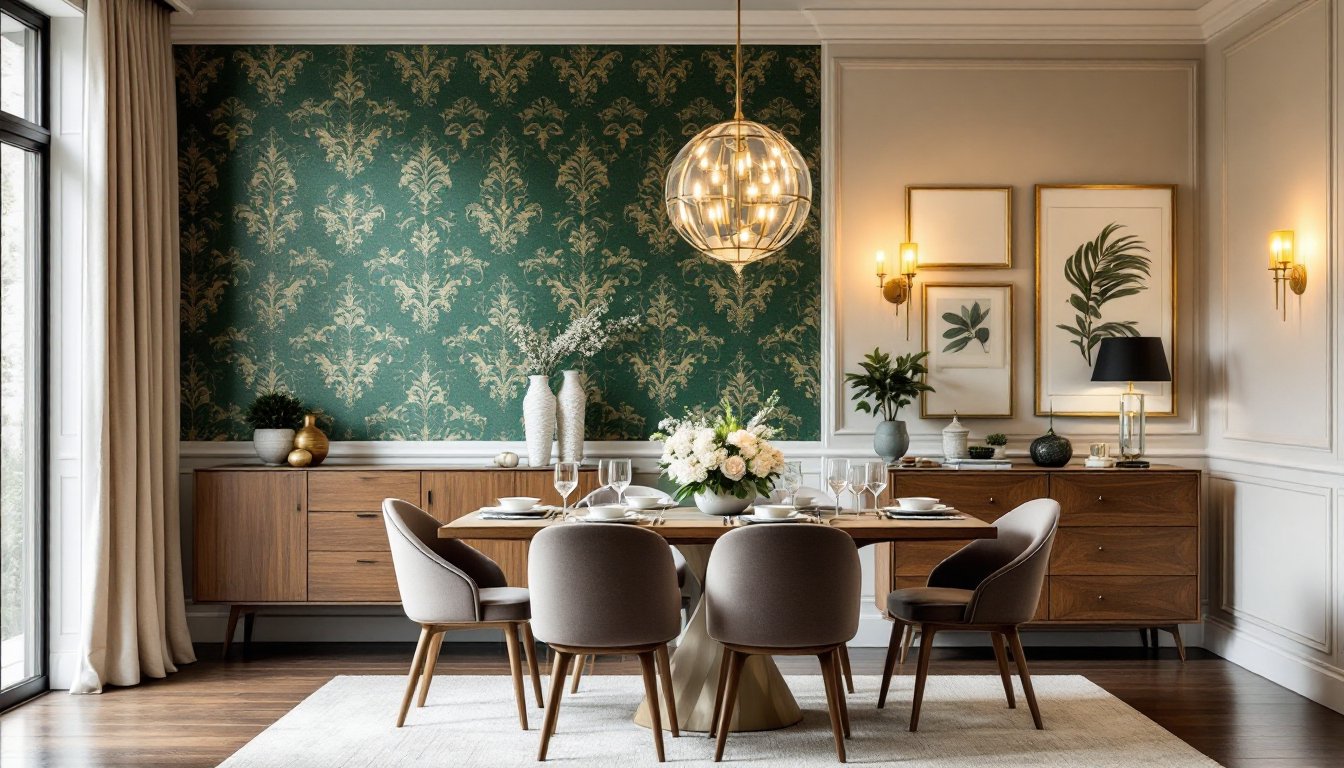

Your dining room sets the tone for meals, conversations, and gatherings. Wallpaper is one of the fastest ways to inject personality and polish into that space, without the commitment of paint that needs touching up every few years or the cost of a full renovation. Whether you’re drawn to dining room wallpaper ideas that make a statement or prefer something refined and understated, the right wallpaper can completely redefine how your space feels. Modern options range from classic damask patterns to contemporary abstract designs, grasscloth textures, and subtle neutrals. The trick is choosing something that complements your dining style, works with your existing furniture, and stands up to the occasional splash of pasta sauce or wine. Let’s walk through your options and the practical considerations that come with each.
Table of Contents
ToggleKey Takeaways
- Dining room wallpaper ideas offer a faster, lower-commitment alternative to paint or full renovations, with modern options including peel-and-stick, traditional paste, and durable vinyl-coated finishes.
- Vinyl or acrylic-coated wallpapers are ideal for dining rooms because they resist moisture, staining, and occasional splashes, while also hiding wall imperfections and improving sound absorption.
- Bold pattern wallpapers transform bland spaces when applied to three walls with a neutral fourth wall or accent wall placement, preventing visual overwhelm while creating a strong design focal point.
- Geometric and abstract patterns are contemporary, forgiving for installation mistakes, and work effectively on all four walls without creating dated looks.
- Current color trends favor jewel tones (emerald, sapphire, burgundy) and muted warm neutrals (sage green, slate blue, terracotta, taupe), with warm colors encouraging appetite and cool colors promoting relaxation.
- Always test wallpaper samples on your dining room walls for at least three days under different lighting conditions before committing, ensuring the color and pattern complement your existing décor and personal style.
Why Choose Wallpaper for Your Dining Room
Wallpaper brings texture, color, and pattern in ways paint simply cannot match. A quality wallpaper can hide minor wall imperfections, muffle noise during dinner parties, and add visual interest that makes a room feel intentional and designed. Unlike paint, wallpaper lets you layer patterns without the monotony, think a botanical print on three walls with a complementary accent wall, or subtle geometric texture everywhere for a cohesive, sophisticated look.
Modern wallpapers are far more forgiving than their predecessors. Today’s options include peel-and-stick varieties that require minimal prep and can be removed without damaging drywall, traditional paste-applied papers for a permanent finish, and vinyl-coated papers that resist moisture and staining, crucial in a dining room. Your choice depends on your comfort level with installation, how long you plan to keep the design, and whether your walls are in good condition.
The durability factor matters too. Dining rooms see heavy traffic, temperature fluctuations, and the occasional sauce splatter. Quality wallpaper with a vinyl or acrylic coating holds up better than delicate paper-only options. Most premium dining room wallpapers are rated for residential use and can handle gentle wiping and occasional cleaning, a genuine advantage over bare painted drywall when accidents happen.
Bold Pattern Wallpapers for Impact
If your dining room feels bland or you want to make a confident design statement, bold pattern wallpaper is your answer. A striking pattern transforms a forgettable room into a memorable space and gives you a strong anchor for decorating everything else, furniture, lighting, table settings, around that visual focal point.
Damask, large-scale florals, and jewel-tone backgrounds pair beautifully with traditional or transitional dining sets. Modern abstract patterns with unexpected color combinations work with mid-century or contemporary furnishings. Metallic accents in wallpaper catch light from dining fixtures and create depth, which is especially valuable in smaller dining spaces.
One practical tip: apply bold wallpaper to three walls and keep one wall (often the wall with a doorway or window) neutral or a complementary solid color. This prevents visual overwhelm and gives the eye a rest. Alternatively, wallpaper a single accent wall behind a sideboard or buffet, where it acts as a gallery backdrop without dominating the room. Many designers who showcase dining room wallpaper ideas use this layering approach to balance drama with livability.
Geometric and Abstract Designs
Geometric patterns, hexagons, triangles, chevrons, and interlocking shapes, feel contemporary without looking trendy or dated. These designs work on all four walls because they’re organized and rhythmic: your eye can rest within the pattern rather than constantly being drawn to a focal point.
Abstract wallpapers with watercolor washes, ink splatters, or free-form brushstrokes add artistic energy. Pair these with solid-colored chairs and a simple wood or glass dining table to let the wallpaper breathe. Geometric and abstract designs are forgiving in terms of installation mistakes too, minor misalignments blend into the pattern, unlike florals or stripes where mismatches are obvious. For installation, measure your wall height, add 2 inches per drop for trimming, and account for pattern repeat when ordering. Most wallpaper comes in double or triple rolls: a typical dining room (12 by 14 feet) needs roughly 4 to 5 double rolls depending on ceiling height and pattern repeat length.
Subtle and Neutral Options
Not every dining room needs to shout. Sometimes elegance comes from restraint. Neutral wallpapers in soft grays, warm beiges, soft whites, and muted greens create a calm backdrop that lets your table settings, art, and guests take center stage. These options work beautifully in smaller dining spaces or in homes where you prefer to change decor seasonally without feeling like the walls need updating.
Textured neutrals are the practical workhorse of dining room wallpaper. They hide imperfections better than smooth paint, add visual interest without pattern fatigue, and pair seamlessly with nearly any furniture or decor style. A light gray linen-look wallpaper, for instance, feels sophisticated and is virtually invisible as a design element, your focus stays on the room’s layout, lighting, and furnishings.
When selecting neutral wallpaper, bring paint chips and fabric samples to compare under your actual lighting conditions. What reads as “warm white” in the store might feel too gray or too yellow once it covers your walls. Request sample rolls or large swatches: most retailers offer these inexpensively or free if you’re buying full rolls. Interior design platforms like MyDomaine showcase how neutral textures function in real dining spaces, helping you visualize scale and finish.
Textured and Grasscloth Finishes
Grasscloth wallpaper, made from natural plant fibers like water hyacinth, seagrass, or jute layered onto a paper backing, brings organic warmth to formal or casual dining spaces. The weave catches light differently depending on angle, creating subtle depth that flat paint cannot achieve. Grasscloth costs more than printed wallpaper but lasts longer and develops a patina that many homeowners find increasingly beautiful over time.
Other textured options include embossed papers (raised patterns that create shadow lines), faux finishes mimicking plaster or stone, and flocked surfaces with velvet-like touch. These are durable and hider of wall flaws. Textured wallpapers require careful installation, the paste needs to be applied evenly, and you must avoid over-brushing, which flattens the texture. If you’re new to wallpaper installation, textured varieties are slightly more forgiving than thin printed papers because minor wrinkles blend into the raised pattern.
Color Trends and Mood Setting
2026 dining room wallpaper trends favor jewel tones, deep emerald, sapphire, and burgundy, paired with metallic accents or crisp white trim. These colors feel luxe without being coldly formal. If jewel tones feel too bold, consider muted or dusty versions: sage green, slate blue, terracotta, and warm taupe are having a moment and feel more livable for everyday dining.
Warm neutrals, cream, soft gold, warm gray, and soft pink, continue to dominate because they photograph well, suit multiple design styles, and don’t show dirt as readily as pure white. Cool grays and soft blues work beautifully in naturally lit spaces and pair well with modern or Scandinavian furnishings.
Color psychology matters in a dining room because the space is tied to appetite, appetite, conversation, and relaxation. Warm colors like terracotta, coral, and golden yellow encourage appetite and socializing, ideal for families or entertainers. Cool colors like blue and green calm the nervous system and work well in spaces where you want to feel relaxed rather than stimulated. Gray and warm beige are neutral mood-setters: they don’t push your psychology in either direction, making them versatile for any dining personality.
Before committing, live with large wallpaper samples on your dining room walls for at least three days, observing them at different times of day under your actual lighting (natural morning light, afternoon sun, and evening artificial light all change how color reads). Resources like Architectural Digest feature high-end dining installations where color and pattern choices are explained by professional designers, offering inspiration and reasoning for specific palettes. Natural light, artificial lighting (warm or cool LED), and wall orientation all shift how color lands in your space, so this step isn’t overthinking, it’s professional-level due diligence.
Conclusion
Choosing the right dining room wallpaper comes down to honest assessment: Does this pattern make you happy when you look at it? Does it work with your existing décor and style? Is the finish practical for a dining space where life happens? Whether you gravitate toward bold geometric designs, grasscloth textures, or soft neutrals, quality wallpaper paired with careful installation transforms your dining room into a space you’ll enjoy for years. Start with samples, trust your instincts, and remember that wallpaper is far easier to change than you might think, peel-and-stick options make future updates painless.