


Imagine stepping into a space where walls disappear and possibilities abound. The open concept living room isn’t just a design trend; it’s a lifestyle choice that invites creativity, connection, and a dash of chaos. Gone are the days of cramped, stuffy rooms where you could barely pass the potato salad at family gatherings. Instead, this airy layout transforms homes into vibrant hubs of activity and warmth.
With an open concept, you can whip up dinner while keeping an eye on the kids or engage in lively conversations without missing a beat. It’s the perfect blend of style and functionality, making every square foot count. So, if you’re ready to embrace a space that’s as flexible as your yoga instructor, let’s dive into the world of open concept living rooms and discover how they can elevate everyday life.
Overview of Open Concept Living Room
An open concept living room features a layout that blends multiple functional areas into a single space. This design promotes a sense of interconnectedness among family members and guests. With fewer walls, it maximizes light flow, creating a brighter and more inviting atmosphere.
Flexibility is a key advantage of open concept living rooms. Homeowners can easily rearrange furniture to suit their needs or transform the space for different activities. For example, a living room can serve as a dining area during gatherings or a play space for children.
A vibrant home environment encourages social interaction. The layout allows hosts to engage with guests while preparing meals or cleaning up, enhancing the overall experience. They can watch children play while cooking or enjoy conversations without being secluded in separate rooms.
Open concept designs also increase functionality. The absence of barriers creates a more spacious feel, making even smaller homes appear larger. It allows for multitasking and facilitates various activities happening simultaneously.
In terms of aesthetics, open concept living rooms can be customized to reflect personal style. Homeowners can choose complementary decor, colors, and materials that unify the space, creating visual harmony. They may incorporate different zones, such as a cozy seating area or a functional home office, within the same expansive area.
Overall, embracing an open concept living room aligns with modern living trends, offering a blend of practicality, style, and socialization. Its appeal lies in fostering a dynamic lifestyle that encourages greater connections among inhabitants.
Benefits of an Open Concept Living Room
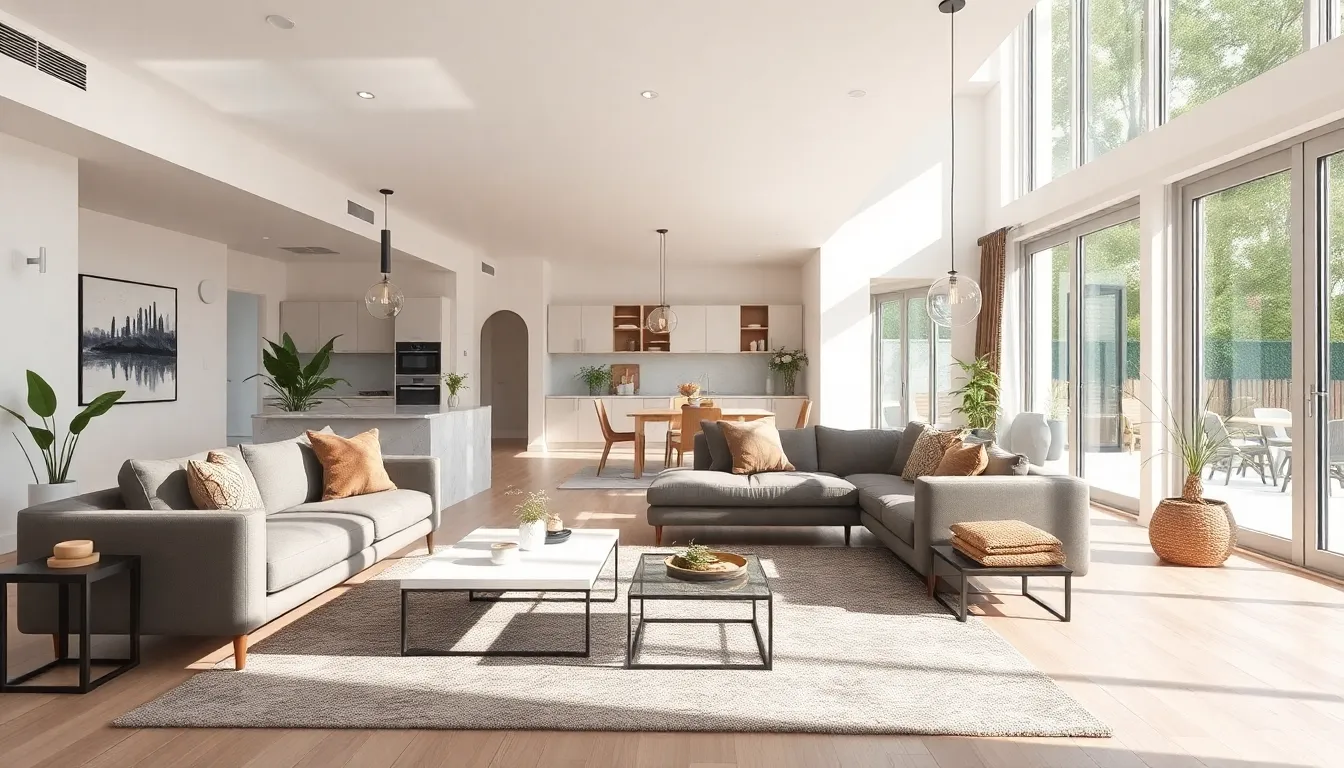
Open concept living rooms offer numerous advantages that cater to modern lifestyles. These spaces encourage flow and connection, making them increasingly popular.
Enhanced Natural Light
Natural light plays a vital role in promoting well-being. Open concept designs reduce barriers, allowing sunlight to penetrate deeper into the space. More windows and fewer walls mean brighter living areas, resulting in a warm and inviting atmosphere. Homeowners experience less reliance on artificial lighting during the day, creating an energy-efficient environment. Enhanced daylight can also improve mood and productivity, making the living area feel more vibrant and open. Opting for this layout naturally enhances both aesthetics and health benefits simultaneously.
Improved Social Interaction
Social interaction receives a noticeable boost in open concept living rooms. The unconfined space fosters engagement, allowing family and friends to connect easily. Hosts can maintain conversations with guests while preparing meals or engaging in activities. Without walls obstructing lines of sight, people can interact from different areas, promoting a shared experience. This design choice also supports hosting gatherings, allowing for seamless movement and transition between kitchen, dining, and living areas. With an open layout, the sense of community and togetherness flourishes within the home.
Design Considerations
Open concept living rooms require thoughtful design. A few key elements ensure both style and functionality.
Furniture Arrangement
Arranging furniture effectively enhances the open concept layout. Position sofas and chairs to create cozy conversation areas without obstructing pathways. Consider using area rugs to delineate spaces, adding texture while defining specific zones. Modular furniture offers flexibility, allowing quick reconfigurations for gatherings or daily activities. Opt for multifunctional pieces, such as ottomans with storage or coffee tables that double as workspace. Ensuring a balanced arrangement promotes a cohesive feel throughout the room.
Color Schemes
Choosing the right color scheme sets the tone in an open concept living room. Light, neutral shades make spaces feel larger and more inviting, while darker hues add depth and coziness. Complementary colors create visual harmony, linking different areas seamlessly. Incorporate pops of color through accessories like cushions, artwork, or decorative items, adding personality without overwhelming the space. Consider using accent walls to define specific zones while maintaining an open atmosphere. Selecting a consistent palette reinforces the overall aesthetic and fosters unity.
Challenges of Open Concept Living Rooms
Open concept living rooms come with unique challenges. Noise levels can become a significant concern. Without walls to absorb sound, conversations, music, and television can create a loud environment. Guests may feel uncomfortable when trying to converse over background noise. Homeowners often struggle to find the right balance between enjoying social interactions and maintaining peace.
Zoning issues often present additional difficulties. Defining specific areas for varied activities becomes challenging in an open layout. Without clear boundaries, it may feel cluttered to guests or residents. Creating distinct functional spaces requires careful furniture placement and strategic decor choices. By using rugs or different lighting, homeowners can visually separate zones without compromising the open feel.
Decor Ideas for Open Concept Living Rooms
In open concept living rooms, decor plays a crucial role in defining areas and enhancing the overall ambiance. Using large statement furniture pieces can create visual anchors in the space, drawing attention and providing comfort. Layering textures such as cushions, throws, and rugs offers depth and interest while promoting a cozy atmosphere.
Incorporating multifunctional furniture serves both practicality and style, from storage ottomans to extendable dining tables. Popular choices like sleek coffee tables provide surfaces for decor and function seamlessly as footrests. Choose light, neutral color palettes to maintain an airy feel, then add colorful accents through artwork or decorative pillows for a balanced approach.
Area rugs can work wonders in visually segmenting spaces, especially in larger living areas. Well-placed rugs define seating zones and anchor furniture, enhancing the room’s flow. Lighting fixtures also contribute significantly; pendant lights over dining areas or floor lamps beside seating areas can create inviting focal points.
Embrace greenery by placing potted plants throughout the room. Plants not only purify the air but also add vibrancy and life, improving the aesthetic quality. Wall-mounted shelves offer another option, showcasing books or decorative items without consuming floor space.
In addition, using mirrors can amplify light and make the room feel more expansive. Decorate walls with artwork or photographs, ensuring a curated approach that reflects personal taste. Striking a balance between decor and functionality enables an open concept living room to remain inviting and enjoyable.
Open concept living rooms represent a modern approach to home design that prioritizes connection and versatility. They create a welcoming atmosphere where family and friends can easily interact and share experiences. With thoughtful design choices and decor, these spaces can be tailored to fit individual styles while maximizing functionality.
Despite some challenges like noise levels and zoning, the benefits often outweigh the drawbacks. Homeowners can enjoy a bright and airy environment that promotes well-being and creativity. By embracing the open concept, they can transform their living spaces into vibrant hubs of activity and togetherness, making everyday moments more enjoyable.