
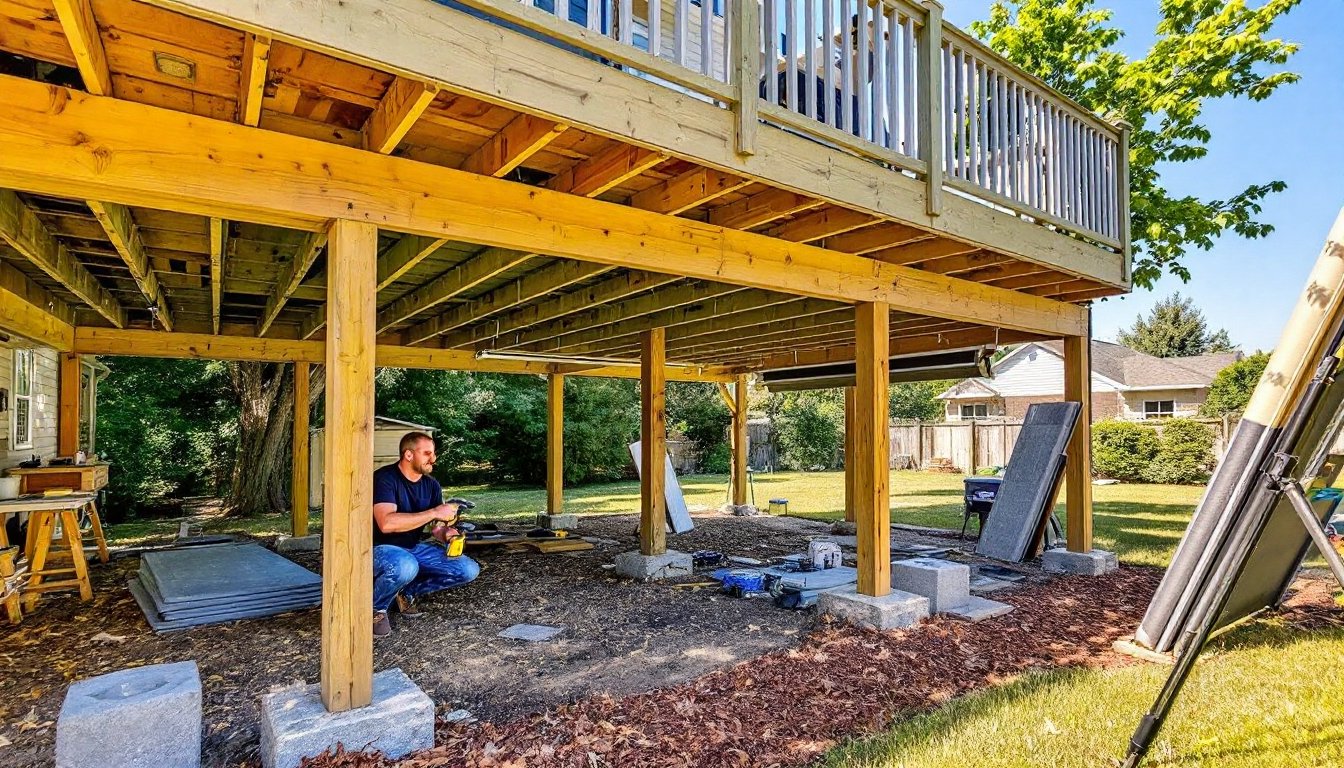

The space under your deck is wasted potential. Whether you’re looking to protect storage, create a covered patio, or keep critters out, enclosing under a deck transforms that shadowy square footage into functional living space. The good news? You don’t need to tear anything down or hire a contractor. From quick lattice solutions to weather-resistant screening systems, homeowners have plenty of options for deck enclosure ideas that fit any budget, skill level, and design preference. This guide walks through seven practical approaches so you can choose what works for your property and your project timeline.
Table of Contents
ToggleKey Takeaways
- Enclosing under a deck transforms wasted space into functional living area with options ranging from affordable lattice ($3–8/sq ft) to retractable curtains ($200–800 total), fitting any budget and skill level.
- Lattice panels and skirting solutions are the most beginner-friendly deck enclosure ideas, requiring only basic tools like a circular saw and drill-driver, and allowing airflow while blocking weather and sight lines.
- Solid skirting with horizontal slats provides complete privacy and weather protection, with composite boards offering a low-maintenance alternative to traditional wood that lasts 25+ years with no staining required.
- Removable deck skirts allow seasonal flexibility and reversibility, letting you pop panels on and off in 20 minutes without permanent fasteners, making them ideal if you need occasional access underneath.
- Retractable outdoor curtains deliver adjustability and decorative appeal, letting you control coverage on demand while remaining simple to maintain—just rinse with a hose seasonally.
- Success with any under-deck enclosure project depends on prioritizing your needs first: budget, permanence, maintenance tolerance, and desired look—then choosing the solution that aligns with your timeline and skill level.
Lattice Panels and Skirting Solutions
Lattice is the go-to starting point for under-deck enclosures. It’s affordable, easy to install, and lets air and light pass through while blocking the worst of the weather and blocking sight lines into that shadowy area beneath the deck joists.
Installing lattice skirting is straightforward. Run pressure-treated 2×4 nailers (nominal lumber, about 1.5 inches actual thickness) along the deck rim joist and along the ground where you’ll anchor the lattice. Space them 16 inches on center if you’re using standard 4×8 sheets of vinyl lattice (lighter, no painting) or wood lattice (traditional look, needs sealing). Attach the lattice with galvanized trim nails or stainless steel screws, corrosion from moisture underneath is real, so skip cheap fasteners.
Vinyl lattice won’t rot, splinter, or need stain, but it can look plastic-y from certain angles. Wood lattice takes on character over time and blends with natural decks, but you’ll need to seal it every 2-3 years in humid climates. Plan on spending $3–8 per square foot for materials (2024 pricing varies by region and material grade). The work is grunt labor, not precision carpentry, so it suits first-time DIYers. You’ll need a circular saw or miter saw to cut panels to fit around posts, a drill-driver, a level, and work gloves.
Removable Deck Skirts for Seasonal Flexibility
If you want to keep your options open, maybe you need access for ductwork maintenance or you like the open feel in summer, removable skirting panels lock in that flexibility. Frame lightweight panels (usually 2×2 studs with plywood faces or composite boards) that slide or bolt into vertical tracks mounted to the deck posts.
Start by installing aluminum or composite vertical mounting tracks along each post and corner, securing them with galvanized bolts or lag screws every 24 inches. Build your panels to fit snugly inside those tracks. Standard panel dimensions are 4 feet tall by 2–4 feet wide, depending on the spacing of your posts. Use pressure-treated plywood (1/2 inch thick) or lightweight composite skirting boards so you’re not wrestling 200-pound panels in and out twice a year.
The advantage here is reversibility: no permanent fasteners means you can pop panels off in 20 minutes. It also lets you customize height per panel, taller openings on one side, solid skirts on the side facing your neighbors. Most removable systems run $8–15 per square foot installed. You’ll want a helper, a drill, a level, and a tape measure. It’s not a one-afternoon job, but it beats ripping out permanent enclosures later.
Solid Screening and Privacy Walls
When you want complete privacy and weather protection, solid skirting is the answer. This approach hides everything underneath, stored tools, HVAC equipment, critter highways, and creates a defined outdoor room.
Horizontal Slat Designs
Horizontal slat fences look contemporary and are easier to construct than vertical boards. Use 1×6 or 1×8 pressure-treated pine boards (nominal widths: actual is 5.5 or 7.5 inches) spaced with even gaps (typically ¼ to ½ inch). Run 2×4 horizontal rails (usually three rails for a 4-foot-tall wall: top, middle, and bottom) between deck posts. Screw the slats to the rails with galvanized or stainless 3-inch exterior wood screws, one screw per rail per slat.
The gap spacing matters: tighter gaps hide more but block more airflow and trap moisture: wider gaps breathe better but show into the space. A ¼-inch gap with black landscape fabric behind it gives the appearance of solid screening while letting air move. Standard materials run $5–10 per linear foot for the skirting itself, before accounting for fasteners or backing material. You’ll need a miter saw or circular saw, a drill-driver, a level, and a helper to hold boards while you screw them. Brush sealer or stain onto everything before installation to minimize weathering.
Composite or Wood Board Options
Composite boards (wood-plastic blend) bridge the gap between low-maintenance vinyl and traditional wood. Trex, Fiberon, and similar brands won’t rot or splinter, require no staining, and last 25+ years. They’re heavier than wood, so you might need sturdier rails underneath, but the durability trade-off appeals to many DIYers. Composite runs $2–5 per linear foot, more than pressure-treated pine but less than custom finishing labor down the road.
Standard pressure-treated lumber is the budget option and works fine if you seal it. Cedar or redwood look better and resist rot naturally, but cost 2–3× more. Whatever you choose, let boards acclimate to outdoor humidity for a few days before installation, wooden boards will cup or crown if nailed up fresh from a dry warehouse. When installing, maintain consistent spacing: use spacers (paint stir sticks, shim-sized blocks) to keep gaps even as you work down the wall.
Retractable Curtains and Outdoor Drapes
For a flexible, decorative approach, retractable outdoor curtains or shade panels let you adjust coverage on the fly. These aren’t your grandmother’s patio curtains, modern outdoor fabrics resist UV damage, mildew, and moisture in ways cotton never could.
Install a stainless steel curtain rod or track system (usually 1 to 2 inches diameter) along the perimeter of your deck on 4×4 posts or the rim joist itself. Hang solution-dyed acrylic or polyester shade panels in neutral tones (grays, earth tones, whites) or bold colors if your deck leans toward design-forward living. Panels typically cost $25–50 each and can roll up onto a motorized mechanism or hand-crank pulley, or simply tie back to posts when not in use.
The appeal is reversibility and adjustability: draw them for a rainstorm, roll them up for open-air entertaining. Maintenance is minimal, rinse with a hose once a season, spot-clean mildew if it appears in humid climates. If you want to protect deck joists from constant moisture, pair curtains with an underside tarp or water management system designed to redirect runoff. The whole setup takes a day or two with a drill, level, and ladder. Cost ranges $200–800 depending on deck size and curtain quality. It’s not a permanent solution, but it’s smart if you think you might reconfigure your deck layout later.
Conclusion
Enclosing under a deck doesn’t mean choosing between aesthetics and functionality, or between DIY simplicity and professional-grade results. Lattice offers fast, low-cost screening. Removable panels give you flexibility. Solid skirting with horizontal slats provides privacy and weather protection. And retractable curtains let you adjust on demand. Start with your priorities: budget, permanence, maintenance tolerance, and desired look. Most of these projects live in the intermediate skill range, nothing requiring a licensed electrician or engineer, but all benefiting from careful planning and accurate cuts. Pick your approach, gather your materials, and watch that wasted under-deck space transform into a functional zone that actually increases your home’s usable square footage.